How to Grow Finger Citron in Pots: Great Shape, Color and Fragrance, Highly Ornamental
Finger citron, also known as bergamot, is an evergreen shrub native to China, India and the Mediterranean coast, and is a variety of citron. The fruit ripens from October to November, and its shape resembles Guanyin's fingers, either clenched or stretched, in a thousand strange forms; once ripe, its color turns golden yellow, making it hard to put down. The fragrance of finger citron is rich and refreshing, lifting the spirits, making it truly excellent in "shape, color and fragrance."
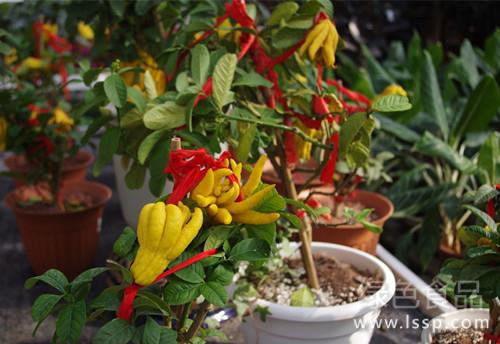
Potted finger citron
Soil selection: Finger citron prefers loose, fertile, well-drained acidic soil. For potting soil, use loose sandy soil mixed with red-yellow soil, add an appropriate amount of decomposed organic fertilizer and mix well; heavy, sticky alkaline soil is unfavorable for the growth of finger citron. Prepare the potting soil with 60% coarse sand, 20% decomposed organic fertilizer and 20% field soil.
Planting: First select good seedlings, requiring grafted seedlings with well-developed roots, no pests or diseases, even branching and thick stems. For planting time, autumn planting is from September to October, and spring planting is from late February to early April. Before potting, first prune the branches and trim the roots, keeping the fibrous roots intact.
Watering: After the finger citron seedlings are potted, immediately water thoroughly to settle the roots. Afterward, water when the soil becomes dry, keeping it moist, but prevent waterlogging, which affects root growth. Watering is a key part of growing finger citron. After April to May, as temperatures rise, finger citron grows rapidly and its water demand increases; in the hot summer, besides keeping the potting soil moist, water should also be sprayed around it to maintain a certain environmental humidity; in autumn, as temperatures drop, the amount of watering should gradually decrease; in winter, the tree enters dormancy and should be moved into a warm shed, and the potting soil only needs to be kept at a certain level of moisture, preventing excessive wetness or dryness, so as to avoid root rot or withering. Watering finger citron should also be handled flexibly according to the specific condition of the plant: water less for small trees and weak trees, and more for large trees and strong trees; during the fruit enlargement stage, use a bit more water; at the early stage of flowering and fruiting, it is not suitable to water, so as to avoid fruit drop.
Fertilizing: Apply topdressing in combination with watering. For potted finger citron, fertilization can be divided into four stages in a year: First, from the Spring Equinox to Grain in Ear, apply light fertilizer every 7 days, and also use potassium dihydrogen phosphate as a foliar fertilizer, in order to strengthen the tree vigor. Second, from Grain in Ear to Major Heat, during the full flowering and fruiting stages, apply fertilizer once every 3 to 5 days, and the fertilizer concentration can be stronger than before. At this time, apply more phosphorus and potassium fertilizers, in order to produce more flowers and fewer fallen fruits, and artificial pollination can also be carried out. Third, from Major Heat to Autumn Equinox, which is exactly the fruit enlargement stage, use more compound fertilizers such as potassium and phosphorus, and use less nitrogen fertilizer, otherwise the fruit ripening period will be delayed. Fourth, from White Dew to Frost's Descent, after harvesting the fruit, apply dilute phosphorus and potassium fertilizer, control watering and nitrogen fertilizer, in order to restore tree vigor and promote flower bud differentiation. In short, at the early fruiting stage, control fertilizer and water, and during the fruit enlargement stage, increase fertilizer and water.
Pruning: After finger citron is potted, it initially focuses on vegetative growth, with the terminal bud growing continuously and without self-pruning, so attention should be paid to pinching the main shoot to promote branching and dwarf the crown. Thin out dense and weak branches, and combine propping, pulling and hanging methods to adjust the tree posture and beautify the tree form. After fruiting, according to the growth and fruiting vigor, carry out spring and summer bud removal, pinch the terminal shoots of fruiting branches, and thin flowers and fruits, so as to promote balance between shoots and fruits in each period and prevent alternate bearing.
Cold protection: Finger citron has poor cold resistance. When encountering low temperatures, it will shed a large number of leaves, and the branches will freeze and wither, affecting flowering, fruit setting and growth the following year. Therefore, after finger citron is moved indoors in winter, the indoor temperature and humidity should be increased to enhance the tree's resistance.
Pest and disease control: The main disease of finger citron is sooty mold, caused by saprophytic fungi, which covers the branches and leaves with a dense pale black mold and affects leaf photosynthesis; it can be controlled with 50% Tuzet 800-fold solution or carbendazim. The main pests are aphids and scale insects. In May to June and August to September, when aphids harm the tender leaves at the tips of finger citron flowering branches, spray 50% Sevin 500-fold solution. From June to July, in dry and hot weather, red spider mites easily harm finger citron leaves, and 40% dimethoate 1000-fold solution can be sprayed for control.