Causes and Control Methods of Downy Mildew, Black Spot, and Sclerotinia Rot in Celtuce
The late stage of celtuce production is a period of high disease incidence. Common diseases include downy mildew, black spot, and sclerotinia rot, and preventive work is very important. The characteristics and control methods of these three celtuce diseases are briefly described below:
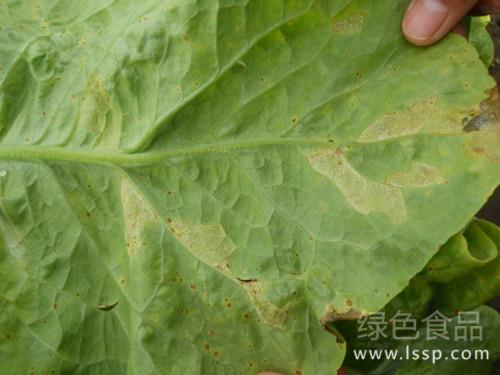
Celtuce Downy Mildew
I. Downy Mildew:
1. Characteristics: This disease infects celtuce leaves. After seedlings are infected, they turn yellow and die. When plants at the mature stage are infected, the leaves develop symptoms from the bottom upward. In the early stage, pale yellow angular or nearly round spots appear on the leaves. When humid, white mold-like growth develops on the spots on the underside of the leaves, and sometimes the mold layer can extend to the upper surface of the leaves. In the later stage, the spots die, turn yellow-brown, and merge into patches, causing the entire leaf to dry up. Sometimes the pathogen can infect the stem, causing the stem to turn black.
2. Control methods: Before the celtuce rows close, cultivate 2-3 times. After the rows close, reduce the number of waterings, lower field humidity, prevent waterlogging in the field, promote celtuce growth, and inhibit pathogen development. After symptoms are found, promptly remove and burn diseased leaves, especially removing the lower old leaves to increase air permeability. Spraying a 600-800 times dilution of Daconil M-45 can provide a preventive effect. In the early stage of disease onset, apply pesticide once every 7-10 days. Options include a 800 times dilution of 72% Dupont Curzate or a 600-800 times dilution of Ridomil Gold, etc., by spraying. Alternate several pesticides, spraying once every 7-10 days, for 2-3 consecutive sprays.
Celtuce Black Spot
II. Black Spot:
1. Characteristics: Black spot, also known as ring spot and leaf blight, mainly damages celtuce leaves. Round or nearly round brown spots form on the leaves, 3-15 mm in diameter, with concentric rings. When humid, black mold-like growth develops on the underside of the spots. The disease spreads by wind and rain. Warm, rainy conditions, long dew periods, and insufficient fertility make weakened celtuce susceptible to the disease.
2. Control methods: Strengthen cultivation management and increase the application of phosphorus and potassium fertilizers. Implement crop rotation and promptly remove old, diseased, and residual leaves. In the early stage of disease onset, choose a 1500 times dilution of 50% iprodione wettable powder or a 1000 times dilution of 10% difenoconazole water-dispersible granules, etc., alternating pesticides, spraying once every 7 days, for 2-3 consecutive sprays.
Celtuce Sclerotinia Rot
III. Sclerotinia Rot:
1. Characteristics: It mostly starts from the base of the stem and gradually spreads, causing the epidermis to rot. The surface of the lesions has cotton-like mycelium, within which are black, mouse-dropping-like sclerotia, and the upper part of the diseased plant wilts and dies. The pathogen spreads through wind and rain and invades from senescent parts of the celtuce. Low temperature, humidity, and high density can promote disease onset.
2. Control methods: Fertilize rationally, avoid excessive application of nitrogen fertilizer, and increase the application of phosphorus and potassium fertilizers. Cultivate and weed frequently, promptly remove diseased and residual celtuce plants and lower diseased leaves, and after harvest carry out one deep plowing so that most sclerotia are buried below the 6 cm soil layer. In the early stage of disease onset, choose a 700 times dilution of 70% thiophanate-methyl wettable powder, a 1500 times dilution of 50% procymidone wettable powder, or a 500 times dilution of 40% dimethachlon wettable powder, spraying once every 7-10 days, for 3-4 consecutive treatments.