Lettuce has few diseases but they still occur: common disease causes and control methods
Lettuce is one of the common vegetables in daily life. Although it has few diseases, they still occur. The common diseases are the following three, and they should be controlled promptly.
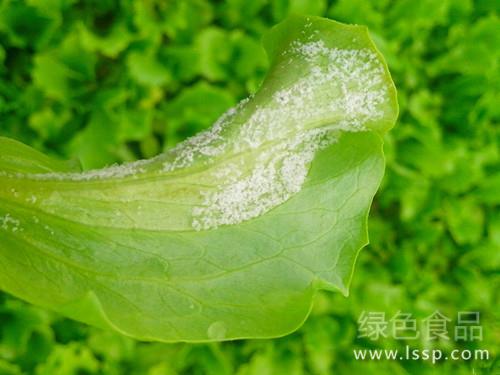
Lettuce downy mildew
Downy mildew:
1. Symptom characteristics. It first affects old leaves, causing chlorotic or pale yellow lesions on the upper surface of the leaves. The lesions gradually expand as the disease develops, but do not cross the leaf veins. They vary in shape and size, and the diseased and healthy parts of the lettuce appear yellow-green in an alternating pattern. On the corresponding underside of the lesions, a layer of white mold-like growth forms, and soon afterward the leaves turn yellow and dry up.
2. Control methods. ① Soil treatment. Drench the soil around the lettuce root zone once with 5% formalin, or mix garden soil with 2% lime powder and sterile mud powder and broadcast it once. ② Seed disinfection. Before sowing, treat seeds with 35% metalaxyl seed dressing agent at 0.1% of seed weight to reduce the primary infection source. ③ Field management and care. In the early stage of the disease, reduce field humidity, remove diseased leaves and residual plants, prevent waterlogging, and keep the field ventilated and well lit. The root-zone soil can be drenched once with 5% formalin solution. After harvest, clean the field promptly and take lettuce diseased residues outside the field for centralized deep burial or burning. ④ Chemical control. Before applying chemicals, the diseased leaves must be removed. After finding the central diseased plant, begin spraying 75% chlorothalonil wettable powder 500 times dilution, 72.2% Previcur aqueous solution 600-800 times dilution, 64% Sandofan wettable powder 500 times dilution, or 58% Ridomil wettable powder 800 times dilution, once every 7-10 days, for 2-3 consecutive sprays.
Lettuce gray mold
Gray mold:
1. Symptom characteristics. When infected at the seedling stage, the affected stems and leaves show water-soaked rot. When infected at the adult plant stage, it starts on leaves near the soil surface, initially appearing water-soaked, then rapidly expanding. The stem base rots, and gray-brown mold grows on the affected surface. In dry weather, the diseased plants gradually die, and the mold layer changes from white to green; when humidity is high, they rot from the base upward, and the petioles turn dark brown.
2. Control methods. ① Fertilize reasonably, avoid high humidity in the field, and enhance disease resistance. ② Remove old lettuce leaves, improve ventilation, strengthen air exchange, and reduce the disease. ③ Chemical control. In the early stage of the disease, spray 50% carbendazim wettable powder 1000 times dilution, 50% thiophanate-methyl wettable powder 600-800 times dilution, 50% iprodione wettable powder 1000-1300 times dilution, or 50% methyl thiophanate wettable powder 1200-1500 times dilution. Depending on the disease severity, rotate the chemicals and apply once every 7-10 days, for 2-3 consecutive treatments. Stop applying chemicals 15 days before harvest. ④ Greenhouse fumigation. Fumigate with 40% Baipu smoke agent (chlorothalonil and iprodione), 40% Baisu smoke agent (chlorothalonil and procymidone), or 15% Pumeiling smoke agent, once every 7 days, for 2-3 consecutive fumigations. ⑤ After harvest, handle diseased residues promptly, burn or deeply bury them in a centralized manner to prevent the pathogen from spreading in the field; plow deeply in time to reduce the source of inoculum.
Lettuce black rot
Black rot:
1. Symptom characteristics. It mainly affects leaves, usually starting from the petioles and main veins. It initially appears as light brown water-soaked short streak spots, then spreads along the vascular bundles to the main veins and net-like leaf veins, showing purplish-black lesions, and eventually the leaves dry up. When moist, bacterial ooze exudes from the surface of the spots, faintly visible, and feels sticky to the touch; this is the characteristic of this disease.
2. Control methods. ① Practice crop rotation, strengthen fertilizer and water management, remove field weeds promptly, and pay attention to field sanitation. ② Seed selection and dressing. In areas where lettuce black rot often occurs, choose disease-resistant varieties, and before sowing treat seeds with 50% DT wettable powder (the amount of chemical is 0.4% of seed weight). ③ In the early stage of the disease, spray chemicals as early as possible. Use 72% agricultural streptomycin 3000 times dilution, 47% Kasumin wettable powder 400-600 times dilution, or 58.3% Kocide 2000 dry suspension concentrate 600-800 times dilution, spraying once every 7-15 days, 2-3 sprays depending on the disease severity, and alternate the chemicals. When spraying, insecticides may also be added, such as fenpropathrin-malathion emulsifiable concentrate 2500 times dilution, for mixed spraying to control both diseases and pests.