Myths in overwintering cucumber management: focusing on air temperature while ignoring low temperature and light
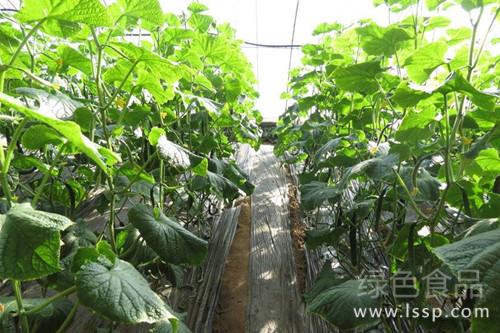
Overwintering cucumber
1. The higher the temperature cucumbers need, the better.
Generally speaking, the more suitable night temperature for cucumbers is 15-18°C, and the day temperature is about 32°C. But cucumbers can still grow normally at higher temperatures; within the range of 38-40°C, although photosynthesis is strong, respiration is also intense. In practice, the accumulation of photosynthetic products is best at 26-30°C; within this temperature range, the higher the temperature the greenhouse cucumbers need, the better. A lower night temperature can reduce respiratory consumption. Cucumber fruit expansion occurs mainly at night; reducing respiratory consumption is equivalent to "spending less money," so naturally more cucumbers set and the yield is higher (cucumbers generally transport the photosynthetic products produced by photosynthesis during the day, that is, nutrients, to the fruit in the first half of the night; therefore, the air temperature required in the first half of the night in the greenhouse is 15---20 degrees. Of course, it can be a little higher to let the photosynthetic products be transported quickly. In the second half of the night, cucumbers mainly carry out respiration, which consumes nutrients; therefore, the temperature in the second half of the night must not be high, generally 10---15 degrees, in order to make cucumber respiration weaker and consume fewer nutrients.) Generally speaking, the lowest nighttime temperature in the shed should be above 10°C; below 8°C, moderate heating should be applied to ensure that cucumber growth is not inhibited and malformed flowers and fruits do not occur.
2. As long as it tolerates weak light, there is no need to supplement light.
Dense-spined cucumbers such as Jinyou 35 and Xintai Mici cultivated in winter-spring greenhouses should be tolerant of low temperature and weak light. If there are continuous cloudy, rainy, or snowy days, and the light is below the compensation point, cucumbers are in a "starving" state, which has a great impact on yield. Therefore, it can be said that the light for winter-spring greenhouse cucumbers is severely insufficient, and yield can be increased by supplementing light. The usual practice is to frequently wipe the film, remove dust, and increase light transmittance. By covering with colorless plastic film, the reflection of sunlight from the ground is enhanced, so that the lower and middle leaves receive more light. Installing a reflective screen on the back wall also has a certain effect. But the most effective method is to install special supplementary lighting lamps such as plant sodium lamps, generally with a power above 300 watts, one every 8-10 meters. Low-power incandescent lamps have no obvious effect.
3. Only seeking higher air temperature; soil temperature is not important.
Cucumbers have higher requirements for soil temperature than for air temperature. 1°C of soil temperature is equivalent to the effect of 2°C of air temperature. The minimum soil temperature favorable for cucumber root growth is 12-15°C, but when the soil temperature is above 8°C, the main root can still elongate. Below 8°C, the main root and root hairs are inhibited and no longer elongate. Experiments have proved that if the soil temperature is raised from 18°C to 24°C, the early yield and total yield of cucumbers increase by 45% and 34% respectively. But if the soil temperature exceeds 32°C, the total yield decreases. When pumpkin is used as the rootstock for grafting, the stress resistance of cucumbers is significantly improved; when the soil temperature drops to 12°C, the root system can still grow normally. Therefore, the effect of soil temperature on cucumbers is far greater than that of air temperature. There are many methods to raise the soil temperature in winter greenhouses: applying more crop straw and cow and horse manure, etc., can use fermenting materials to raise soil temperature, with relatively good results; through plastic film mulching and cold-insulation trenches, soil temperature can also be effectively raised. In deep winter, reduce the amount of chemical fertilizer applied and apply as much organic fertilizer and biological bacterial fertilizer as possible, that is, apply more heat-generating fertilizers, which can raise the soil temperature.