How to prevent lodging in rapeseed after spring, which affects yield?
Causes of rapeseed lodging: besides strong winds, there is improper fertilizer and water management, especially after spring, when excessive nitrogen fertilizer causes the rapeseed bolting stems to grow too fast, thick at the top and thin at the bottom, with tender stems and weak lodging resistance; too high a density causes field shading, stems that are not thick and strong, and a high branching position, with the pod-bearing layer concentrated on the upper part of the rapeseed, resulting in a “top-heavy” condition; inadequate ditch systems and poor drainage lead to high field humidity; shallow transplanting without earthing up around the roots causes the root system to concentrate in the surface soil, and so on. When unfavorable weather occurs, lodging is likely. In addition, in the late stage of rapeseed, severe sclerotinia causes the stems to dry up, making lodging more likely.
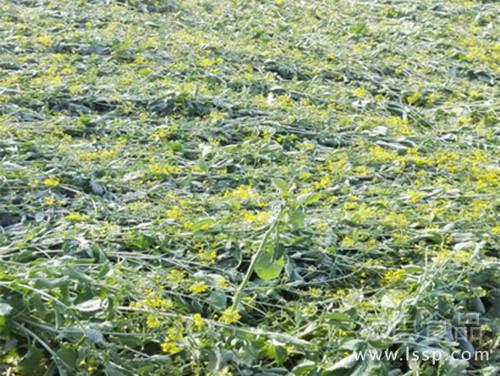
Rapeseed lodging
After rapeseed lodges, the impact on yield is great. Because after lodging, the pods pressed underneath cannot receive light, or the light is reduced, affecting nutrient accumulation; after lodging, the stems break, the conductive tissues of the rapeseed are destroyed, and the nutrients and water absorbed by the roots and the nutrients accumulated in the rapeseed plant cannot be transported to the pods; after lodging, some “dormant buds” regrow, forming secondary branches and flowering, but they cannot set pods normally and consume a large amount of nutrients, which is unfavorable for the growth and development of normal pods; after lodging, ventilation and light penetration in the field are poor, and relative humidity increases, causing the lodged rapeseed to mold and rot and favoring the spread of sclerotinia; after lodging, the rapeseed pods ripen unevenly, harvesting is labor-intensive, and during threshing, waste increases.
Comprehensive measures are needed to prevent and reduce rapeseed lodging.
Scientific application of bud fertilizer: after the Beginning of Spring, applying bolting fertilizer can make the rapeseed stems strong without excessive growth. The amount applied should be appropriate, generally accounting for about 30% of the total fertilizer application. Before bolting, that is, at the end of February or early March, apply about 1000 kg of decomposed human and livestock manure or 7.5-10 kg of urea per mu; prevent excessive bolting fertilizer, which causes dense growth and lodging and disease. At the same time, 50 kg of 0.2% borax aqueous solution can be sprayed per mu to increase rapeseed yield.
Timely irrigation and drainage: after the Beginning of Spring, rapeseed bolting and flowering require a lot of water, so irrigation should be timely to ensure the water demand; after the Beginning of Spring there is often more rain, soil moisture content is high, and field humidity is high, which often induces rapeseed sclerotinia. Therefore, after the Beginning of Spring, ditches and rivers should be cleared in time to ensure that ditches and rivers are connected, preventing waterlogging after rain.
Intertillage and loosening the soil, earthing up around the roots: after the Beginning of Spring, seize the favorable opportunity before row closure to carry out intertillage and loosen the soil; remove weeds to reduce pests and diseases; raise soil temperature to prevent late spring cold spells; earth up around the roots in time to enhance lodging resistance and speed up field drainage.
Prevention and control of pests and diseases: during the bolting and early flowering stages of rapeseed, use 150 g of 50% carbendazim per mu, mixed with 50 kg of water, and spray to control sclerotinia; use 8-10 g of fenvalerate mixed with 30 kg of water and spray to control aphids.
Spraying regulators: spray growth regulators at the bolting stage, using 30 g of 15% paclobutrazol per mu, mixed with 25-30 kg of water and sprayed evenly, which can enhance the stress resistance of rapeseed and prevent lodging in the later stage.