Flower shiitake is a treasure among shiitake mushrooms: key techniques for cultivating flower shiitake
Flower shiitake is a variant of shiitake whose cap surface bears chrysanthemum-like or tortoise-shell-like patterns. It has large fruiting bodies, thick flesh and short stems, with a crisp, tender texture and a rich aroma. It is a treasure among shiitake mushrooms and is highly popular. This article mainly introduces the key techniques for cultivating flower shiitake.
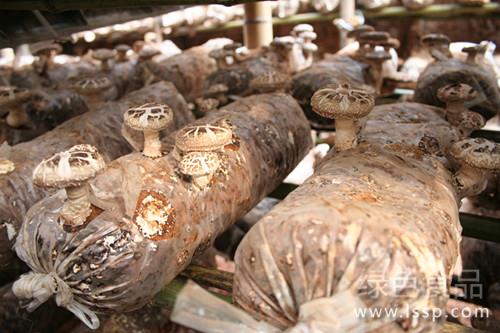
Flower shiitake
1. Strain selection and seasonal scheduling: Flower shiitake forms under specific environmental conditions and is not hereditary, but strains used for cultivating flower shiitake should preferably be medium-low temperature, medium-to-late maturing strains with large caps, thick flesh, short stems and distinct “flushes”. In northern regions, they can be planted in either spring or autumn; use late-maturing varieties for spring planting and early-maturing varieties for autumn planting.
2. Mycelium culture: Management during the mycelium culture stage determines the success or failure of flower shiitake cultivation and affects yield and the speed of fruiting. During the mycelium running stage, several points should be noted: 1. The temperature of the culture room should be 20℃--26℃, and high temperatures must be strictly prevented; if it exceeds 28℃, the mycelium is easily damaged by heat, and air humidity should be below 70% to avoid contamination by competing microorganisms. 2. Mycelium does not need light during growth, so shade the mycelium running area and keep doors and windows closed. However, doors and windows should often be opened for ventilation to keep the indoor air fresh and allow the mycelium to grow normally. 3. Turn the bag stacks once every 15--20 days, and when turning, puncture the bags to increase oxygen.
3. Management during the color-change period: The quality of color change also affects fruiting. Conditions for color change: room temperature 20℃--24℃, air humidity 80%--95%, scattered light and sufficient oxygen. Mycelium that has undergone proper color change should be glossy brown.
4. Management during the fruiting period: 1. Management of young mushrooms. Arrange bags that have changed color normally on the mushroom shed shelves; the water content inside the bags should be about 55%. After primordia appear, do several things well: ① The temperature inside the shed should be 8℃--16℃ and air humidity 80%--90%. During this period, the shed film should not be lifted off, especially on windy days, when it must not be lifted off. ② When the mushroom buds are larger than 0.5cm in diameter, if the bags are not to be removed, use a small knife to slit the film around the stem for 2/3 of the way, allowing the buds to grow out freely. Slitting too early, when the young buds are too small and have poor resistance, makes them prone to death, freezing to death or damage from high temperatures; slitting too late causes the young mushrooms to be squeezed by the film and form deformed mushrooms, so timely slitting is very important. If a single bag has too many primordia, thin them out by removing deformed, overly dense and clustered young mushrooms, keeping 3--5 per bag, and try to make the retained young mushrooms evenly spaced, uniform in size and not crowded.
2. Flower shiitake cultivation period. After slitting, cultivate at low temperature for 5--7 days to make the young buds grow slowly. During this period, the shed temperature should be 8℃--12℃, air humidity 85%--90%, with appropriate scattered light, and ventilation at both ends of the shed. On windless sunny days and when ventilation is needed, the film can be lifted to let sunlight shine directly on the young mushrooms. When the temperature drops below 5℃, cover the film promptly; in windy weather, cover the film tightly and leave only one end open for ventilation. When the cap diameter reaches 2~2.5cm and the fruiting body is dense and firm, and the cap surface feels soft and elastic when stroked by hand, flowering can be induced at the appropriate time. If flowering is induced when the cap diameter is less than 2cm, small flower shiitake buttons easily form. If it is greater than 2.5cm, strip-like cracks easily form.
Flower shiitake management
Methods for inducing flowering: ① Normal-temperature flowering induction. If the temperature is 8℃--15℃ and air humidity is about 70%, no heating is needed; use natural temperature to induce flowering, covering the film during the day to raise the temperature and lifting the film at night to lower the temperature, prompting the caps to crack. ② Heating-induced flowering. In winter and spring, when the temperature is 0℃--12℃, heating can be used at night to promote flowering. On clear days, after 10 a.m., lift off the plastic film on the shed to let sunlight shine directly on the young mushrooms and let a breeze blow over them; at this time the cap surface of the young mushrooms is dry. Around 3 p.m., cover the film again, and at night check the microclimate temperature inside the shed and the moist stickiness of the young mushroom surfaces. If the caps feel moist to the hand, do not add humidity first. If they are dry, humidity should be added; if they feel sticky, it indicates excessive humidity. Begin heating and dehumidifying at 11--12 p.m. When heating, leave ventilation openings to prevent the shed temperature from exceeding 35℃, so as to achieve the purpose of heating and dehumidifying. After 3--5 hours, stop heating, and after sunrise lift off the shed film to let wind and sun act on the mushrooms. After 4--6 days of continuous stimulation, the cap surfaces crack rapidly. White mushroom flesh is exposed, and with each stimulation the cracks deepen somewhat, forming high-quality flower shiitake. ③ Steam-induced flowering. In seasons of low temperature, dryness and long drought without rain, when the temperature is below 12℃ and air humidity is below 50%, steam can be used to induce flowering. That is, seal the mushroom shed and direct steam into the shed, or place a basin of water directly on the fire and heat it, adding heat and water at the same time. When humidity increases to 80%, stop the steam immediately; generally maintain the bag temperature at 25℃ for 8--10 hours.
Preserving the flowers: After flowering induction, in order to make the caps enlarge, whiten, thicken in flesh and deepen and widen the cracks to form flower shiitake, another 15--25 days of meticulous management are needed. The key is to prevent humidity inside the mushroom shed from rising above 70%. The management requirements are as follows: ① On clear, dry days, strengthen ventilation and light during the day and cover the film at night; as long as humidity does not exceed 70%, there is no need to heat and dehumidify. ② If rainy weather occurs and outside humidity is high, the shed film must be tightly covered, and dehumidifying holes should be opened, with heating for dehumidification, or lime, coal cinders, etc. spread on the shed floor to lower air humidity. ③ Ventilation should be strengthened to keep the indoor air fresh.