Sweet Potato Pests, Diseases and Weeds Throughout Its Life Cycle: A Complete Guide to Control Methods
Sweet potato is one of the main traditional crops under cultivation. The main pests and diseases throughout the sweet potato life cycle include black rot, soft rot, stem nematode disease, sweet potato hornworm, tobacco cutworm, cotton semi-looper, and underground pests such as white grubs. To achieve high and quality yields of sweet potato, integrated control of multiple pests, diseases and weeds should be carried out to effectively keep their damage in check.
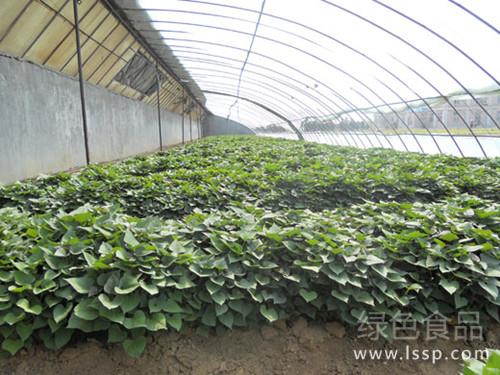
Sweet Potato Seedling Raising
1. Seedling raising period: The targets for control during this period are black rot and stem nematode disease.
1) Establish disease-free seed production fields and select disease-resistant and disease-tolerant improved varieties. Vigorously develop virus-free sweet potato and plant disease-resistant improved varieties such as Xuzhou 18, Wanshu No. 1 and No. 3, Lushu No. 6 and No. 7, Beijing 553, etc.
2) Cultivate strong, pest- and disease-free seedlings. Choose a disease-free field as the seedbed and use disease-free tubers for seedling raising. Before raising seedlings, carefully select disease-free seed tubers and strictly discard tubers with black rot, stem nematode disease, wounds or frost damage. Before raising seedlings, soak the tubers in warm water at 52-54 degrees C for 10 minutes to kill viruses, nematodes and other pathogens surviving in the tubers.
3) Chemical seed soaking and spraying. A mixed solution of 40% isofenphos-methyl at 1000 times and 40% carbendazim at 800-1000 times, or 50% thiophanate-methyl at 1500 times, can be used to soak or spray the seed tubers.
2. Transplanting period: The pests and diseases to be controlled during this period are sweet potato black rot, stem nematode disease, underground pests and weeds.
1) Use the high-cut seedling method. That is, when cutting seedlings, cut at a point 30 cm away from the seedbed to prevent the seedlings from carrying black rot and nematode disease.
2) Chemical treatment of the seedlings. A mixed solution of 50% carbendazim and 40% isofenphos-methyl, each at 1000 times, can be used to soak the seedlings. For fields with severe stem nematode incidence, 1-1.5 kg of 5% stem nematode granules per mu can be mixed with soil to treat the planting holes. For fields with severe underground pest outbreaks, before transplanting, mix 15-25 kg of ammonium bicarbonate per mu with farmyard manure and apply it to the plow sole, which can eliminate more than 80% of underground pests. Alternatively, 15 kg of wheat bran and 250 g of phoxim pesticide can be mixed evenly and scattered with farmyard manure in the ridges, giving very good control effects.
3) Carry out chemical weeding well. After the seedlings are transplanted, promptly spray 200-300 g of acetochlor per mu over the whole area, and do not weed within 1 week after spraying.
3. Growth period: The main targets for control during this period are sweet potato hornworm, tobacco cutworm and cotton semi-looper.
1) Light trapping and killing. Use the phototaxis of adults to trap and kill them, reducing the pest sources in the field. During the peak moth emergence period, black light lamps and the like can be used to trap and kill adults.
2) Use pesticides scientifically and carry out chemical control well. Per mu, 50 g of deltamethrin or 100 g of 80% dichlorvos plus 50 kg of water can be sprayed to control the damage of sweet potato hornworm, tobacco cutworm, cotton semi-looper and others.
In addition, when harvesting sweet potatoes, and during winter plowing and land preparation and ridging, overwintering pupae should be picked up, and during the peak larval period, manual capture should be carried out to kill the pests.