How to control cucumber sclerotinia rot? Symptoms are stem and vine rot, diseased fruit rot with white mycelium
Cucumber sclerotinia rot, also called tip rot disease, can occur in open-field and protected cultivation cucumbers, with the most severe occurrence in protected cultivation. Losses generally range from 10% to 30%, and in severely affected plots can reach over 90%, resulting in total crop loss. Low temperature, high humidity or rainy early spring is the peak season for cucumber sclerotinia rot, and control must be strengthened.
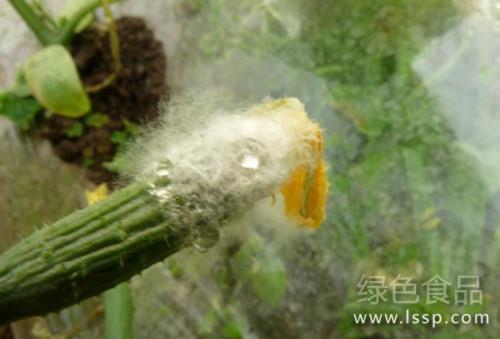
Cucumber sclerotinia rot
Disease symptoms:
It can occur from the seedling stage to the mature plant stage, mainly damaging the fruit, and also damaging stems and vines, leaves, flowers and other parts. When fruit is affected, water-soaked irregular lesions first appear on the remnant flower part, then the cucumber tip becomes soft and rots, and on the surface of the rotting cucumber a cottony white mycelium grows, along with black mouse-dropping-shaped sclerotia. When stems and vines are affected, mostly in the middle and lower parts of the main stem, water-soaked light brown lesions appear at the branching points of the main and side branches, slightly sunken, later turning white; under high humidity conditions, the diseased stem soft-rots and grows white cottony mycelium, the stems and vines and leaves above the affected part wither and die, and finally the pith inside the stalk is destroyed by the pathogen and becomes hollow, producing white mycelium and mouse-dropping-shaped sclerotia.
Integrated control:
1. Agricultural control. Rotate every other year with aquatic vegetables, grasses, and allium crops. After harvest, thoroughly remove diseased residues, carry them out of the field, and bury them deep or burn them. Plow the soil deeper than 25cm to bury sclerotia in deep layers and inhibit apothecia from emerging. In diseased plots, flooding and soaking for more than 10 days in summer can be done to promote sclerotia rotting. Adopt formula fertilization techniques to enhance cucumber disease resistance.
2. Physical control. Before sowing, float the seeds in 10% salt water 2 to 3 times to wash out sclerotia. Using UV greenhouse film can hinder apothecia emergence and ascospore formation. High-ridge cultivation with plastic film mulching can also be used to reduce inoculum sources.
3. Seed and soil disinfection. Before planting, prepare medicinal soil with 40% quintozene, harrow it into the soil, using 1 kilogram of pesticide per mu mixed with 20 kilograms of fine soil, mix well and sprinkle into the planting holes; soak seeds in 50°C warm water for 10 minutes to kill sclerotia in the seeds.
4. Ecological control. In greenhouse cultivation, focus on closing the greenhouse to raise temperature in the morning; do not ventilate until the temperature exceeds 30°C, and ventilate promptly in the afternoon to exhaust moisture. After cucumbers become diseased, appropriately raise the night temperature to reduce dew formation time; in early spring, when the daily average temperature is 29°C or 31°C and relative humidity is below 65%, disease occurrence can be reduced. Prevent excessive irrigation; when soil moisture is high, extend the irrigation interval.
5. Stem smearing control. When the stem is infected with sclerotinia rot, first use a blade to scrape off the rotting area on the diseased stem where white fuzz grows, then dilute 50% vinclozolin or iprodione with water into a 20 to 30 times solution, like thick milk slurry (a small amount of edible starch paste and pesticide powder can also be mixed with water at a 2:1 ratio), and smear it on the affected area. Generally after 1 application, the affected area will slowly heal on its own, and the cucumber can continue to flower and bear fruit. If the affected area is severely rotted, after 3 to 5 days, apply once more depending on the situation. Usually cucumber plants whose diseased stem rot is less than half their diameter can all be saved and can still maintain a certain yield.
6. Chemical control. In the early stage of cucumber disease, use 250 grams of 10% vinclozolin smoke agent or 45% chlorothalonil smoke agent per mu to fumigate for 1 night, once every 8 to 10 days, continuously or alternating with other methods for 3 to 4 times; dust with 5% chlorothalonil dust agent, about 1 kilogram per mu each time; you can also use 50% vinclozolin wettable powder 1000 times solution or 60% fenaminosulf ultra-fine powder 600 times solution or 50% iprodione wettable powder 1000 times solution or 70% thiophanate-methyl 1000 times solution for spraying, once every 7 to 10 days, spraying 3 to 4 times continuously.