How to manage sweet cherry during the flowering and fruiting period? Key points of artificial pollination and preventing fruit cracking
The key to improving the yield and quality of sweet cherry lies in doing a good job of flower and fruit management. Management measures for sweet cherry during the flowering and fruiting period mainly include pollination, flower and fruit thinning, and preventing fruit cracking.
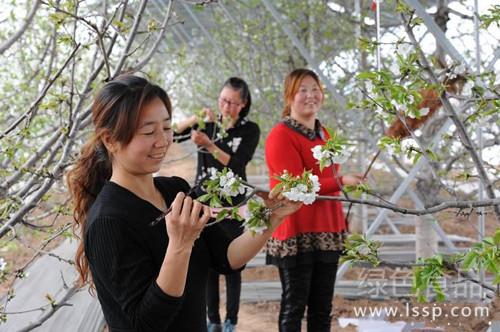
Artificial pollination of cherry
1 Artificial pollination: artificial pollination can increase the fruit-setting rate of cherry and raise the yield. Artificial pollination mainly involves the following steps:
①Collecting pollen. At the early flowering stage, collect bell-stage flowers, remove the anthers, and dry them at 24°C; after about 12—24 hours, the anthers will shed pollen, which is collected for later use. A mixture of pollen from multiple cultivars gives better results.
②Pollination methods. These mainly include manual spot pollination and spray pollination. The most common manual spot pollination uses a brush or a rubber tip to dip up pollen and apply it to the stigma of the pistil. Another method is to tie foam plastic balls, clean gauze, or other soft materials to the tip of a wooden stick or bamboo pole and gently roll it among flowers of different cultivars to achieve pollen collection and pollination. Spray pollination requires less labor and gives good results, but is technically demanding. For spray pollination, pay attention to the ratio of pollen, sucrose, borax, and water: pollen about 2‰, sucrose about 10%, borax about 1‰; prepare it into a suspension and use it immediately after mixing. Generally, spraying the pollen suspension once at the full flowering stage can achieve a satisfactory pollination effect.
Releasing bees at the flowering stage is also a very good pollination method. Honeybees and mason bees are two commonly used types of pollinating insects; honeybees only begin activity at 18°C and begin pollinating above 20°C; the horned mason bee (Osmia cornifrons) begins leaving its nest at 12°C, visiting flowers and transferring pollen, and is less affected by rainy and low-temperature conditions. Therefore, sweet cherry is better suited to pollination by the horned mason bee, to avoid the effects of low temperatures in early spring.
2 Preventing fruit cracking: before harvest, due to rainfall, watering, heavy fog, and so on, the flesh cells of sweet cherry absorb water and expand rapidly, but the physiological activity of the skin cells is slow. When the turgor pressure of the cherry increases beyond the pressure that the cell walls of the skin and flesh can withstand, fruit cracking is caused. Pre-harvest fruit cracking is also often related to calcium deficiency in cherry. Therefore, calcium supplementation is an important measure to prevent sweet cherry fruit cracking. Calcium supplementation method: starting from 2 weeks after flowering, spray 300-500 times diluted amino acid calcium about once every 10 days, for a total of 2-3 times, which can reduce fruit cracking.