Make the Most of the March Strawberry Growing Peak: Master Spring Management Techniques for Open-Field Cultivation
When the soil temperature at root depth stabilizes at 1-2°C, the strawberry root system begins to grow first; as the soil temperature rises, new roots gradually emerge and absorb nutrients. At 10°C, root formation begins, and the optimum temperature is 15-20°C. The optimum temperature for above-ground growth and development is 20-26°C. Open-field (plastic-film mulched) strawberries in Jiangsu and Zhejiang generally enter their peak growing period from mid-to-late February to March, and ripen and reach the market in early April. Therefore, strengthening spring management is a key part of achieving vigorous growth, early fruiting, excellent quality and high yields in strawberries. Five measures need to be carried out well:
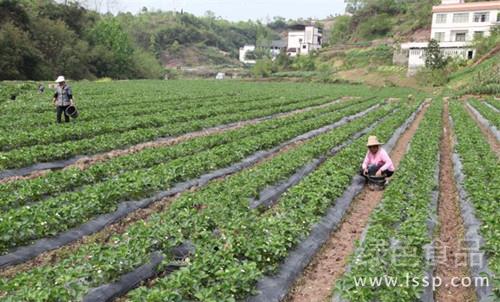
Spring Management of Strawberries
1. Timely cultivation and clearing of old leaves. After spring begins, cultivate and weed in time, but cultivate shallowly, and strictly prevent clods of soil from burying the crown of the plant. Also clear the drainage ditches to avoid waterlogging damage. At the same time, remove the old leaves, dead leaves and diseased leaves of the strawberries to prevent the spread of pathogens.
2. Fertilize promptly to promote early growth. After a winter of dormancy, when spring returns and temperatures rise, strawberries begin to grow. Timely topdressing can promote early growth, quickly form new leaf area, increase the number of effective flowers and raise the fruit-setting rate. Because strawberry roots are shallow and sensitive to fertilizer, avoid chemical fertilizers such as ammonium bicarbonate and ammonium sulfate. Quick-acting nitrogen fertilizer such as urea, compound fertilizer and diluted manure should be the main choices. The application rate is 5-6 kg of urea per mu, 20-25 loads of diluted manure and 10-15 kg of compound fertilizer. Combine fertilization with one watering. During the flowering and fruiting period, spray 0.2% potassium dihydrogen phosphate on the leaves 2-3 times, which significantly improves quality and increases yield.
3. Do a good job of removing and covering the film in time. When the daily average temperature stabilizes at around 10°C, remove the film of the small arched tunnel at noon and cover it again in the morning and evening. Do a good job of hardening the seedlings to prevent sudden excessive temperature differences from affecting strawberry growth.
4. Thin buds and flowers to improve quality. After the strawberry's new stems produce inflorescences, each inflorescence has 10-30 flowers. Too many flower buds lead to insufficient nutrient supply, weak growth and an increase in small and deformed fruit. Therefore, after budding, thin out the thin and small flower buds, and during full bloom also do a good job of flower thinning so that nutrients are supplied for the growth of large fruit and the weight of individual fruit is increased. For bud and flower thinning, keep 2-3 inflorescences per plant, and it is appropriate to leave 3-5 strawberries per inflorescence.
5. Check frequently to prevent and control pests and diseases. Strawberry plants are short and grow prostrate on the ground, and their flowering and fruiting period is long, making it easy for them to come into contact with the ground. At the same time, there is a lot of spring rain and high field humidity, making them prone to pest and disease damage, so comprehensive measures must be taken. Diseases include viral disease, yellows, gray mold, bud blight, powdery mildew, snake-eye disease, etc. In early spring, spraying 200-fold Bordeaux mixture or 2000-fold thiophanate-methyl, zineb, phosethyl-Al and other pesticides, or spraying with 50% carbendazim 500-fold solution, can also effectively control the diseases. Treating the soil with phoxim or diazinon can control underground pests. If red spider mites are found, they can be killed by spraying 3000-fold Kelmante solution. It should be noted that during the fruit-picking period, pesticides must be prohibited to strictly prevent poisoning.