Key Technical Points for Spring Management of Hongyang Kiwifruit
Hongyang kiwifruit, whose fruit core resembles the sun, is a red-fleshed, very early-maturing variety. In recent years it has become quite popular among growers and has been widely introduced. But without scientific management methods, there will be no expected benefits. Therefore, the cultivation and management of kiwifruit every spring must be carried out well.
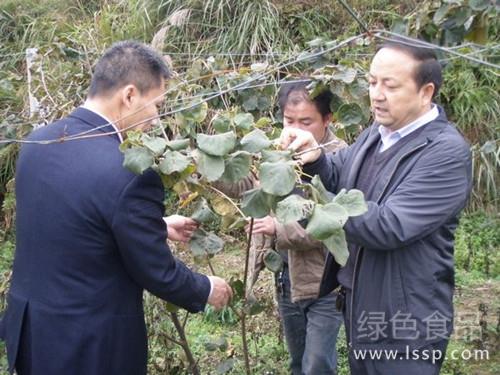
Spring management of Hongyang kiwifruit
(1) Timely watering. Hongyang kiwifruit has a particularly high water requirement in spring, to meet the needs of bud break, shoot growth, leaf expansion, flowering and fruit set. When field water content falls below 75-80%, watering must be done promptly. At the same time, pay attention to waterlogging prevention and drainage, and clear the ditches and channels in the orchard to avoid water accumulation in the orchard.
(2) Spring fertilization. On the basis of applying sufficient autumn base fertilizer, apply one spring fertilizer 15 days before kiwifruit bud break, combined with irrigation, depending on tree vigor, tree age, soil fertility and water content, mainly with quick-acting fertilizer, with the required nitrogen-phosphorus-potassium ratio of 4:2:1. Apply 150—200 g urea, 250 g superphosphate and 100—150 g potassium chloride per plant, and water 80—120 kg per plant. When the seedlings sprout, topdressing with bud-break fertilizer is crucial, as it can promote more and better spring shoots. For adult trees, topdress per plant: 150-200 g urea, 400-500 g superphosphate, 100-150 g potassium chloride.
(3) Pruning of young seedlings. For seedlings planted in spring, select and retain 2—3 plump, robust buds above the grafting interface and cut back, finishing pruning before bud break.
(4) Thinning flower buds. Hongyang kiwifruit has a high flower formation rate, and early bud thinning can save nutrients. Begin thinning buds when the buds grow to the size of a pea, and combine bud thinning with pruning and branch thinning. Before thinning branches, first distinguish fruiting branches from vegetative branches. Branches that grow on fruiting mother branches and can flower and bear fruit are called fruiting branches; branches that do not flower or bear fruit are called vegetative branches. Flower-bud branches with few or no leaves, buds and small branches on the trunk, the first and last flower buds on fruiting branches, and diseased or pest-damaged flower buds should all be removed.
(5) Flowering period management. The flowering period is about mid-to-late April. Hongyang kiwifruit is difficult to self-pollinate, so artificial supplementary pollination is recommended. Artificial pollination can use the dry powder method or the liquid method. In the dry powder method, after 8 a.m. use a cotton ball or chicken feather brush to pick up the prepared pollen and lightly dab it on the stigmas of female flowers. Each dip can pollinate 5—10 flowers. Liquid pollination method: mix glucose:borax:water at 5:3:2:20, stir well, and let the pollen fully suspend in the water; the operation method is the same as above. In spring-drought areas, the liquid method is recommended. 3—5 days before pollination, buds and flowers can be thinned according to the load; at full bloom, spray the leaves with Guaguo Zhuangdiling liquid to increase nutrient transport and self-regulate nutrient balance.
(6) Pest and disease control. ① Hongyang kiwifruit has weak resistance to canker disease. In addition to strengthening tree management and enhancing resistance, promptly spray insecticide + Hushu Jiangjun before and after spring bud break to prevent pests from biting the bark and shoot tips and to prevent disease invasion. If it has already occurred and the condition is severe, cut off the diseased branches and burn them. Then spray Hushu Jiangjun over a wide area so that it forms a protective film, suffocating and killing pathogens, and preventing re-infection. ② For root rot and root decay, in winter and spring root irrigation can be used to kill pathogens in the soil, and during the growing season the method of digging soil and exposing roots can be used to control soil-borne pathogens. ③ Hongyang has weak pesticide resistance, so when spraying pesticides and foliar fertilizers, the concentration should not be too high.
In short, the whole year's work depends on a good start in spring. Only by doing a good job in spring management can a solid foundation be laid for a high yield of Hongyang kiwifruit.