How to prevent and control the degeneration, weakening and disappearance of black fungus (wood ear mushroom) mycelium?
During the mycelium incubation period, black fungus sometimes shows mycelium regression, that is, when the mycelium grows to the middle or lower-middle part of the substrate, starting from the surface of the substrate, the mycelium gradually weakens and even disappears. What causes wood ear mycelium regression? How should it be prevented and controlled?
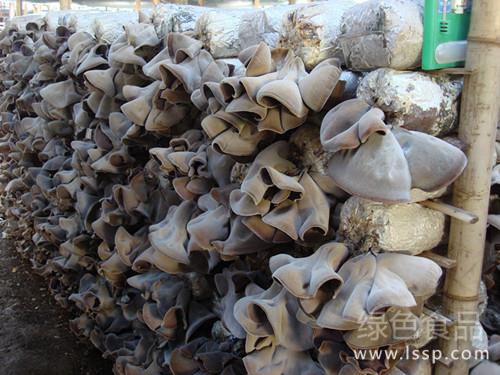
Wood ear mushroom
I. Improper raw material ratio:
The raw materials for cultivating black fungus are wide-ranging, but different nutritional combinations lead to different cultivation results. If softwood sawdust such as poplar, willow, paulownia and toon, and soft stalks such as millet straw, rice straw (husk) and sorghum husk account for too large a proportion of the substrate, the culture material is nutritionally deficient or produces inhibitory odors, causing mycelium that barely survives to subsequently die, that is, mycelium regression. Therefore, when cultivating, the main materials should as far as possible be low shrubs such as oak, birch, hazel and nanmu, and cottonseed hulls; when adding softwood sawdust or soft stalks, do not exceed the formula proportion.
II. Too loose filling:
Filling too loosely not only easily causes separation between the bag and the material, but also leads to mycelium regression. The reason is that the gaps between the material are large, there is a lot of aerial mycelium, and aerial mycelium has poor anti-aging ability and is very prone to aging and dying, which causes the substrate to shrink and soften, resulting in mycelium regression.
III. Culture material too dry:
When the water content of the culture material is 60%-65%, the mycelium grows well. If it is below 53%, the anti-aging ability of the mycelium declines. The mycelium is weak, grows slowly, and shrivels and ages as it grows, resulting in mycelium regression. During cultivation, the water content should not be too low; after piling and fermenting, measure the water content, and pre-mix large-particle raw materials in advance to avoid the "false water" phenomenon affecting the water content measurement.
IV. Overheating during mycelium incubation:
Mycelium regression in autumn-crop wood ear is mostly caused by excessively high temperatures during the mycelium incubation period. Excessive temperature causes dehydration of the mycelial cells and denaturation of the fungal proteins, leading to aging and death. The mycelium gradually turns yellow from the surface of the substrate downward and is accompanied by exudation of yellow liquid; the substrate softens, and even if this part is cut open, it is difficult for fruiting bodies to emerge. Therefore, do not exceed the temperature limit during the mycelium incubation period. Pay constant attention to the temperature difference between the culture environment and the inside and outside of the bag, and accurately monitor the mycelial temperature.
V. Insufficient ventilation and oxygen supply:
Black fungus is an aerobic fungus and requires oxygen at every growth stage, especially after the middle stage of mycelium incubation, when oxygen demand increases. At this time, ventilation and oxygen supply should be strengthened; otherwise, the mycelium grows weakly, has poor decomposition ability, accumulates little internal energy and is prone to aging, leading to mycelium regression. Spring-crop wood ear often emphasizes heat preservation and warming while neglecting ventilation and oxygen supply, causing mycelium regression.
VI. Aging of the fungal spawn:
Practice has shown that it is best to subculture the spawn within one month after it has grown well. If the spawn age exceeds four months (under non-low-temperature storage conditions), after inoculation it may still germinate, but it feeds on the substrate slowly and is accompanied by mycelium regression. Therefore, when the wood ear spawn cannot be subcultured immediately after growing well, it should be placed in a low-temperature, dark, dry place to preserve mycelial vigor, so as to avoid aging of the spawn and the mycelium regression after subculturing.