Brussels sprouts have a unique flavor and are highly nutritious; a detailed guide to growing them on a balcony
The balcony is the most unused space in urban homes. To make effective use of it, we can grow some vegetables, which not only adds greenery but also helps fill the family's vegetable basket. Today, the editor will introduce a new type of vegetable to everyone—how to grow Brussels sprouts on a balcony.
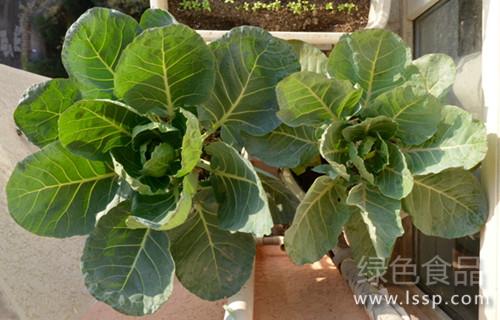
Brussels sprouts
1. Choose suitable varieties according to local conditions. For potted Brussels sprouts, early-to-mid-maturing varieties that mature in 90-100 days are generally used.
(1) Early-bearing: an early-maturing variety, harvested about 90 days after transplanting; it grows vigorously in the early stage, with shorter internodes and a plant height of 50-60 cm; the sprouts are relatively small, 2-2.5 cm in diameter; it is relatively tolerant of high temperatures and forms sprouts at temperatures below 25°C.
(2) Oriental Green: plant height below 85 cm, harvested 90-100 days after transplanting. The sprouts are firm and uniform. The sprout diameter is 3-3.5 cm.
2. Seedling raising methods:
Sow seeds and raise seedlings in early spring under suitable temperature conditions. The soil should be loose and fine. Water thoroughly before sowing, and after sowing cover the seeds with fine soil. When the seedlings grow 2 true leaves, select the strong seedlings and plant them separately in suitable containers.
3. Management methods:
(1) Temperature and light: Brussels sprouts prefer cool conditions, tolerate frost, and do not tolerate high temperatures. The quality is best in autumn when there is plenty of sunlight during the day and light frost at night. Under high temperatures, the small sprouts rot easily, crack, and deteriorate in quality. During the leaf growth stage, a slightly higher temperature is required, and an average of about 20°C is most favorable for growth. When the temperature drops to 5-6°C, leaf growth is inhibited. The heading stage requires a lower temperature; a temperature of 10-13°C is favorable for sprout formation and nutrient accumulation, while temperatures above 23°C are unfavorable for sprout formation.
(2) Fertilizer and water management: after the seedlings are transplanted, water them frequently to ensure the seedlings' water needs. During the growth period of Brussels sprouts, topdressing can be applied 3-4 times; topdressing is needed after transplanting and survival, when the sprouts swell, and during the sprout harvest period. Topdressing can be applied at the roots with urea combined with foliar spraying of a 0.3% potassium dihydrogen phosphate solution. When the lower small sprouts begin to form, irrigate frequently to keep the soil adequately moist.
(3) Other management: after Brussels sprouts are placed in containers, they need support, with the upper part tied securely with string to prevent lodging; remove diseased leaves promptly to reduce water and nutrient consumption. When harvesting, harvest successively from bottom to top; once the sprouts are firm, they can be harvested. Harvesting should not be too late, otherwise the sprouts crack, the texture becomes coarse, and the flavor is lost.
(4) Pest and disease control:
① Disease control: the main diseases of Brussels sprouts include black rot, root rot, sclerotinia rot, downy mildew, soft rot, black spot, and damping-off. Integrated control is needed, such as using disease-resistant varieties, sowing at the proper time, and promptly removing diseased seedlings when found, combined with chemical control. Chemicals include: zineb 500x solution, chlorothalonil 600x solution, Bordeaux mixture, and other fungicides. During periods of high temperature and high humidity, spray once every 7-10 days.
② Pest control: the main pests include cabbage white butterfly, diamondback moth, cabbage aphid, cabbage moth, and cabbage webworm. They can be controlled with imidacloprid 800x solution, chlorfenapyr 1000x solution, and abamectin 1000x solution. Pay special attention to controlling aphid damage, because after aphids invade the small sprouts they are difficult to wash off, seriously affecting the quality and yield of Brussels sprouts, and they also transmit viral diseases.