Spring wheat: beware of late spring cold snaps, as a new round of cold waves brings sharp temperature drops
The high temperatures of the past few days are only an illusion; a new round of cold waves is already on its way. According to weather forecasts, around the 9th our country will experience a large-scale temperature drop. At present, wheat will successively enter the green-up and jointing stages. Everyone is advised to prevent the harm of late spring cold in advance, and once freezing injury occurs, remedy it promptly.
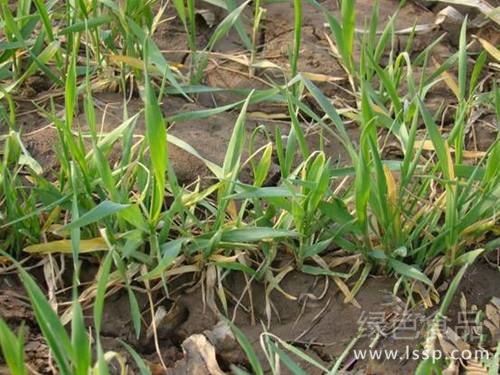
Harm of late spring cold to wheat
1. Harm characteristics:
Late spring cold, also called early spring freezing injury, refers to weather in which, after temperatures rise in spring, a cold wave arrives and temperatures suddenly drop sharply, with the lowest temperature reaching around 0°C. Because winter wheat successively enters the green-up and jointing stages after the Beginning of Spring and its cold resistance declines, when a cold wave arrives, wheat is prone to freezing injury. In mild cases, wheat leaves turn white and dry up, looking at first as if scalded by boiling water; in severe cases, young wheat spikes are frozen, and later no spikes or deformed spikes emerge, wheat grains are missing, the number of grains per spike decreases, and the plants may even die, causing severe yield reduction.
2. Preventive measures
1. Pre-disaster preventive measures: classified management. Provide classified guidance for wheat fields according to seedling conditions and weather, strengthen field management, and improve wheat cold resistance. For wheat fields growing too vigorously, focus on "control", adopting measures such as spraying the plant growth regulator Zhuangfeng'an, pressing, and deep hoeing to inhibit excessive wheat growth, avoid premature jointing, improve cold resistance, and at the same time improve wheat lodging resistance. For vigorously growing wheat fields, the first fertilization and irrigation in spring can be postponed until the late standing-up stage or around jointing. For ordinary wheat fields, adopt "combining promotion and control", first pressing and then shallow intertillage, so as to raise temperature and preserve soil moisture. At the standing-up stage, apply an appropriate amount of topdressing and irrigation to promote tiller growth and strive for more spikes. For fields with weak seedlings, focus on "promotion", try to hoe early to raise soil temperature, increase tillers and promote root development, and note that hoeing should be shallow to avoid damaging roots. After green-up, apply quick-acting nitrogen fertilizer as topdressing according to soil moisture conditions. For weak seedling fields, as long as soil moisture is acceptable, avoid early spring irrigation so as not to lower soil temperature. Topdressing and irrigation are generally carried out in the late green-up stage or early standing-up stage.
Irrigation before freezing: Irrigation before freezing is one of the effective measures to prevent late spring cold. Before the arrival of late spring cold, for wheat fields susceptible to freezing injury, be sure to irrigate promptly. This regulates the microclimate near the ground surface and can significantly reduce freezing injury.
Increase application of organic fertilizer: During the standing-up and jointing stages of wheat, increase the application of organic fertilizer and phosphorus and potassium fertilizers to promote root development, inhibit excessive aboveground growth of wheat seedlings, and enhance cold resistance.
Spray regulators: Before the arrival of late spring cold, spray plant nutrient agents such as Tianda 2116 Zhuangmiao Ling (special type for grain crops) on the leaves, which can improve wheat immunity and disaster resistance and reduce harm.
2. Post-disaster remedial measures:
Timely irrigation and fertilization: Wheat has strong adaptability. For any frozen wheat field, as long as the tillering nodes are not dead, timely remediation can help strive to reduce or avoid yield loss. After suffering disaster, apply quick-acting nitrogen fertilizer promptly to promote early seedling development, more tillering, and large spikes. Generally, apply about 10 kg of urea per mu as topdressing, and irrigate quickly after temperatures rise; or apply 30-40 kg of ammonium bicarbonate per mu as topdressing, and irrigate immediately after fertilization.
Timely spraying of plant growth regulators: Spray "Tianda 2116", urea solution, potassium dihydrogen phosphate, etc. (mixing is prohibited), which can quickly repair the damage caused to wheat by late spring cold, help wheat resume growth, promote the rapid growth of medium and small tillers and the quick sprouting of dormant buds, increase the number of wheat spikes and thousand-grain weight, and reduce yield loss.
Timely hoeing: More hoeing can raise soil temperature, promote early sprouting and rapid growth of dormant buds, effectively increase the number of tillers, and compensate for the loss of main stems.
Do a good job in pest and disease control: Frozen wheat fields are prone to pest and disease damage. Pest and disease conditions should be closely monitored and controlled promptly.