Which pests can imidacloprid control, and how is it used?
What pests can imidacloprid control? What are the methods for using imidacloprid? We also ask knowledgeable netizens to help explain. On the agricultural supply market there are imidacloprid wettable powders, emulsifiable concentrates, dispersible granules, soluble concentrates, etc., but farmers are still not very clear about what imidacloprid specifically does, so Zhongdi Network has compiled...
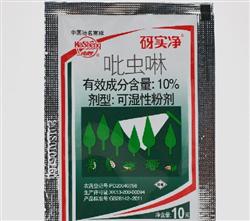 What pests can imidacloprid control? What are the methods for using imidacloprid? We also ask knowledgeable netizens to help explain.
On the agricultural supply market there are imidacloprid wettable powders, emulsifiable concentrates, dispersible granules, soluble concentrates, etc., but farmers are still not very clear about what imidacloprid specifically does, so Zhongdi Network has compiled the insecticidal principle of imidacloprid, the pests it can control and its methods of use, listed in detail below for netizens' reference.
The insecticidal principle of imidacloprid:
Imidacloprid is a new-generation chloronicotinyl insecticide, with the characteristics of broad spectrum, high efficiency, low toxicity, low residue, pests not being prone to developing resistance, and safety to humans, livestock, plants and natural enemies, and it has multiple effects including contact killing, stomach poisoning and systemic action. After pests come into contact with the agent, imidacloprid can interfere with the pest's motor nervous system and make chemical signal transmission fail, can rapidly kill insects after paralyzing their nerves, and after imidacloprid is applied there is already relatively high control efficacy after 1 day, with a residual period of as long as about 25 days. At high temperatures the insecticidal effect is better.
The insect pests that imidacloprid can control:
Imidacloprid can effectively control piercing-sucking mouthpart pests such as aphids, planthoppers, leafhoppers, thrips, whiteflies, rice beetles, wheat blossom midges, leafminer flies, rice leaf beetles, leafminer moths, etc., and also has relatively good control effects on Diptera and Lepidoptera pests, but it is ineffective against nematodes and red spider mites.
Methods of using imidacloprid:
1. For controlling rice planthoppers, leafhoppers, thrips, aphids, rice beetles, etc., use 15~20 grams of 10% imidacloprid wettable powder per mu, dilute with water and spray evenly on rice.
2. For controlling wheat aphids and blossom midges, use 15~20 grams of 10% imidacloprid wettable powder per mu, dilute with water and spray evenly on wheat.
3. For controlling vegetable pests such as aphids, whiteflies, thrips and leafminer flies, use 10~15 grams of 10% imidacloprid wettable powder per mu, dilute with water and spray evenly on the plants.
4. For controlling aphids at the cotton seedling stage, use 10~15 grams of 10% imidacloprid wettable powder per mu, dilute with water and spray evenly on cotton seedlings.
5. For controlling fruit tree pests such as leaf-curling aphids, green peach aphids and yellow aphids, use 15~20 grams of 10% imidacloprid wettable powder per mu, dilute with water and spray evenly on the branches and trunks of fruit trees.
Precautions and pre-harvest intervals for imidacloprid:
Note 1: Imidacloprid cannot be mixed with alkaline pesticides.
Note 2: Imidacloprid is highly toxic to beneficial insects such as silkworms and honeybees.
For fruit trees, vegetables and rice, use 10% imidacloprid wettable powder at most 2 times, with a pre-harvest interval of 14 days.
For wheat, use 10% imidacloprid wettable powder at most 2 times, with a pre-harvest interval of 20 days.
For tea trees, use 10% imidacloprid wettable powder at most 2 times, with a pre-harvest interval of 7 days.
For fruit trees, use 10% imidacloprid emulsifiable concentrate at most 2 times, with a pre-harvest interval of 20 days.
How is omethoate used?
Methods of using carbosulfan