Can acetochlor be used for weed control in cotton fields?
Can acetochlor be used for weed control in cotton fields? What should be noted when spraying acetochlor in cotton fields? We also ask netizens who have used it to help explain. Acetochlor is a widely used herbicide, one of the most important herbicide varieties in the world today, and also one of the herbicides with the largest usage volume in our country at present. Acetochlor is effective against crabgrass,...
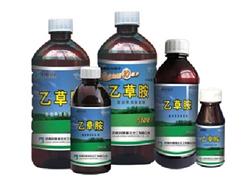 Can acetochlor be used for weed control in cotton fields? What should be noted when spraying acetochlor in cotton fields? We also ask netizens who have used it to help explain.
Acetochlor is a widely used herbicide, one of the most important herbicide varieties in the world today, and also one of the herbicides with the largest usage volume in our country at present. Acetochlor has a special effect on annual grass weeds such as crabgrass, foxtail, goosegrass, barnyardgrass, moleplant, shortawn foxtail, wild oat, bluegrass, hard grass, and lovegrass, and can be used on corn, cotton, beans, peanuts, potatoes, rapeseed, garlic, tobacco, sunflower, castor, scallion, and so on. Zhongdiwang has compiled the points to note when applying acetochlor for weed control in cotton, and they are listed in detail below for netizens' reference.
Note 1,When spraying, the dosage and water volume should be calculated well; do not spray repeatedly or miss spots. When using acetochlor for weed control, the spraying operation should be completed in one go, neither spraying repeatedly nor missing spots. Especially at the field edges and corners, the spraying quality must be strictly controlled to ensure the spraying effect. It is strictly forbidden to use acetochlor after applying trifluralin, so as to avoid phytotoxicity and unnecessary waste.
Note 2,When using acetochlor for weed control in cotton fields, do not use low-volume spraying. The main mechanism is to form a film of herbicide on the soil surface, so that weeds absorb the agent when they emerge and then die. If the spray volume is too small, a uniform herbicide film cannot form on the soil surface, which affects the weed control effect. Generally, the spray liquid volume is 30-45 kg per mu, and when the soil is dry, the spray liquid volume should be appropriately increased.
Note 3,After spraying acetochlor in cotton fields, do not destroy the herbicide film. Do not carry out tillage or trample, so as to avoid damaging the herbicide film and reducing the effect. After spraying, mulch should be applied promptly to protect the soil surface herbicide film and improve the weed control effect. Special attention should be paid to the fact that mixing soil is strictly forbidden after using acetochlor.
Note 4,For cotton fields, acetochlor is generally used at 80-100 grams per mu; do not blindly increase the dosage. For sandy soil, use the lower limit; for clay soil, use the upper limit. Do not blindly increase the dosage, otherwise phytotoxicity is likely to occur.
How to prevent glyphosate phytotoxicity
What weeds can bentazone herbicide control?