What are soil-dwelling pests? Common species explained clearly in one go
What are soil-dwelling pests? What do the damage symptoms look like? We ask knowledgeable readers to help explain. Soil-dwelling pests generally refer to pests that live in the soil for their whole life or for a certain stage of their life, mainly feeding on the underground parts of crops, seeds, seedlings or the main stem near the soil surface, causing affected crops to wilt and grow slowly...
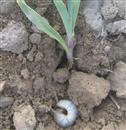 What are soil-dwelling pests? What do the damage symptoms look like? We ask knowledgeable readers to help explain
Soil-dwelling pests generally refer to pests that live in the soil for their whole life or for a certain stage of their life, mainly feeding on the underground parts of crops, seeds, seedlings or the main stem near the soil surface, causing affected crops to wilt and grow slowly, and in severe cases causing crops to dry up and die, resulting in missing plants and broken rows that lead to reduced yield. Therefore, Zhongdiwang has compiled common soil-dwelling pests, such as the damage caused by white grubs, click beetles (wireworms), cutworms, mole crickets and root maggots, listed in detail below for readers' reference.
1. Damage caused by white grubs to crops:
White grubs, also called Zhuangdi worms or Dilouzi, are the larvae of scarab beetles. They are the largest group among soil-dwelling pests in terms of species number, widest distribution and most severe damage. The more common ones include the black chafer (Holotrichia parallela), the copper-green chafer (Anomala corpulenta) and the dark black chafer (Holotrichia morosa).
The crops mainly damaged by white grubs include millet, sorghum, wheat, beans, peanuts, sugar beet, cotton and other field crops, as well as the seeds, seedlings and roots and stems of vegetables and fruit trees. They bite the seeds or bite through the roots and stems of seedlings, causing missing plants and broken rows in mild cases, and destroying the whole crop with no harvest in severe cases, not only causing reduced yield, but also making it easy for pathogens to invade after feeding.
The adult white grubs emerge from the soil and become active in the evening, being most active from 20:00 to 21:00 and gradually decreasing after 22:00. The adult white grubs have weak phototaxis; generally the number of insects attracted under a light trap accounts for only about 0.2% of the actual number of insects in the field. Moreover, adult white grubs play dead, immediately dropping to the ground and feigning death when disturbed or startled. They are weak fliers, and their range of activity is generally mainly around the source of the insects, concentrated mainly in non-cultivated land such as field edges, ditch edges or field corners. They like to feed on the leaves of poplar, soybean, peanut and other crops, and they lay their eggs in fields near these trees or in cultivated land. Click to view >>Control methods for white grubs
2. Damage caused by click beetles (wireworms) to crops:
Wireworms, also called Jiejie worms or iron wire worms, are the larvae of click beetles and are relatively common in farmland. The species of wireworms include the groove wireworm (Pleonomus canaliculatus), the slender wireworm (Agriotes fuscicollis), the brown-striped wireworm (Agriotes lineatus) and the broad-backed wireworm (Selatosomus latus). Generally the most serious damage is caused by the groove wireworm.
Because adult wireworms do not spend long active above ground and can only eat the tender leaves of some cereal and legume crops, their damage is not so serious. But wireworm larvae live in the soil for a long time and often damage corn, wheat, sugar crops, cotton, beans and various vegetables and tree seedlings. Wireworms mainly bite the sown seeds and feed on the endosperm, preventing crop seeds from germinating; wireworms also bite the fibrous roots of crop seedlings, causing poor growth or even death of the crops; wireworms generally rarely damage the main root of crop seedlings, and roots damaged by wireworms are irregular and thread-like, which is the typical damage symptom caused by wireworms. Moreover, wireworms can also bore into tubers or root tubers, which facilitates the invasion of pathogens and causes rot. Click to view >>Control methods for wireworms
3. Damage caused by cutworms to crops:
Cutworms, also called soil silkworms, root-cutting worms or night thief worms, are the larvae of noctuid moths. Cutworms can damage many food crops, such as cotton, vegetables, tobacco, Chinese medicinal herbs, fruit trees and so on. Young cutworm larvae can feed on the cotyledons, tender leaves and tender stems of crops both day and night. After the 3rd instar they hide by day and come out at night, and older cutworm larvae can bite through the part of the seedling near the soil surface, causing missing plants and broken rows or even destroying the crop and requiring replanting. Click to view >>Control methods for cutworms
4. Damage caused by mole crickets to crops:
Mole crickets, also called Lalagu or Ligū, are the most active soil-dwelling pests. Mole crickets mainly bite the seeds and seedlings of various crops, and especially like to feed on freshly sprouted seeds, causing serious missing plants and broken rows. Moreover, mole crickets are good at crawling on the soil surface, scurrying back and forth and making crisscrossing tunnels, which causes seeds to be lifted off the soil and unable to germinate, and seedlings to have their roots exposed and dry up and die from water loss.
Mole crickets generally hide by day and come out at night, with peak activity or feeding from 21:00 to 23:00. Mole crickets have strong phototaxis and chemotaxis. Black light traps can be used to attract large numbers of Oriental mole crickets (Gryllotalpa orientalis) on moonless, windless, muggy nights. Mole crickets have a strong attraction to substances with a fragrant or sweet taste, and are fond of eating half-cooked millet, cottonseed, roasted soybean cake, wheat bran and so on.
5. Damage caused by root maggots to crops:
Root maggots, also called soil maggots or seed maggots, are the larvae of the seed fly, onion fly, cabbage fly, small radish fly and wheat bulb fly. Root maggots mainly damage cotton, corn, tuber crops, beans, cucurbits, cruciferous vegetables, spinach, onions, garlic and other crops.
Root maggot larvae often bore into seeds or seedling stems, or feed inside the root stem from bottom to top, causing the whole plant to die and resulting in missing plants and broken rows. Root maggot pupae generally overwinter in the soil. Adult root maggots like to feed on nectar and decaying matter and often lay eggs on manure. When unrotted manure or poorly fermented cake fertilizer is applied in the field, root maggots often occur severely. Adults can also lay eggs on moist soil, in soil cracks or on the leaves of crops near the ground. After hatching, the larvae bore into the soil to move about and cause damage, and they like to live in humid environments. After maturing they pupate in the soil near the damaged plant. When the temperature exceeds 35°C, it is unfavorable to the survival of eggs, larvae and pupae.
What is carbofuran
What are the specific-effect pesticides for soil-dwelling pests
Related Articles
- How to Use Glyphosate Herbicide and Its Soil Residual Period
- What are some practical ways to improve the effectiveness of pesticides?
- What are the precautions for using plant growth regulators?
- Key Management Points After Using Plant Growth Regulators
- What are the advantages of plant growth regulators?
- Why is the pesticide effect poor after application?
- How to use insecticides for the best results? A detailed guide to the correct method of use
- Detailed Explanation of Plant Growth Regulator Application Methods