How to use herbicides in cornfields for good results
How should herbicides be used in cornfields? Which weeding methods can be used in cornfields? Experienced netizens are also asked to help explain. With the continuous development of the breeding industry, the demand for corn is also increasing day by day, corn planting has gradually entered large-scale production, and weed control techniques in cornfields have also become diversified. Therefore, Zhongdiwang has compiled...
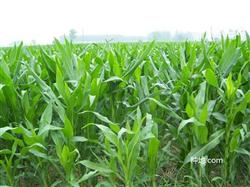 How should herbicides be used in cornfields? Which weeding methods can be used in cornfields? Experienced netizens are also asked to help explain
With the continuous development of the breeding industry, the demand for corn is also increasing day by day, corn planting has gradually entered large-scale production, and weed control techniques in cornfields have also become diversified. Therefore, Zhongdiwang has compiled several weeding methods for cornfields, listed in detail below for netizens' reference.
Method 1, Soil sealing weeding method:
Soil sealing weed control technology has always been the main method used in cornfield weed control. A single application before weeds emerge can effectively control weed damage throughout the entire growth period of corn. The key points for using soil sealing weed control technology are as follows:
1. Correctly select herbicide varieties: choose varieties with characteristics such as being new, safe, efficient, low-toxicity, and low-residue.
2. Time of use: after corn sowing and before emergence, or in the early stage after corn emergence. During this period, weeds are at the emergence stage and are easily killed by contact with the herbicide. Spraying after weeds have emerged will make the effect less ideal.
3. Dosage: use the commonly used amount according to the dosage recommended in the instructions. However, for plots with higher wheat stubble after mechanical harvesting, the amount can be appropriately increased. It is strictly forbidden to burn wheat stubble, to prevent the burned wheat ash from reacting with the herbicide and reducing its efficacy.
4. Method of use: it is best to use it when field humidity is relatively high after watering or rainfall. It is best to irrigate immediately after corn sowing, and spray 2-3 days after irrigation. When mixing the herbicide, shake it thoroughly and evenly, then calculate the amount according to the area to be treated and measure it accurately. When spraying, in order not to damage the herbicide film, walk backward and spray while retreating.
Precautions for soil sealing weed control in cornfields:
First, it is best to use a sprayer, with sufficient water for mixing, and spray evenly. Do not spray repeatedly or miss areas, and avoid spraying in windy weather;
Second, it should not be used when corn has just emerged, in corn seed production fields, or on sandy soil, to avoid herbicide damage;
Third, after spraying, a herbicide film forms on the soil surface. Do not cultivate the soil and destroy the herbicide film;
Fourth, spraying is best done before 10 a.m. or after 4 p.m., to avoid evaporation of the herbicide solution or damage to the herbicide film;
Fifth, if heavy rain occurs within 24 hours after application, respray in time;
Sixth, for plots with many purple nutsedge (that is, Cyperus rotundus), effective agents should be selected in the later stage for directed spraying control;
Seventh, after spraying, promptly clean the spraying equipment with alkaline water to avoid harming other crops.
Method 2, Stem and leaf spray weeding method:
Generally, apply the herbicide at the 3-5 leaf stage of corn and the 3-5 leaf stage after weeds emerge. For summer cornfields in North China, use 1500 milliliters of 38% atrazine plus 60 grams of 25% Baocheng per hectare; for spring cornfields in Northeast China, use 2250 milliliters of 38% atrazine plus 75 grams of 25% Baocheng per hectare, add 450 liters of water, and spray evenly. If 0.1%-0.2% non-ionic surfactant or neutral laundry detergent is added to the spray liquid, the weeding effect can be improved.
At the 3-5 leaf stage after corn emergence, the 1-2 leaf stage of monocotyledonous weeds, and the 2-4 leaf stage of dicotyledonous weeds, per hectare you can use 3000-3750 milliliters of 40% acetochlor-atrazine aqueous suspension emulsion, or 1200-1500 milliliters of 4% nicosulfuron aqueous solution, or 3000 milliliters of 50% acetochlor-atrazine mixture, or 2250 milliliters of 38% atrazine suspension concentrate plus 1800-2250 milliliters of 48% alachlor emulsifiable concentrate, or 2250 milliliters of 38% atrazine suspension concentrate plus 1500 milliliters of 33% pendimethalin emulsifiable concentrate, or 2250 milliliters of 38% atrazine suspension concentrate plus 900 milliliters of 4% nicosulfuron aqueous solution. Or 1800 milliliters of 38% atrazine suspension concentrate plus 300 milliliters of 48% dicamba aqueous solution, add 750 kilograms of water, and spray evenly.
If broadleaf weeds are severe in the cornfield, at the 4-6 leaf stage of corn, use 15 grams of 75% tribenuron-methyl (broadleaf net) dry suspension concentrate per hectare. Or 15 grams of 75% thifensulfuron-methyl (broadleaf dispersible), or 375-450 milliliters of 48% dicamba aqueous solution, or 750 milliliters of 72% 2,4-D butyl ester emulsifiable concentrate, or 1200-1500 milliliters of 22.5% bentazone emulsifiable concentrate, or 750-900 milliliters of 20% fluroxypyr emulsifiable concentrate, add 450 liters of water, and spray evenly.
If weed infestation occurs in the middle and late stages of corn growth, use 3 liters of 20% Yibahuo aqueous solution per hectare, or 9-12 liters of 10% glyphosate aqueous solution, or 3-4.5 liters of 41% Yibashou aqueous solution plus 450 liters of water. Add a protective hood to the nozzle and spray directionally at the weeds, trying to avoid spraying the herbicide solution onto corn stems and leaves.
Method 3, No-till weeding method:
The tank-mix agent made from acetochlor-atrazine mixture and Nongminle is an ideal herbicide for no-till cornfields with stubble. This agent has a broad weed-killing spectrum and significant efficacy. It can not only control all weeds that have already emerged, but also control or suppress annual grass and broadleaf weeds propagated by seed that have not yet emerged; it has a long residual effect, and one application can ensure that the entire growing season is free from weed damage, and it is also safe for the current and subsequent crops.
After wheat harvest and before corn sowing, use 2250-3000 grams of 40% acetochlor-atrazine mixture plus 600-900 grams of 74.7% Nongminle per hectare, mix with 450 liters of water, keep the nozzle height 30 cm above the weeds, and spray evenly.
Method 4, Plastic film mulching weeding method:
In spring corn areas where the temperature is relatively low and drought occurs, cornfields often use plastic film mulching cultivation technology to increase soil temperature and preserve soil moisture, so as to promote rapid emergence and growth of corn. Because the temperature inside the plastic film is high and the humidity is high, it is very conducive to the herbicide's efficacy. Therefore, compared with open-field application, a lower herbicide dosage (generally reduced by 1/4-1/2 compared with the conventional amount) can achieve a very good weeding effect.
Per hectare, you can use 1800-2250 milliliters of 40% acetochlor-atrazine aqueous suspension emulsion, or 750-1050 milliliters of 50% acetochlor emulsifiable concentrate, or 900-1200 milliliters of 72% metolachlor emulsifiable concentrate, 600-750 milliliters of 90% Harness emulsifiable concentrate, or 2250 milliliters of 48% alachlor emulsifiable concentrate, or 1500-2250 milliliters of 33% pendimethalin emulsifiable concentrate. After corn sowing and compacting, add 450-750 liters of water, spray evenly, and then cover with film and seal the soil. If applying herbicide in bands along the seedling row, calculate the dosage according to the actual treated area.
What is paraquat?
Methods for improving the efficacy of glyphosate