What is plant antifreeze, and how should it be used?
What is plant antifreeze? How is it used? Please give an introduction. The role of plant antifreeze: the main role of plant antifreeze is to improve the cold resistance and low-temperature resistance of crops and various fruit trees and nursery stock, and their resistance to late-spring cold snaps, effectively preventing early and late frost attacks and avoiding or reducing frost damage. For frostbitten plants, it can quickly restore tree vigor and restore the normal growth and repair function of crops.
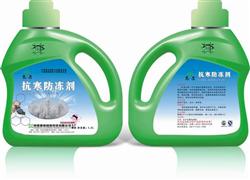 What is plant antifreeze? How is it used? Please give an introduction.
The role of plant antifreeze:
The main role of plant antifreeze is to improve the cold resistance and low-temperature resistance of crops and various fruit trees and nursery stock, and their resistance to late-spring cold snaps, effectively preventing early and late frost attacks and avoiding or reducing frost damage. For frostbitten plants, it can quickly restore tree vigor and restore the normal growth and repair function of crops.
The principle of plant antifreeze:
When the atmospheric temperature drops below 0 degrees Celsius, some plants freeze to death because they cannot withstand the severe cold, while other plants can stand proudly in the ice and snow, full of vitality. This is because different plants differ significantly in their freezing resistance.
The biomembrane system within plant cells is closely related to plant freezing resistance; when plants encounter low temperatures, the biomembrane undergoes a phase change, that is, from a liquid crystal phase to a gel state, and the structure of the membrane is destroyed. As a result, non-lipid "holes" with relatively high permeability form on the plasma membrane, becoming channels through which many electrolytes pass freely in and out, and the sol in the cytoplasm is therefore discharged in large amounts, ultimately causing plant death.
Plant antifreeze can enhance the ability of crop cytoplasmic membranes to control electrolyte leakage. At the same time, plant antifreeze contains proline, and proline has relatively strong hydrophilicity and has the effect of stabilizing protoplasmic colloids and preventing and easing protein denaturation after cell dehydration. Therefore, when the proline content increases, the plant can better adapt to adverse environments such as low temperatures. Plant antifreeze can also increase the sugar content of crops, which has a more positive cold-protection effect, and regulates the functions of fruit trees, promotes metabolism, and restores vitality.
The best time to apply plant antifreeze:
The best time to apply plant antifreeze is in late autumn, early winter, and during late-spring cold snaps in spring. Use it when the temperature is 10-15 degrees, spraying once every 7 days, for 2-3 consecutive applications. Use it 3-5 days before a cold wave arrives. Dilute 150-200 times for spraying, and 300-400 times for root drenching.
Application methods for plant antifreeze:
1. Spraying period of antifreeze from the perspective of absorption function: the absorption function of all plants, apart from the roots, lies in the leaves and trunk above ground. The absorption function of leaves accounts for more than 95% of the absorption capacity of the above-ground part. Therefore, if drugs or fertilizers are sprayed on the tree body, they must be sprayed before leaf fall in autumn for the effect to be good. In particular, they must be used before the leaves turn yellow. After the leaves naturally turn yellow, not only do the leaves no longer have absorption function, but an abscission layer will also form at the growth point where the petiole connects to the branch. Even if the leaves absorb the liquid medicine or fertilizer liquid, it cannot be transmitted and transported into the tree body, and ultimately it will likewise fail to produce the proper effect.
2. Before leaf fall in autumn is a key period for the formation and accumulation of plant dry matter. At this time, spraying antifreeze 2-3 times can greatly promote the accumulation of sugars and dry matter, thereby enhancing the freezing resistance of plants.
3. Spraying from September to before leaf fall: various liquid medicines and fertilizer liquids all require a process of absorption and transformation, and the transformation of the liquid medicine requires the respiration and photosynthesis of plant leaves. From September to before leaf fall is exactly the time when the leaves are green, alive, capable of transformation, and able to carry out photosynthesis, so this time is the best time to spray antifreeze!
What is ningnanmycin?
The role of ethephon
ClickGet more regulator application techniques