A Detailed Explanation of the Effects and Usage Methods of Trichlorfon
What are the effects and usage methods of trichlorfon? What should be noted when using trichlorfon? We ask netizens who know about it to help explain. In the agricultural input market, trichlorfon insecticides are often seen as 30% and 40% emulsifiable concentrates or 50% and 80% soluble powders, but many netizens are not very familiar with the effects and usage methods of trichlorfon...
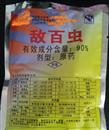 What are the effects and usage methods of trichlorfon? What should be noted when using trichlorfon? We ask netizens who know about it to help explain.
In the agricultural input market, trichlorfon insecticides are often seen as 30% and 40% emulsifiable concentrates or 50% and 80% soluble powders, but many netizens are not very familiar with the effects and usage methods of trichlorfon. Therefore, Zhongdi Website has compiled the insecticidal effects of trichlorfon and the methods for controlling pests, listed in detail below for netizens' reference.
The effects of trichlorfon:
Trichlorfon mainly has a strong stomach-poison effect on pests and also has a contact-poison effect on pests; trichlorfon has penetrative properties in plants but no systemic translocation effect. Trichlorfon can be used on rice, wheat crops, vegetables, fruit trees, cotton and other crops to control pests with chewing mouthparts, as well as livestock parasites and sanitary pests. Here it is mainly directed at use in agricultural planting.
Usage methods of trichlorfon:
1. For controlling pests such as the rice stem borer, rice leafminer, rice hispa, rice skipper, rice leaf roller, and rice planthopper: use 150-200 grams of 80% trichlorfon soluble powder per mu, mix with 75-100 kilograms of water and spray on rice for control. The pre-harvest interval for using trichlorfon on rice should be greater than 7 days.
2. For controlling young larvae such as inchworms, hawk moths, leaf roller moths, whiteflies, sawflies, meadow moths, weevils, jasmine leaf borers, leafminers, tussock moths, slug moths, tiger moths, armyworms, mulberry caterpillars, swallowtail butterflies, and longhorn beetles: use 90% trichlorfon crystals, dilute with water at 1000 times for spray control.
3. For controlling pests such as tobacco budworm, yellow squash beetle, and striped flea beetle on vegetables: use 80-100 grams of 80% trichlorfon soluble powder per mu, mix with 75-100 kilograms of water for spray control. The pre-harvest interval for using trichlorfon on vegetables should not be less than 7 days.
4. For controlling onion maggots, radish maggots, and cabbage maggots: use trichlorfon diluted with water at 1000-1500 times for root drenching control.
Precautions for trichlorfon:
1. Trichlorfon is not easily absorbed by human skin and has little impact on most beneficial insects and natural enemy insects of pests, but it is toxic to bees.
2. After dilution, trichlorfon solution should not be left standing for too long and should be prepared and used immediately.
3. Corn and apples are relatively sensitive to trichlorfon, so attention should be paid when applying trichlorfon to corn and apples.
What are the effects of chlorantraniliprole
What are underground pests?