What effects do plant growth regulators have on crops?
What effects do plant growth regulators have on crops? What results can be achieved by using plant growth regulators? We also ask knowledgeable readers to help explain. Plant growth regulators refer to a class of pesticides used to regulate plant growth and development, including artificially synthesized compounds and natural plant hormones extracted from organisms. Zhongdi Network...
 What effects do plant growth regulators have on crops? What results can be achieved by using plant growth regulators? We also ask knowledgeable readers to help explain.
Plant growth regulators refer to a class of pesticides used to regulate plant growth and development, including artificially synthesized compounds and natural plant hormones extracted from organisms. Zhongdi Network has compiled the six main effects of plant growth regulators, listed in detail below for readers' reference.
Effect one, breaking plant seed dormancy to promote germination:
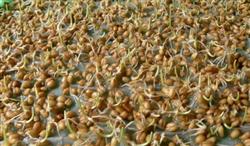
For example, freshly harvested seeds, immature seeds, seeds from poor environmental conditions at maturity and harvest, and seeds stored poorly or for too long may have low germination rates or fail to germinate, emerge slowly, or produce weak seedlings, thereby affecting the emergence rate and increasing the amount of seed used. Applying gibberellin and other treatments to seeds can break dormancy, promote sprouting, increase the seed germination rate, and make seedlings emerge early and strong.
Effect two, increasing tillering and promoting rooting in crops, and cultivating short, sturdy seedlings:
For example, growth retardants help overcome the effects of adverse environmental conditions, delay seedling growth, and form short, sturdy seedlings. Paclobutrazol, chlormequat, and others have a good effect on cultivating strong seedlings, and the main application methods are seed treatment and foliar spraying at the seedling stage.
Effect three, promoting grain filling and plumpness in plants:
For example, in production, auxin, gibberellin, cytokinin, and other plant growth regulators are often applied to promote full grain filling in rice and wheat. For instance, spraying cytokinin, yield-increasing agents, and other growth regulators on rice and wheat at the booting, flowering, and filling stages can, to varying degrees, enhance photosynthetic intensity and the rate of nutrient transfer to reproductive organs, extend the functional period of leaves, accelerate the filling rate, increase the 1000-grain weight, and raise yield.
Four, controlling excessive vegetative growth in plants and preventing lodging:
For example, cereal crops such as wheat often lodge in the later stage, especially tall-stalk varieties. In areas with high fertilizer and water levels, even short-stalk varieties may still lodge. Applying growth retardants can effectively control excessive growth, reduce height, prevent lodging, and increase yield.
Five, preventing flower and fruit drop in plants to promote fruit setting:
For example, in indeterminate-inflorescence crops such as cotton, legumes, and cucurbits, flower and fruit drop is related not only to environmental conditions and cultivation techniques but also to the state of vegetative and reproductive growth and the hormone balance within the plant. In production, auxins and growth retardants can be used to improve their growth status and internal hormone balance, thereby preventing flower and fruit drop and increasing the fruit-setting rate.
Six, promoting plant maturation:
For example, the endogenous hormone cytokinin has the effect of delaying senescence, while ethylene and abscisic acid can accelerate senescence and promote maturation.
The effects of ethephon
The effects and usage methods of paclobutrazol