What are the wrong ways to use plant growth regulators?
How is plant growth regulator used incorrectly? Why is it said to be wrong? Experienced readers are also asked to help explain. Plant growth regulators are mainly exogenous, non-nutritive chemical substances, which can usually be transported within the plant to the site of action, and at very low concentrations can promote or inhibit certain links in its life processes...
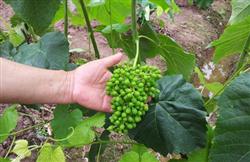 How is plant growth regulator used incorrectly? Why is it said to be wrong? Experienced readers are also asked to help explain.
Plant growth regulators are mainly exogenous, non-nutritive chemical substances, which can usually be transported within the plant to the site of action, and at very low concentrations can promote or inhibit certain links in its life processes, causing it to develop in ways that meet human needs.
Because each plant growth regulator has a specific use, and the application technical requirements are quite strict, only under specific application conditions (including external factors) can it produce a specific effect on the target plant. Often, changing the concentration will produce the opposite result; for example, at low concentration it has a promoting effect, while at high concentration it becomes an inhibitory effect.
However, during visits to rural areas, many farmers have some obvious misunderstandings when using plant growth regulators, which seriously affect the results of use. Therefore, Zhongdi Network has compiled the common misunderstandings in the use of plant growth regulators, and the following are listed for readers' reference.
1. Using "regulator" instead of "fertilizer":
Because plant growth regulators must be used under sufficient water and fertilizer conditions to exert significant effects, but some plant growth regulators have been exaggerated by manufacturers, causing some farmers to use them as fertilizer and pin their hopes for promoting crop growth on plant growth regulators, rather than working hard on conventional techniques such as fertilizing, irrigating, intertilling, and loosening soil, ultimately affecting the use effect of plant growth regulators.
2. Arbitrarily increasing the amount of plant growth regulator used:
Because plant growth regulators are hormone-type substances, the amount used per mu is generally only a few grams or a few milliliters. But some farmers always worry that too little will have no effect, and arbitrarily increase the amount or concentration of plant growth regulator used. Doing so will not only fail to promote plant growth, but will instead inhibit its growth, and in severe cases even lead to leaf deformity, withering and shedding, and death of the whole plant.
3. Directly mixing some plant growth regulators with water for use:
For example, gibberellin (GA3), which is widely used in production, must first be dissolved with alcohol or warm high-proof liquor before being mixed with water for use. But before using plant growth regulators, some farmers often do not carefully read the instructions, and instead directly mix the plant growth regulator with water for use. Because some plant growth regulators cannot dissolve directly in water, and because a trace amount of plant growth regulator, if not first prepared into a "mother solution" and then diluted to the required concentration, is difficult to mix evenly in one go, this will also affect the use effect.
4. Arbitrarily mixing with other substances:
Whether plant growth regulators can be mixed with other substances such as chemical fertilizers and pesticides must be determined only after carefully reading the instructions and conducting tests. But when using plant growth regulators, many farmers, in order to save trouble, often arbitrarily mix them with chemical fertilizers, insecticides, fungicides, and the like, hoping to simultaneously promote growth or preserve flowers and fruits, supplement fertilizer, or prevent diseases and control pests. But if the mixing is improper, it will yield "half the result with twice the effort," or even "all effort and no result."
5. Spraying plant growth regulators arbitrarily:
Plant growth regulators must be used at key moments in plant growth (such as the cucumber flower bud differentiation stage) in order to exert the greatest effect. If the timing of use is improper, the ideal effect cannot be achieved, and "side effects" may even occur. Some farmers lack sufficient understanding of this and believe that no matter when plant growth regulators are sprayed, they can promote growth, increase yield, and increase income. Therefore, they do not consider timing and spray at any time, resulting in poor spraying effects, and in some cases even reduced yield and reduced income.
The role of plant auxin
The difference between foliar fertilizer and plant growth regulators