How to Control Root-Knot Nematodes? A Full Analysis of Practical Control Methods
How to control root-knot nematodes? What should be noted when controlling root-knot nematodes? We also ask knowledgeable netizens to help explain. Root-knot nematodes have a relatively broad host range; for example, more than 30 kinds of vegetables including cucurbits, solanaceous fruits, legumes, radishes, carrots, lettuce, and cabbage are all harmed by root-knot nematodes. Therefore, Zhongdiwang has compiled the root-knot...
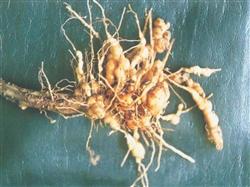 How to control root-knot nematodes? What should be noted when controlling root-knot nematodes? We also ask knowledgeable netizens to help explain
Root-knot nematodes have a relatively broad host range; for example, more than 30 kinds of vegetables including cucurbits, solanaceous fruits, legumes, radishes, carrots, lettuce, and cabbage are all harmed by root-knot nematodes. Therefore, Zhongdiwang has compiled the control methods and precautions for root-knot nematodes, listed in detail below for netizens' reference.
I. Focus on prevention, with treatment as a supplement:
In the process of preventing and controlling diseases and pests, many netizens simply want to know what kind of pesticide can control such a disease or pest, and still focus on how to treat it. This view of prevention and control is held by most vegetable growers, yet they do not think about how to avoid the occurrence of diseases and pests, what kind of farming operations should be done before diseases and pests occur, cutting off the transmission routes of diseases and pests, and consciously worsening the survival and reproduction conditions of diseases and pests, thereby reducing their occurrence. Especially in the process of nematode control, more attention should be paid to the important role of "prevention," and attention should be paid to every tiny farming operation link (borrowing seedlings, moving between greenhouses, rotary tiller cultivation).
II. Root-knot nematodes cannot be eradicated:
Root-knot nematodes cannot be completely eliminated. According to actual planting conditions, early prevention, early detection, and early treatment should be achieved, and different control measures should be comprehensively used for integrated control. In particular, attention should be paid to the comprehensive use of agricultural and physical measures to reduce input costs, and combining them with chemical control to enhance the control effect. It is particularly worth noting that in the process of selecting chemical agents, pesticides with high efficiency and low toxicity should be chosen, such as Jianzhibao (nematode-suppressing type), Xianchongbike, Kexiandan and other agents, avoiding the use of highly toxic pesticides, so as to realize the pollution-free and standardized cultivation of vegetables as soon as possible.
III. Causes of root-knot nematode occurrence:
Nematodes can spread through various channels, but in old vegetable-growing areas their main transmission routes are unreasonable agricultural operation measures (moving between greenhouses, borrowing seedlings, arbitrarily discarding diseased plant residues, applying undecomposed organic fertilizer, and large-scale use of chemical fertilizers causing deterioration of the soil environment, etc.), which expand the spread range of nematodes and aggravate the degree of harm.
IV. Rational use of pesticides:
Highly toxic nematicides are generally pesticides with high toxicity and high residues, which can cause residue contamination of vegetables, have a great impact on human health, and do not conform to the requirements of pollution-free vegetable production. In the process of using highly toxic nematicides, relatively large losses are caused. Moreover, due to the special environmental conditions in which nematodes live, the control effect of highly toxic nematicides is not ideal, and using highly toxic and extremely toxic nematicides brings more loss than gain.
What is pesticide phytotoxicity
What are the specific pesticides for underground pests