What kind of insecticide is tebufenozide? A detailed explanation of its effects and uses
When was tebufenozide invented? What are the characteristics of tebufenozide? Which pests can tebufenozide control? The following brief introduction is provided by Gengzhongbang Planting Network for the reference of netizens. Tebufenozide, chemical name 1-(1,1-dimethylethyl)-1-(4-ethylbenzoyl)-3,5-dimethyl...
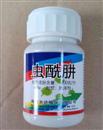 When was tebufenozide invented? What are the characteristics of tebufenozide? Which pests can tebufenozide control? The following brief introduction is provided by Gengzhongbang Planting Network for the reference of netizens.
Tebufenozide, chemical name 1-(1,1-dimethylethyl)-1-(4-ethylbenzoyl)-3,5-dimethylbenzoylhydrazide, trade names MIMIC and Confirm, is an ecdysone-type insecticide researched and developed in 1990 by the American company Rohm and Haas, and together with fipronil and chlorfenapyr it is known as one of three epoch-making insecticide varieties.
This variety obtained administrative protection in China in 1994. The 20% suspension concentrate from the American company Rohm and Haas has been registered in China on vegetables, fruit trees and forests, with registration numbers: LS95030 and PD245-98. At present, tebufenozide has been industrially produced by this company. In addition, AgrEvo GmbH of Europe and the Japanese chemical companies HOKKO Chemical and Nihon Nohyaku hold production licenses. There is currently no manufacturer of tebufenozide in China, but domestic units such as the Shanghai Institute of Pesticides and the Jiangsu Institute of Pesticides are already conducting research, and the research results are not yet clear. The Institute of Pesticides completed pilot-scale research in 2001.
Tebufenozide has characteristics such as broad spectrum, high efficiency and low toxicity. It has stimulatory activity on insect ecdysone receptors. Its mechanism of action is that after larvae (especially lepidopteran larvae) feed on it, they molt when they should not molt; because molting is incomplete, the larvae become dehydrated, starved and die. At the same time, it can control the basic functions in the insect reproduction process and has a strong chemical sterilizing effect.
Because of its unique mechanism of action and the absence of cross-resistance with other insecticides, this agent is currently widely used on crops such as rice, cotton, fruit trees and vegetables, as well as in forest protection, to control various lepidopteran, coleopteran, dipteran and other pests. At the same time, it is very safe for beneficial insects, mammals, the environment and crops, and is one of the ideal agents for integrated pest management.
Tebufenozide can be used to control the oriental fruit moth, apple tortrix, grape tortrix, pine caterpillar, fall webworm and so on.
The above is Gengzhongbang Planting Network's introduction to the characteristics of tebufenozide. If you have better additions, please leave a message below to tell us.