Three propagation techniques for daylily: division, bud division and seed propagation
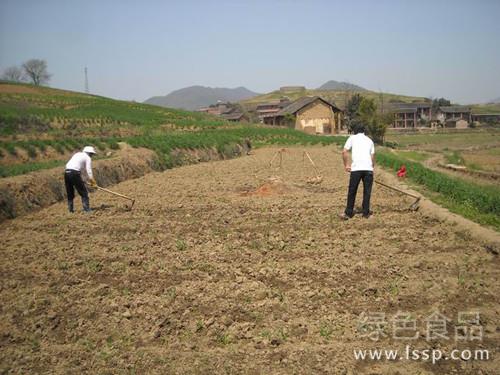
Daylily cultivation
1. Division propagation method:
Select robust daylily plants that have grown for many years, dig out part or all of the mother clump's rhizomes, shake off the soil, cut off the old and diseased roots at the lower part of the rhizomes, and separate them one plant at a time, peel off the yellow-brown fibrous hairs around the rhizomes to expose the main and lateral buds, keep 2-3 layers of new roots on each rhizome, and plant them in the field. Features: simple to operate, high survival rate, can be done in all four seasons, but spring and autumn are best; it is one of the commonly used asexual propagation methods.
2. Bud division propagation method:
The roots of daylily are fleshy rhizomes, and each fleshy rhizome bears many small protrusions called latent bud clusters; each latent bud cluster contains six latent buds, arranged alternately on both sides of the fleshy rhizome. Latent buds generally do not sprout; only when the main or lateral buds are damaged do they germinate into new life. Based on this characteristic of daylily, bud division propagation cuts the rhizome along the distribution of the latent bud clusters, deliberately cutting with a knife; through cultivation, within one month the latent buds germinate and grow into a new plant. Features: highly technical, with a high propagation coefficient, so rhizomes with strong vitality, fast development, high survival rate and short age should be selected. Generally, one single plant can be divided into 4-10 plants; through bud division propagation, each mu of old daylily can be used to newly plant 4-6.70 hectares of daylily.
1. Bud division technique:
Bud division propagation can be carried out in all four seasons, but spring and autumn are best. Shake the soil clean from the daylily clump, peel off dead leaves and fibrous hairs, expose the main and lateral buds, and cut the seed blocks according to the positions where the latent bud clusters grow. (1) Horizontal cutting method. Use a knife to cut the rhizome horizontally at the annual ring scar below the main bud, then from top to bottom, cut horizontally one knife at a time at the annual ring scar or every 1-2 cm, dividing the rhizome into several segments, each segment ensuring 1-3 bud clusters. (2) Diagonal cutting method. Use a knife to cut the main bud diagonally downward at a 45° angle from the point where the main bud and lateral bud connect, then cut the lateral bud diagonally downward at a 45° angle in the opposite direction, and so on.
Whichever method is used, each segment should carry 1-3 fleshy roots 3-7 cm long, to provide nutrients for sprouting and germination.
2. Cultivation method:
(1) Plant the seed blocks directly in the field. Prepare the land and make beds, apply 5000 kg of farmyard manure and 40 kg of nitrophosphate fertilizer; the bed width is 2 m, with 2 rows planted per bed, a large row spacing of 1.20 m, a small row spacing of 80 cm, and a plant spacing of 50 cm for digging holes. Place 3-4 seed blocks in each hole, with buds facing upward and roots spread downward, cover with 3 cm of soil, water thoroughly with a small amount of water after planting, and cover with plastic film after the water seeps in. Release the seedlings after 1 month, and strengthen seedling-stage management to achieve early sprouting and strong seedlings.
(2) First raise seedlings and then transplant; plant the cut seed blocks in a seedbed, with a row spacing of 15 cm and a plant spacing of 10 cm, raising 45,000 plants per mu. After a seedling age of 2 months, they can be transplanted to the field. This method sprouts quickly, produces strong seedlings and has a high survival rate.
3. Seed propagation method
1. Seed selection. Select robust daylily plants that are free of pests and diseases and have been planted for 5-8 years; at the early flowering stage, leave 5-6 thick flower buds on each flower scape to let them set fruit and be kept as seed. The remaining flower buds continue to be picked and sold as produce. For daylily used for seed collection, at the early flowering stage spray 2000-fold amino acid solution once every 7-10 days, spraying 2-3 times; when the capsules mature and the top slightly splits, pick them and thresh the seed. Store the seeds in a ventilated, dry place and keep them properly.
2. Raising seedlings. Choose a sunny bed or greenhouse and other sites, use fertile garden soil to make a seedbed, and disinfect the soil. Soak the seeds in warm water at 25℃ for 48 hours. When sowing, apply 200 kg of decomposed and screened organic fertilizer per bed (1.50-7 m), level the bed, water thoroughly with bottom water, and after the water seeps in, open furrows and sow at a row spacing of 15 cm and a plant spacing of 3 cm, then cover with 2 cm of soil after sowing. If using a sunny bed for seedling raising, insert small arch rods and cover with film; keep the temperature inside the shed at 25℃ during the day and not lower than 12-15℃ at night; seedlings can emerge in 1 week. After emergence, gradually lower the shed temperature to adapt to the outside climate and prevent seedlings from growing leggy. During the seedling stage, strengthen field management and keep the soil moist. Pay attention to disease and pest control, carry out more intertillage, and spray some foliar fertilizer to promote the growth and development of daylily seedlings, so as to cultivate large and strong seedlings for transplanting the following year.