How to improve the fruit-setting rate of eggplant? Raising temperature, increasing light, reducing humidity, and foliar topdressing
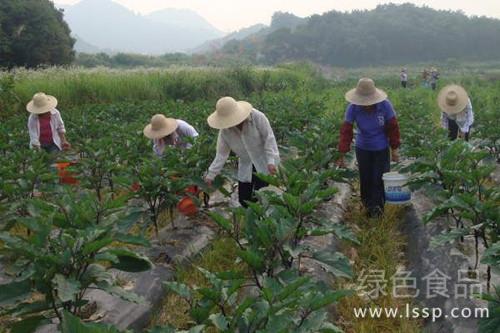
Topdressing for eggplant
Increase temperature and keep it warm, and build the shed scientifically.When growing eggplant, use a good shed type; the lighting angle, greenhouse efficiency, wall thickness, straw curtain thickness, etc. should all meet the standards. Hanging a second curtain inside the shed can raise the air temperature by about 3°C. After covering the straw curtain in the evening, add a layer of plastic film on top for cold protection, which can raise the shed temperature by 3-4°C. In addition, apply more organic fertilizer, because organic fertilizer has large and numerous pores filled with air, which can effectively reduce soil heat loss. Organic fertilizer can also release a certain amount of heat during decomposition, which can raise the ground temperature and air temperature inside the shed.
Increase light intensity.Keep the shed film clean, and clean the shed film often. On snowy days, clear the snow promptly to increase the transparency of the shed film. Next, install reflective film inside the shed, using an aluminized reflective screen (3 m long, 2 m wide), hung on the north wall inside the greenhouse and made vertical to the ground, which can increase ground light by about 40%. When choosing shed film, choose drip-free film, which can enhance the light intensity inside the shed and raise the shed temperature. In addition, removing the old leaves at the lower part of the eggplant can increase light transmission.
Cultivate robust plants, promote weak ones and control excessive vigor.For weak seedlings, strengthen fertilizer and water management. In the early stage, organic fertilizer and quick-acting phosphorus should be the main focus; in the middle and late stages, switch to quick-acting nitrogen fertilizer. It is best to apply 500-600 kg of decomposed dilute manure or 20-30 kg of cake fertilizer plus 15-20 kg of ordinary superphosphate per mu when the first eggplant flowers. After entering the full fruiting period, switch to quick-acting nitrogen as the main focus, and topdress 3-5 times during the fruiting period. At the same time, water in combination with topdressing. For overly vigorous seedlings, pinch and injure the eggplant stems during the flowering period to promote the accumulation of photosynthetic products and promote fruit setting.
Pinch the growing tips at the right time.The fruit-setting rate of eggplant increases with plant branching. Generally, each branch sets one fruit, so after planting, the growing tips should be pinched in time to promote rapid branching, increase the fruiting positions, and improve the fruit-setting rate.
Use hormones correctly.During the flowering period, spray flowers with 20 ppm of 4-CPA, or dip flowers with 30-40 ppm of 2,4-D, both of which can prevent flower and fruit drop and improve the fruit-setting rate.
Foliar topdressing.In winter, with low temperature and weak light, the transformation of organic matter and trace elements in the soil is slow and cannot meet the growth needs of eggplant, so foliar fertilizer should be supplemented in time to make nutrition sufficient, promote flower bud differentiation, and preserve flowers and fruits. You can spray 150-fold Baolifeng solution, 2000-fold borax or boric acid solution, 1000-fold magnesium sulfate solution, 1000-fold zinc sulfate solution, 600-fold rare earth solution, and other foliar fertilizers.
Do a good job of artificial pollination.Eggplant grown in protected cultivation should be artificially pollinated, and the best pollination time is 8-10 a.m.
Prevent and control pests and diseases in time.The main disease affecting the fruit-setting rate of eggplant is gray mold. To control gray mold, agricultural control and chemical control can be used. Agricultural control: (1) Control watering and reduce humidity in the greenhouse. Watering should be done in the morning, and overwatering must be strictly prevented. In the early stage of the disease, water appropriately less, and after watering, ventilate promptly to remove moisture. (2) Remove the petals, and do not leave the base of the petals, otherwise gray mold is easily triggered. (3) Remove diseased leaves and diseased fruits in time. Chemical control: (1) Fumigation: 10% Suguangling smoke agent can be used, 250 g per mu each time. (2) Dusting: use 5% chlorothalonil dust or 6.5% Wanmeiling powder, 1 kg per mu each time, and dust again after 7 days. (3) Spraying: in the early stage of the disease, spray 40% Shijiale suspension concentrate at 1200-fold, or Ronilan wettable powder at 1000-fold, once every 7 days, for 2-3 consecutive sprays.