Balanced fertilization is needed for napa cabbage growth: pay attention to nitrogen fertilizer but do not neglect potassium fertilizer
Fertilizing napa cabbage should achieve the dual goals of high yield and good quality. The ratio of nitrogen, phosphorus, and potassium required by napa cabbage is 1:0.5:1.2, and its potassium requirement is greater than its nitrogen requirement. However, in actual production, generally only nitrogen fertilizer is paid attention to, while potassium supplementation is neglected.
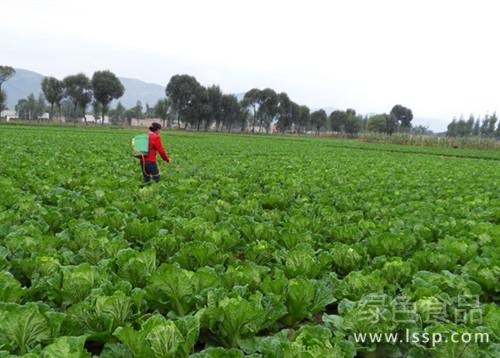
Fertilizing napa cabbage
First, nitrogen fertilizer should be applied in an appropriate amount. Practice has proven that producing 1000 kg of napa cabbage requires absorbing about 2 kg of pure nitrogen from the soil, and producing 10,000 jin of napa cabbage requires absorbing 22-25 kg of nitrogen. The nitrogen needed by napa cabbage can come from soil, organic fertilizer, and chemical fertilizer. Under the condition of applying large amounts of organic fertilizer, the amount of chemical nitrogen fertilizer applied should be appropriately reduced. Applying an appropriate amount of nitrogen fertilizer helps napa cabbage grow, benefits photosynthesis, and achieves high yield. At present, in most areas the actual amount of nitrogen applied exceeds the requirement. Excessive nitrogen fertilizer not only makes the outer leaves of napa cabbage thick and fleshy, with poor head formation and low yield and quality, but also causes the leaves to have high water content; after harvest, it is not resistant to storage and is prone to rotting, and in the late growth stage it is susceptible to pests and diseases.
Therefore, in addition to applying an appropriate amount of nitrogen fertilizer, the timing of use should also be suitable. Throughout the entire growth period of napa cabbage, the amount of nitrogen absorbed varies at different stages. It is very little at the seedling stage, accounting for about 2% of the total; it increases to about 28% at the rosette stage; it is greatest at the heading stage, accounting for about 70% of the total. Therefore, nitrogen fertilizer should be applied in split applications, reflecting light application first and heavy application later. Napa cabbage has a long growth period, so sufficient base fertilizer should be applied. In terms of topdressing, from the seedling stage to the cluster stage, napa cabbage should have controlled water and fertilizer (mainly controlled nitrogen), except in special circumstances when seedling-promoting fertilizer is applied. Generally, at the rosette stage, seedling restraint should be carried out, first so that the aboveground outer leaves grow robustly, and second to promote root growth and downward extension, laying the foundation for rapid later growth and the absorption of large amounts of nutrients and water. The first topdressing is at the rosette stage. It is advisable to apply quick-acting nitrogen and potassium fertilizers, along with irrigation; after water and fertilizer, it enters the heading stage. The second topdressing is at the early and middle heading stages, mainly applying nitrogen fertilizer, at most twice, with the nitrogen amount controlled. At the late heading stage, stop topdressing nitrogen fertilizer.
Second, increase the proportion of phosphorus and potassium fertilizer applied. In base fertilizer and topdressing, increasing potassium fertilizer is beneficial to head formation in napa cabbage and enhances disease resistance. In topdressing at the early heading stage, pay attention to applying potassium fertilizer. If phosphorus and potassium fertilizer are insufficient during the heading stage, napa cabbage will not easily form heads. At present, in production, potassium fertilizer application is often neglected. The suitable amount of potassium applied is generally 12 kg of potassium chloride or 16 kg of potassium sulfide per mu. It is best to apply it in two applications, as base fertilizer and topdressing. The base fertilizer is applied at the bottom of the hole when planting, and the topdressing is applied after seedling restraint ends at the rosette stage, together with nitrogen fertilizer and irrigation.
Third, pay attention to the supply of calcium fertilizer. Applying superphosphate as base fertilizer to supplement calcium nutrition can effectively prevent napa cabbage “tipburn”. Napa cabbage likes calcium, and calcium deficiency, especially excessive nitrogen application, easily causes tipburn. Controlling nitrogen fertilizer and supplementing calcium nutrition are the keys to preventing napa cabbage “tipburn”. In addition to applying calcium-containing fertilizer to the soil, calcium can also be supplemented through the leaves by spraying 0.1%-0.3% calcium chloride or calcium nitrate, or spraying sugar alcohol calcium and amino acid calcium, starting at the rosette stage and spraying 2-3 times.