Watering Agaricus bisporus requires care: use water well to promote fruiting body growth
In Agaricus bisporus production, from casing soil onward until fruiting, in addition to routine management, the following four water application points should be correctly understood and applied to ensure the number and vigor of mycelium, ensure the number and uniformity of pinheads, and ensure the healthy growth of Agaricus bisporus fruiting bodies and their commercial quality, etc.
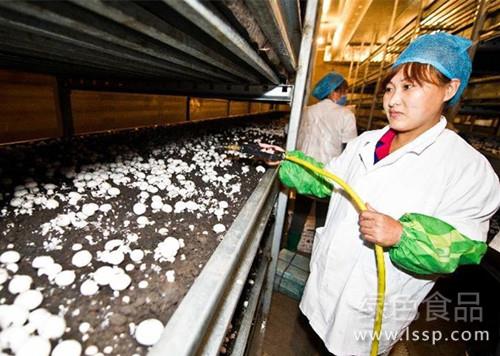
Watering Agaricus bisporus
1. Timing of "mycelium-pressing water":When mycelium emerges on the bed surface, it indicates that the Agaricus bisporus mycelium has reached the bottom of the compost and has fully developed within the soil layer, and has the ability to form mushrooms; at this time, mycelium-pressing water can be sprayed at the right moment. The method is: increase ventilation so that strong wind blows into the mushroom shed, causing the mycelium on the soil surface to lie down; and control the amount of water sprayed according to the mycelium development in the soil layer, generally about 1 kg per square meter of compost surface, once in the morning and once in the evening, so that 1/2 of the soil layer thickness is soaked through. After spraying, the mycelium no longer emerges from the soil surface, and combined with strong ventilation, the top layer of about 0.5 cm of soil surface loses water and slightly whitens; the mycelium grows laterally and connects within the soil layer below this thickness, reaching physiological maturity and transitioning to reproductive growth.
2. Heavy spraying of "mushroom-forming water":Spray mushroom-forming water 3 days after the mycelium-pressing water. According to the moisture status of the substrate and soil layer, spray about 3 kg per square meter in 4 applications, judged by the casing soil being soaked through but with no water seeping downward. If the soil layer is not soaked through, the water amount is insufficient; if water seeps into the soil layer, the water amount is excessive and may adversely affect fruiting. When spraying mushroom-forming water, ventilation should be strengthened, and where conditions permit, forced ventilation measures should be adopted. After 2 to 3 days, small mushroom buds can be seen emerging.
3. Sufficient "fruiting water":The amount and spraying method of fruiting water are similar to those of mushroom-forming water. At this time, mushroom buds have already emerged; note that the water temperature should be as close as possible to the shed temperature, and the temperature difference must not be too large; moreover, at places with mushroom buds, spray multiple times with less water each time, and the total amount should be sufficient, but still be careful not to let water seep into the casing soil and substrate, which is very important.
4. Frequent "maintenance water":Combined with maintaining the humidity of the mushroom shed, the number of sprayings and the amount of water used should be controlled daily according to temperature, ventilation and other conditions, maintaining air humidity at about 90%, with the casing surface basically moist; whitening at ventilation holes and near the doorway is normal. As the fruiting bodies continue to grow, the number of sprayings and the amount of water used should also increase. When the mushroom cap diameter reaches 1 cm, a three-dimensional edible mushroom nutrient essence solution can be sprayed directly, once a day in October; after mid-October, it can be sprayed once every other day, and water should be sprayed onto the Agaricus bisporus fruiting bodies according to the humidity inside the shed.