Seed selection, sowing, field management, topdressing: high-yield cultivation techniques for coix
Coix cultivation
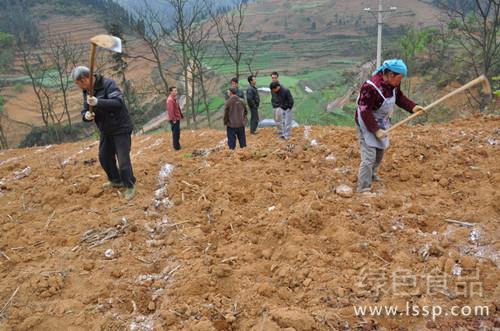
1. Site selection and land preparation: Coix is not demanding regarding soil and can be grown in ordinary soils except heavy clay, but sunny sandy loam with good drainage and irrigation is best. Coix is highly tolerant of salt damage and moisture in saline-alkali land and marshland, so it can also be planted along the coast, lakesides, river courses and both sides of irrigation canals. Continuous cropping is avoided; the preceding crop is preferably legumes, cotton, potatoes, etc. Before land preparation, apply 3000 kg of farmyard manure per mu as a base fertilizer. Plow deeply and harrow finely, level the ground; except for small areas, beds are generally unnecessary, but drainage ditches should be opened well around the perimeter.
2. Seed treatment: To promote germination of coix seeds and prevent smut, the seeds should be treated before sowing as follows.
(1) Soak in 5% limewater or 1:1:100 Bordeaux mixture for 24—48 hours, then wash with clean water; (2) soak in 60°C warm water for 30 minutes; (3) mix 0.5 kg of 75% quintozene with 100 kg of seed.
3. Sowing: The sowing period varies with coix varieties, generally from March to May; early-maturing varieties can be sown early, and late-maturing varieties can be sown late.
(1) Direct sowing in the field, in hills or drills. Hill spacing varies with coix varieties; early-maturing varieties can be closer, late-maturing varieties sparser, generally 25—40cm×30—50cm, sowing 4—5 coix seeds per hill at a depth of 3cm, covering with ash soil and watering with diluted manure water, using 4—5 kg of seed per mu.
(2) Raising seedlings and transplanting. Prepare the seedbed well, broadcast sowing for seedlings, cover lightly with fine soil and keep the soil moist; after 30—40 days, when seedlings are 12—15cm tall, they can be transplanted, with the same spacing as direct sowing, planting 2—3 seedlings per hill and watering with diluted manure water after planting; seedling raising uses 30—40 kg of seed per mu, and the seedlings raised can be transplanted to about 10000 sq m.
4. Field management:
(1) Thinning and gap filling: When coix seedlings have 3—4 true leaves, thin and fill gaps, leaving 2—3 strong seedlings per hill. For drill-sown plants, thin to a plant spacing of 3—6cm. At 5—6 true leaves, final thinning is done at a plant spacing of 12—15cm.
(2) Cultivation and weeding: Conducted in 3 rounds. The first when seedlings are 5—10cm tall, shallow hoeing; the second when seedlings are 20cm tall; the third when seedlings are 30cm tall, combined with fertilization and earthing up.
(3) Topdressing: Also in 3 rounds. The first when seedlings are 5—10cm tall, applying 2000 kg of manure water per mu; the second when seedlings are 30cm tall or at the booting stage, applying 3000 kg of manure water per mu; the third at the flowering stage, using 2% superphosphate solution for foliar topdressing.
(4) Drainage and irrigation: Sufficient water should be ensured during the seedling stage, ear stage, flowering and grain-filling stages. In drought, water promptly in the evening to keep the soil moist; after rain or furrow irrigation, drain accumulated water from the furrows.
(5) Removal of lower leaves: After jointing, remove ineffective tillers and old leaves below the first branch to facilitate ventilation and light penetration.
(6) Artificial supplementary pollination: During the flowering stage from 10—12 o'clock, use tools such as ropes to shake the coix so that pollen flies, which can increase the seed-setting rate.
5. Pest and disease control:
(1) Smut: Also known as black powder disease, it causes serious damage with a high incidence rate. Control methods: strictly treat coix seeds, rotate crops, and immediately pull up and burn diseased plants when found.
(2) Leaf blight: Occurs frequently in the rainy season, damaging the leaves. Control methods: In the early stage of the disease, spray with 1:1:100 Bordeaux mixture or 65% zineb wettable powder at 500 times dilution.