Key Techniques for Sowing and Cultivating Spring Peanuts in the South Around the Spring Equinox
Around the Spring Equinox is exactly the season for sowing and cultivating spring peanuts in the Shanghang area of Fujian. Based on years of cultivation experience, here is a discussion of the sowing and cultivation techniques for spring peanuts:
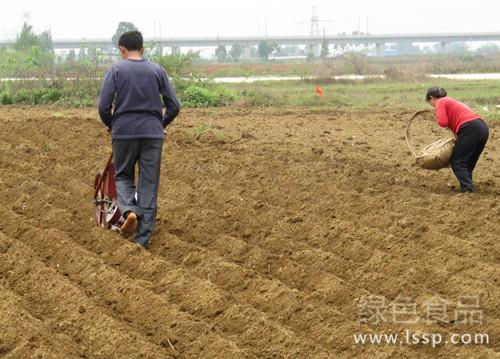
Peanut Sowing
1. Carefully prepare the soil and apply sufficient base fertilizer: To cultivate spring peanuts, sandy soil should be chosen, requiring high soil fertility and convenient drainage and irrigation. Apply 5300 kg of high-quality farmyard manure, 50 kg of three-element compound fertilizer, and 1 kg of boron fertilizer per mu. After plowing, harrowing, and leveling, open furrows and make beds with a bed width of 1.7 m and a furrow depth of 02 m, ensuring that furrows and beds are connected.
2. Select local varieties with high and stable yield: It is advisable to select local red-skin peanuts autumn-multiplied in Xingning, Guangdong, or local white-skin peanuts from Zhangpu, Guangdong, as good seed, with strong resistance, a short growth period, suitability for close planting, high and stable yield, and a single yield of 300-350 kg.
3. Pre-sowing treatment: Select plump kernels as seed, and before sowing, carry out seed sunning treatment. On a sunny day, sun the seeds for 1-2 days. Peanuts should not be shelled too early; the closer the shelling time is to the sowing period, the better. Mix the seed with 50% carbendazim wettable powder or 40% seed-dressing wettable powder at 0.3%-0.5% of seed weight, which can effectively prevent root rot and seedling death; mix the seed with 50% phoxim emulsion at 0.2% of seed quantity, which can control underground pests during the peanut seedling stage.
4. Sow at the right time: According to the temperature and sowing habits of our county, it is best to sow around the Spring Equinox. Sowing at this time can prolong the vegetative growth period of peanuts, ensure that peanuts flower at the most suitable temperature (23-28°C), and form pods at the most suitable temperature (25-30°C), which is conducive to high peanut yield.
(1) Sowing method: open-field sowing; (2) Reasonable close planting. The suitable planting density of peanuts depends on climate, soil fertility, variety, and cultivation conditions. According to the soil fertility conditions of peanut fields in various parts of our county, reasonable close planting is recommended, about 10,000 hills per mu, with two seeds per hill; (3) The sowing depth of peanuts should preferably be 3-5 cm. Sandy soil or soil with a high sand content should be deeper, with a maximum of no more than 6 cm and a minimum of no less than 3 cm for open-field cultivation.
5. Topdressing: Peanut topdressing should be determined according to soil fertility, the amount of base fertilizer applied, and the growth status of peanuts. (1) Topdressing at the seedling stage, applied before the initial flowering stage, mainly nitrogen fertilizer, with phosphorus and potassium fertilizers combined. Generally, apply 15-20 kg of compound fertilizer per mu, broadcast on the soil surface or applied in furrows; (2) Topdressing at the pegging stage. After peanuts begin flowering, generally apply 20 kg of superphosphate per mu and 250 kg of high-quality barnyard manure per mu to improve phosphorus and calcium nutrition for peanuts, with very significant yield increase; (3) Foliar spraying. In the later stage of peanut growth and development, the root system ages, and foliar spraying has an obvious effect. When spraying nitrogen fertilizer on the leaves, the absorption and utilization rate by peanuts reaches more than 50%; spraying phosphorus fertilizer on the leaves can quickly transport it to the pods and promote full and plump pods. In the later stage of peanut growth, use 200 g of potassium dihydrogen phosphate per mu, mix with 60 kg of water, and spray on the leaves. It is best to spray 3 times consecutively, once every 7 days.
6. Strengthen field management and control pests and diseases: Peanuts emerge uniformly 15-20 days after sowing. When the cotyledons are flat and expanded, promptly reseed plots with missing seedlings or broken rows. Timely carry out intertillage and weeding, clear ditches and drain water after rain, maintain soil aeration, and raise soil temperature, which is beneficial for the early formation of rhizobia and promotes strong seedlings and early growth. Pay attention to controlling leaf spot disease, aphids, and other pests and diseases in the middle and late stages of peanut growth.