Wheat has a relatively high phosphorus demand; how should phosphorus fertilizer be applied scientifically as a top dressing?
Wheat has a relatively high phosphorus demand. Scientific application of phosphorus fertilizer helps improve phosphorus fertilizer efficiency, reduce fertilization costs, and promote high-quality, high-yield wheat.
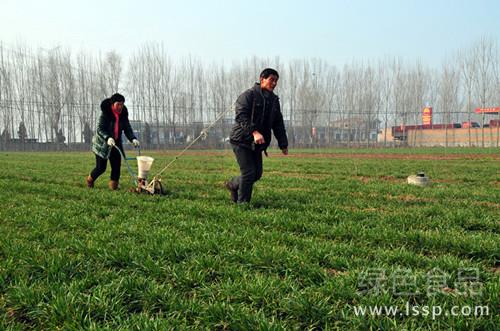
Wheat fertilization
I. Organic fertilizer should be mixed, composted and fermented before application.
Organic fertilizer is rich in phosphoric acid, organic matter and various organic weak acids, and can turn insoluble phosphorus into soluble phosphorus. At the same time, mixing organic fertilizer with phosphorus fertilizer can greatly reduce the contact area between phosphorus fertilizer and soil, thereby reducing the fixation of phosphorus by soil. Therefore, applying phosphorus fertilizer after composting and fermenting it with organic fertilizer can not only greatly improve the utilization rate of phosphorus fertilizer, but also overcome the problem of phosphorus fertilizer burning seedlings. Composting method: half a month before application, mix 1 part phosphorus fertilizer with 10-20 parts organic fertilizer, pile it up, and seal it tightly with mud on the outside.
II. Apply in combination with nitrogen, potassium and zinc fertilizers.
According to wheat's demand for elements such as nitrogen, phosphorus, potassium and zinc, scientifically applying nitrogen fertilizer, potassium fertilizer and zinc fertilizer together with phosphorus fertilizer can both supplement insufficient soil nutrients and increase the utilization rate of phosphorus fertilizer by 20-30%. The combined application ratios: for generally high-yield wheat fields, apply 4000 kg of high-quality organic fertilizer, 50 kg of standard phosphorus fertilizer, 30 kg of standard nitrogen fertilizer and 12 kg of standard potassium fertilizer per mu as a base application; for zinc-deficient plots, apply 1.5 kg of zinc sulfate per mu; for medium-yield fields, apply 3000 kg of high-quality organic fertilizer, 50 kg of standard phosphorus fertilizer, 35 kg of standard nitrogen fertilizer, 8 kg of standard potassium fertilizer and 1 kg of zinc sulfate per mu as a base application.
III. Concentrated application:
Concentrated application of phosphorus fertilizer can reduce the contact area between phosphorus fertilizer and soil, reduce the fixation of phosphorus by soil, and improve the utilization rate. The utilization rate of concentrated band application of phosphorus fertilizer is 28% higher than that of broadcast application, and it increases wheat yield by about 12%.
IV. Choose phosphorus fertilizer according to the soil:
For neutral and calcareous alkaline soils, water-soluble superphosphate is suitable. Superphosphate is weakly acidic and can neutralize alkali in the soil; in acidic soils, weakly alkaline calcium magnesium phosphate fertilizer is suitable. Applying alkaline fertilizer in acidic soil can not only enhance its fertilizer efficiency, but also neutralize acid in the soil and avoid harm to wheat roots from acid.
V. The dosage should be appropriate:
The number of jin of wheat yield increase per kg of phosphorus fertilizer decreases as the amount of phosphorus fertilizer increases, but if the amount is too small, the yield increase per unit area is not significant. Generally, the application rate is 50-60 kg per mu.
VI. Foliar spraying:
Dissolve 2-3 kg of superphosphate in clean water, filter out the residue, add 50-60 kg of clean water and mix well. Spray once each at the jointing, booting and grain-filling stages of wheat, which can increase yield by 4-6%. Alternatively, spray a 0.2% potassium dihydrogen phosphate solution on the leaves, 60-80 kg per mu each time, spraying three times, which has an obvious effect of strengthening stems and preventing lodging.