Key Points of Spinach Cultivation Techniques and Field Management Methods
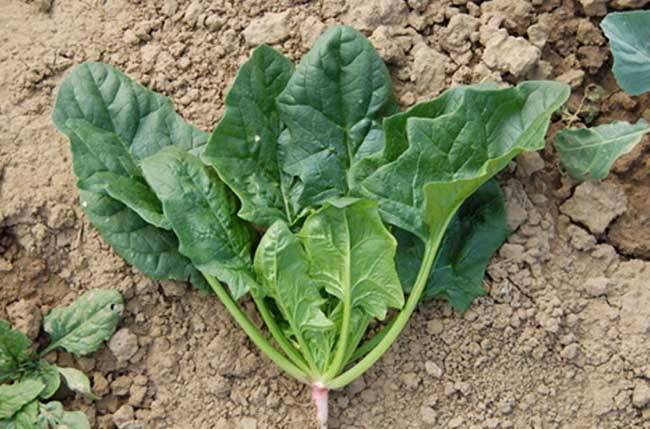
>> The growth process of spinach can be divided into two periods:
1、Vegetative growth period:From cotyledon emergence to inflorescence differentiation. The minimum temperature for seed germination is 4°C, with an optimum of 15-20°C; too high a temperature reduces the germination rate and prolongs germination time. From cotyledon expansion to the appearance of two true leaves, growth is slow. After the two true leaves expand, leaf number, leaf weight and leaf area increase rapidly. When the daily average temperature is below 23°C, the rate at which the shoot apex differentiates leaf primordia slows down as the temperature falls. Leaves grow fastest when the daily average temperature is 20-25°C. After the shoot apex differentiates flower primordia, the number of basal leaves no longer increases. The number of leaves at the time of inflorescence differentiation varies with sowing date, ranging from as few as 6-7 to as many as over 20.
2、Reproductive growth period:From inflorescence differentiation to seed maturity. Spinach is a typical long-day crop; under long-day conditions, the temperature range within which flower bud differentiation can occur is very wide, and summer-sown spinach can still differentiate flower buds without experiencing temperatures below 15°C. The number of days from inflorescence differentiation to bolting varies greatly with sowing date, ranging from as few as 8-9 days to as many as over 140 days. The length of this period affects the length of the harvest period and the level of yield. Spinach has strong cold resistance; in regions where the average minimum winter temperature is around -10°C, it can overwinter safely in the open field. Cold-resistant varieties, with plants bearing 4-6 true leaves, can tolerate short-term temperatures of -30°C.
> Cultivation techniques:Spinach is not strict about soil requirements; cultivated on sandy loam it shows early maturity, while on clay loam it tends to give high yields. Its acid tolerance is relatively weak; the suitable soil pH is 5.5-7, and growth is poor when soil pH is below 5.5 or above 8. Main cropping sequences: sown in early spring and harvested in late spring, called spring spinach; sown in summer and harvested in autumn, called autumn spinach; sown in autumn and harvested the following spring, called overwintering spinach; sown in late spring and harvested in summer, called summer spinach. Direct sowing is used; when sowing in early spring and summer, to ensure full stands, the seeds are first soaked in 15-20°C water for one day, then sown wet after sprouting. The usual sowing rate is 3-3.5 kg per mu. The sowing rate for overwintering spinach is larger, 4-10-plus kg per mu. In northern China, flat beds are mostly used, while in southern China high beds are mostly used, with broadcast sowing or drilling. After two true leaves, quick-acting nitrogen fertilizer is applied 1-2 times. The uptake ratio of nitrogen, phosphorus and potassium by spinach is 2:1:2.5; excessive application of nitrate nitrogen fertilizer will increase the nitrate content. Throughout the growth period, soil moisture must be maintained at 70-80% of field capacity.
To prevent seedling death of overwintering spinach, cold protection and moisture conservation are necessary. In northern China, measures such as setting up windbreaks, irrigating with "freezing water" and covering with barnyard manure are taken before the soil freezes. To ensure full stands of summer spinach and promote growth, the Yangtze River basin and southern China mostly use shed covers to reduce damage from high temperatures and heavy rain.
The sowing date for seed-production spinach can be slightly later than that for overwintering spinach. Drill sowing, with a row spacing of 20-23 cm. After greening in spring, rogue out off-type plants and early-bolting male plants successively, keeping a portion of vegetative male plants, so that the plant spacing reaches about 20 cm. During the bolting period, excessive irrigation should be avoided, lest the flowering stems become thin and weak and lodge, reducing seed yield. After flowering, topdress and irrigate, and spray the leaves with 1-2% superphosphate to make the seeds plump. After the female plants set seed, remove the male plants to improve ventilation and light penetration. When the stems and leaves are mostly withered and yellow and the seeds are mature, harvest, then after-ripen for several days before threshing.