What to Do When the Leaves of the Graptopetalum (Sedum) Wrinkle? Teach You the Correct Remedy
【Summary】: When growing Graptopetalum (Sedum), a common problem often appears, especially in summer: the plump, juicy leaves wilt out of nowhere, all wrinkled, looking like they are about to die? What can be done? Take a look with the editor at what to do when the leaves of the Graptopetalum wrinkle!
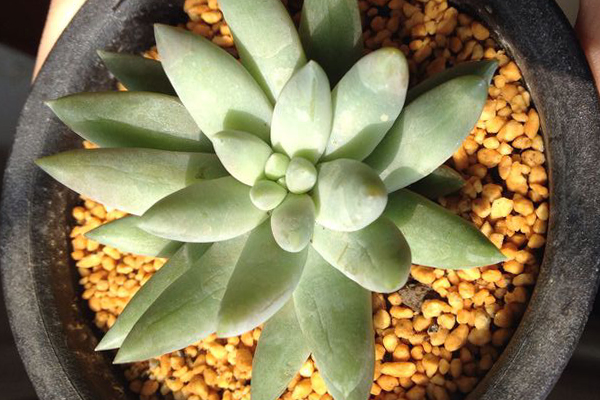
>> Reason One for Wrinkled Leaves in Graptopetalum:
The Acclimation Stage
Shortly after repotting, or just after moving to a new care environment, the Graptopetalum needs some time to adapt. The plant itself will get through this stage by consuming nutrients from the lower leaves. So wrinkled leaves during the repotting stage are a normal phenomenon.
* Solution:
Wrinkled leaves during acclimation can appear under any circumstances, so there is no need to worry; place it in partial shade and wait for it to slowly recover. It may take as little as a week, or as long as half a month. During the repotting period, try not to water, because the roots have not grown well and their water-absorbing ability is very poor.
>> Reason Two for Wrinkled Leaves in Graptopetalum:
Lack of Water
Wrinkled leaves are clearly a sign of water shortage. Reflect on whether you have not watered for a long time. When the weather is dry, the water in the leaves evaporates quickly, and insufficient water causes the wrinkling.
* Solution:
As long as the roots have not died, pay more attention to watering normally, watering when the soil is dry and stopping when it is moist, and when there is good ventilation, spray the leaves with water more often.
But note: if you have not watered for a very long time (more than 2 months), do not water thoroughly all at once. Water gradually, moistening the soil step by step. Because the roots are short of water, their absorbing ability has declined; if you replenish water too much at once, the roots will swell excessively and be damaged.
>> Reason Three for Wrinkled Leaves in Graptopetalum:
Frostbite
If the leaves appear wrinkled in winter, it is very likely frostbite. Check the care environment to see whether there is cold wind or the temperature is too low. Failing to move it indoors in time or exposing it to direct cold wind, snow, and rain can all cause frost damage to the Graptopetalum. The warning sign of frost damage is wrinkled leaves. Depending on the degree of frostbite, the symptoms vary; in severe frostbite, the leaves will gradually turn black.
* Solution:
When the weather is relatively cold and you notice the leaves are wrinkled, move it in time to a relatively warm place, with a temperature of around 10°C. The temperature must not be too high, to avoid the slightly frostbitten leaves rotting. After winter passes, the leaves will gradually recover.
>> Reason Four for Wrinkled Leaves in Graptopetalum:
Root Rot
Careless watering, or watering too much, reduces the oxygen in the soil, so the roots cannot breathe properly and cannot normally absorb water and nutrients. The leaves lose water and wilt, and this situation easily causes root rot.
* Solution:
Take the Graptopetalum out of its pot, check the condition of the root rot, cut off the rotted parts, then apply carbendazim powder to disinfect, place it in a cool place to dry, then replace with new soil, and after repotting in a cool place for a week, return to normal care. Unless the roots have all rotted, it can survive in all other cases.