Key Points of Watermelon Seedling Cultivation: How to Improve Fruit Set Rate and Quality
Watermelon seedling cultivation refers to sowing seeds ahead of time in protective facilities to grow seedlings, and transplanting them to the field when external conditions are suitable. The more commonly used methods include greenhouse seedling cultivation, plastic tunnel seedling cultivation, and low tunnel seedling cultivation. Watermelon seedling cultivation can improve the fruit set rate, reduce pests and diseases, increase yield and income, and also save on seed usage and reduce expenses. Watermelon seedling cultivation requires certain equipment and relatively advanced techniques, and several points should be noted:
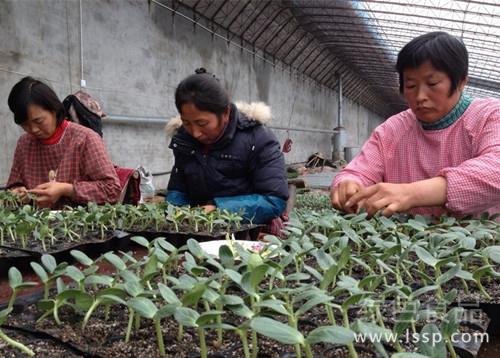
Watermelon Seedling Cultivation
1. Seedbed soil preparation: The prepared nutrient soil should be fertile, loose, and able to retain water and fertilizer, free of pathogens, insect eggs, and weed seeds. When preparing it, field soil, paddy field soil, river bend mud, furnace ash, cattle and horse manure, poultry manure, etc. can be used. Mixing ratio: soil accounts for 7-5 parts, organic fertilizer accounts for 3-5 parts. When mixing, blend evenly and adjust well. At the same time, add 0.25 kg of urea, 1 kg of superphosphate (phosphate fertilizer), and 0.5 kg of potassium sulfate per cubic meter of seedbed soil, or add only 1.5 kg of NPK three-element compound fertilizer, to achieve balanced nutrition.
2. The watermelon seeds used must be germinated and disinfected, sown individually into nutrient pots (blocks), and covered with 0.8-1 cm of soil, to ensure smooth emergence and normal growth.
3. To increase ground temperature, weeds, cattle and horse manure, wood shavings, or a layer of heating wire can be added beneath the seedbed soil. On the surface, double film, etc. can be used.
4. From sowing to emergence, a relatively high bed temperature is required, generally 28-30°C on sunny days and about 25°C on cloudy days. If the temperature is low, emergence time will be prolonged, the seeds will consume too many nutrients, and after emergence the seedlings will be thin, weak, and yellow, reducing resistance. After the cotyledons emerge, the temperature should be appropriately lowered to 22-25°C on sunny days and 18-20°C on cloudy days, to prevent leggy seedlings. When 90% of watermelon seedlings have grown their first true leaf, raise the temperature again to 25-27°C. One week before planting, gradually lower it to about 20°C for hardening the seedlings, until it matches the outside air temperature.
5. Humidity: At sowing, after watering thoroughly, generally do not water until emergence. During the cotyledon flattening stage, keep the surface alternating between dry and moist, mainly preserving soil moisture. A thin layer of fine sandy soil can be spread on the seedbed to reduce soil moisture evaporation and prevent damping-off and Rhizoctonia rot. The relative air humidity should be maintained at about 80%. After true leaves emerge, if the surface is dry, water with a watering can, doing so on sunny mornings. As the temperature rises, the amount of water can gradually increase, generally watering once every 3-5 days, until watering stops 5 days before planting.
6. Light: Use new film as much as possible, keep the film clean, and increase light transmittance. When bed temperature permits, uncover the film early and cover it late. If double film is used, remove one layer during the day and cover it again at night.
7. Loosening the soil: After all seedlings have emerged, loosen the surface soil, but not too deep, to avoid damaging the roots. Generally about 1 cm, this can improve soil aeration, promote root growth, regulate humidity, and increase seedbed soil temperature. When true leaves emerge, loosen the soil again, which helps cultivate strong seedlings. Generally, loosen the soil once 1-2 days after each watering.
8. Pest and disease control: The main disease during the watermelon seedling stage is damping-off, which can be prevented with chemicals such as Dexon, Miaojundi, quintozene, and zineb. The main pests during the watermelon seedling stage include mole crickets and aphids. Once found, they should be controlled promptly with insecticides.
9. Begin hardening the seedlings 5-7 days before planting, stopping watering and fertilizing. Increase ventilation to gradually acclimate the watermelon seedlings to the natural environment and improve the survival rate. Transplanting and planting are best done when 2-3 true leaves have unfolded.