Key points for transplanting greenhouse tomatoes: how to avoid dead seedlings and root rot
Greenhouse tomatoes have high requirements for transplanting; not only must the technique be scientific, but the management must also be standardized. How to let greenhouse tomatoes grow "finely" and avoid problems such as dead seedlings and root rot? Overall, you need to combine "planting and management." Here is a detailed explanation of the matters before and after transplanting greenhouse tomatoes, for your reference.
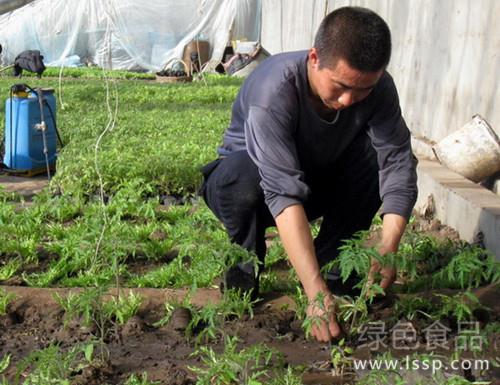
Greenhouse tomato transplanting
One: Tomato transplanting "secret tips":
Pre-planting preparation: For early spring tomato production, except for newly built greenhouses, there is generally a previous vegetable crop. Before land preparation, clean the field. Fertilization should be mainly decomposed farmyard manure, combined with about 50 kg of superphosphate. At the same time, prepare the land by forming ridges or beds. Ridges are generally spaced 50 cm apart and 15 cm high. Beds are generally made with a bottom width of 1 m, a bed surface width of 70-80 cm, and a bed height of 15 cm. After land preparation, cover with plastic film. For high-bed plastic film mulching, open a small ditch in the middle of the bed for dark ditch irrigation under the film.
Transplanting parameters: The soil temperature inside the greenhouse must be stable. For early-maturing varieties, the transplanting density is 3000-3500 seedlings at a row spacing of 40-50 cm and a plant spacing of 40 cm. For mid-maturing varieties, use ridge planting, with 1 row per ridge and a transplanting density of about 2500 plants. Note that when transplanting, water must be applied sufficiently. After the water seeps in, seal the plastic film opening.
Two: Management after transplanting:
Temperature and light: When the weather is clear in spring, the greenhouse can maintain a relatively high temperature, so there is no need to turn on the heating system. However, in cloudy and rainy weather, the greenhouse needs heating (set the temperature at 16°C, 4°C lower than at night on sunny days).
Humidity management: The relative humidity inside the greenhouse should be kept at 70%-80% as much as possible. When the outdoor humidity is too high or the temperature is too low, the heating system must be turned on to make the air circulate and create a suitable humidity environment. At the same time, maintain ventilation to prevent disease.
Fertilizer and water management: When watering, use clean water quality to prevent algae from growing and clogging the drip irrigation pipes. After transplanting, water reasonably to ensure the substrate is moist and to keep tomato plants from wilting. At the same time, apply topdressing promptly along with watering.
Bee pollination: Introduce bees into the greenhouse to ensure that tomatoes can be pollinated evenly, reducing the production of misshapen and inferior fruit.
Three: Ways to eliminate pests and diseases:
First, in multi-span greenhouse tomato production, root-knot nematodes are prone to breeding and are devastating. Therefore, it is necessary to maximize the guarantee that the temperature and humidity inside the greenhouse remain within a reasonable range. In addition, eliminate the source of pests and their growing environment. Second, spring tomato diseases generally occur from March to June, such as early blight, gray mold, leaf mold, late blight, and so on.
Control methods: Strictly disinfect the greenhouse frame, drip irrigation system, heating system, cultivation substrate, and other related tools and utensils; promptly remove weeds and diseased or pest-damaged residual plant stems and leaves in the greenhouse; strengthen field inspections during cultivation; and promptly detect pests and diseases for targeted control.