Cucumber seedlings are prone to physiological disorders during the seedling-raising period, such as stunted seedlings, root burn, excessive spindly growth and root rot
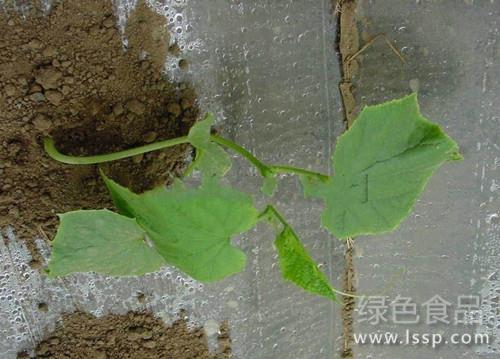
Excessive spindly growth in cucumber seedlings
1. Stunted seedlings. The growth and development of cucumber seedlings are excessively inhibited, shown as short and small plants, small, thin and pale leaves, thin stems, small roots, few new roots, abnormal flower bud differentiation, and few flowers; after planting, the plants are prone to flower-topping. Causes: temperature too low; long periods of cloudy weather; insufficient moisture during the seedling stage; nutrient deficiency; excessive growth control. Control methods: pay close attention to the temperature in the greenhouse; on sunny days, ventilate the greenhouse at 24-28°C; on cloudy and rainy days, open the ventilation openings little or not at all; water the seedling bed or nutrient pots thoroughly 3-5 days before sowing cucumber seeds; apply sufficient fully decomposed organic fertilizer so the seedlings grow quickly and become strong; spray with a solution of 0.5% urea + 0.4% potassium dihydrogen phosphate.
2. Root burn. There are few roots, they develop poorly, and their color turns light brown or brown. Causes: use of inadequately decomposed organic fertilizer or too much fertilizer in the seedling bed, resulting in excessively high salt ion concentration. Control methods: fertilize in appropriate amounts, not too much; mix the seedling bed soil and fertilizer evenly; the organic fertilizer used must be fully decomposed; when topdressing, do not exceed 20 kg per mu, and spread it evenly; if root burn occurs, water appropriately to reduce the soil concentration.
3. Excessive spindly growth. Excessive spindly growth of cucumbers is a common phenomenon during the seedling-raising period. The seedlings are slender, with long internodes, large leaves, thin and slightly pale leaves, tender and easily broken petioles and stems, poor root development, few roots, and small roots. Such seedlings are easily infected by diseases, have weak cold and heat resistance, differentiate few flowers, and are prone to fruit abortion; after planting, the survival rate is low. Causes: temperature too high and ventilation not timely; insufficient light, especially on cloudy and rainy days, with straw mats uncovered late and covered early; high night temperature; too much nitrogen fertilizer in the base fertilizer or nutrient soil; too much water; excessive density. Control methods: ventilate once the temperature reaches 32°C; increase light by uncovering straw mats early and covering them late, or add reflective screens in the greenhouse; close the greenhouse doors and windows only when the afternoon greenhouse temperature reaches 24°C, and pay attention to letting air in from the bottom; balance fertilization, apply more organic fertilizer, pay attention to the combination of nitrogen, phosphorus and potassium, stabilize nitrogen, increase phosphorus, supplement potassium, and apply micronutrient fertilizers; do not water too much or too frequently; increase plant spacing and row spacing; thin and transplant seedlings, and plant appropriately sparsely; when raising seedlings, it is best to raise one plant per pot; spray 50 mg/kg paclobutrazol to control growth.
4. Root rot. The roots turn brown or black and rot severely, and the aboveground parts wilt until they die. Causes: improper watering, with too much water applied at one time; ground temperature or air temperature too low, so evaporation is slow; poor ventilation; heavy clay soil and poor soil quality. Control methods: water appropriately, and do not water the seedling bed unless it is dry; do a good job of ventilating the greenhouse, especially during low-temperature periods, and take advantage of clear, warm weather to ventilate; when the seedling bed soil is poor, mix in sandy loam in an appropriate ratio, or apply more fully decomposed organic matter.
5. Parachute-shaped leaves. The leaf tips of new leaves turn yellow, gradually spreading to leaf chlorosis and yellowing, then slowly dying; the central part of the leaf bulges while the edges curl downward, and in severe cases the growing point stops developing. Causes: greenhouse heat is not dissipated in time, causing stuffiness; new leaves lack calcium; poor cucumber development. Preventive measures: pay attention to maintaining gas exchange in the greenhouse to promote transpiration from cucumber leaves; spray a measured amount of calcium fertilizer; pay attention to formula fertilization and strengthen management to promote normal cucumber growth.