Plastic Film Mulching Cultivation Technique for Spring Peanuts to Help You Bring Them to Market Earlier
Covering spring-sown peanuts with plastic film can raise soil temperature, allow earlier sowing, promote growth and development, enable earlier marketing, increase returns, and raise the rate of full pods, thereby both increasing yield and improving quality. To better promote the plastic film mulching cultivation technique for spring-sown peanuts and achieve high quality and high efficiency in peanut production, the technique is described below:
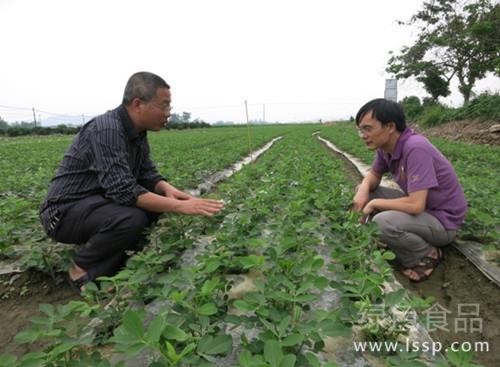
Field Management of Plastic-Film-Mulched Peanuts
I. Preparatory Work:
1. Select superior varieties and prepare the plastic film. Superior varieties are the key to full stands and strong seedlings, and can improve quality and enhance quality. Varieties such as Jihua No. 3, Jihua No. 2, and Luhua 14 can be selected, and the peanut seeds should be sun-dried and grain-selected. The plastic film thickness is 0.05-0.08 mm, with a dosage of about 3.5 kg per mu.
2. Land preparation, fertilization, and soil moisture building. Apply per mu 5 cubic meters of coarse manure (decomposed chicken manure or barnyard manure), 70-100 kg of calcium superphosphate, 20-30 kg of ammonium bicarbonate, 12-16 kg of potassium sulfate, 1 kg of borax, 1 kg of ferrous sulfate, or more than 100 kg of compound microbial organic fertilizer, 50-75 kg of calcium superphosphate, 10-12 kg of potassium sulfate, and 12-13 kg of urea. In conjunction with land preparation, apply all of the organic fertilizer and 2/3 of the chemical fertilizer as base fertilizer.
II. Timely Sowing and Film Mulching, with Reasonable Close Planting.
The suitable sowing time is April 10-15, that is, when the 5 cm soil temperature stably passes 12°C. For sowing density, plant in wide and narrow rows, with a narrow row spacing of 30 cm, a wide row spacing of 55-60 cm, a hill spacing of 17 cm, 2 seeds per hill, a seeding rate of 15 kg per mu, and a sowing depth of 3 cm. After sowing, use 2-3 liang of 50% acetochlor herbicide mixed with 50-60 kg of water and spray evenly, then cover with film. The film should be flat, tight, sealed, and firm to prevent the wind from lifting it and causing soil moisture loss and temperature drop.
III. Field Management:
1. Seedling stage management. Open the film to release seedlings. When the buds push through the soil, promptly open the film to release the seedlings. When the cotyledons unfold, promptly make holes in the film by hand to prevent seedling scorching. After releasing the seedlings, promptly press soil firmly around the base of the seedling stems. Seedling release is generally done before 10 a.m. and after 4 p.m. on sunny days, and can be done all day on cloudy days. Promptly check the seedlings and fill in gaps.
2. From the flowering and pegging stage to the pod-setting stage. The flowering and pegging stage is sensitive to water. If drought occurs at this time, pegging cannot take place, so irrigation should be done promptly according to soil fertility and moisture conditions when drought occurs, in order to increase the number of pods. During the pod-swelling stage, irrigate once to achieve the goal of increasing yield.
3. Combine control measures to increase and stabilize yield. The peanut pod-setting stage occurs during the rainy season. Fields with heavy rainfall, heavy fertilization, and high density are prone to excessive vegetative growth (when plant height exceeds 40 cm and pods appear like chicken beaks at full bloom). Promptly spray 2 liang of 15% paclobutrazol mixed with 50 kg of water to prevent excessive growth, generally around July 10.
4. Full-pod stage. During the full-pod stage, irrigate once when drought occurs to increase the rate of full pods in peanuts.
5. Control diseases and pests and prevent premature aging. Because of plastic film mulching, peanuts grow and develop early and are prone to premature aging in the later stage. From the pod-setting stage to the maturity stage of peanuts, carry out foliar topdressing by spraying 1-2% urea solution or 0.2-0.3% potassium dihydrogen phosphate solution or 500 times 50% carbendazim plus 0.1% ferrous sulfate or 0.5% urea plus 0.2% potassium dihydrogen phosphate, using 50 kg of spray solution per mu, which can control peanut leaf spot and cotton bollworm.
IV. Timely Harvest.
Whether peanuts can be harvested promptly after maturity affects whether a high yield and a good harvest can both be achieved. The signs of peanut maturity are that a few green leaves remain on the upper part of the peanut plant, the middle leaves turn yellow, the lower leaves fall off, and the pod reticulation is clear and has the characteristics of the variety. As for harvest time, under the same variety conditions, plastic-film-mulched peanuts can mature 7-10 days earlier, generally harvested in mid-to-late August. Finally, pick up all residual film to prevent white pollution and protect the soil environment.