Key techniques for increasing carrot yield: fertilizing, watering, thinning seedlings, and preventing bolting
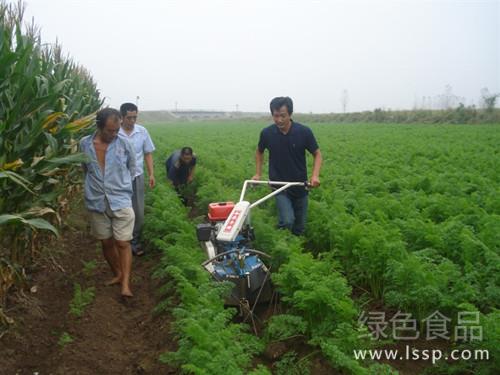
Earthing up carrots
Weeding: Carrots love light, so weeding and thinning seedlings should be done early. Spray herbicide promptly to prevent large-scale weed infestation. After sowing and before emergence, choose a sunny day to spray the ground; when applying, control the concentration well and do not overdose.
Thinning and final thinning: Thin seedlings on a sunny afternoon, removing overly dense seedlings, weak seedlings and mixed seedlings. Carry out the first thinning at 1—2 true leaves, combined with shallow cultivation and weeding, with a seedling spacing of 3—4cm; carry out the second thinning at 5—6 true leaves, with a seedling spacing of 10—12cm.
Watering: Carrot seeds absorb water with difficulty; sowing in different seasons when the soil is dry will delay emergence, causing gaps and missing plants in the rows. From sowing to emergence, water continuously 2—3 times, keeping soil moisture at 70%—80%. Carrots are afraid of waterlogging, so drain promptly after rain. When carrots grow to the thickness of a finger, that is, the taproot enlargement stage, this is the period of greatest water demand; water promptly to prevent the center of the taproot from becoming woody. Spraying Diguo Zhuangdiling can thicken the nutrient transport ducts of carrots, increase the expansion force of the fruit, make the fruit surface smooth, the fruit shape robust, and achieve high quality and high yield. Generally water once every 10—15 days to prevent moisture from fluctuating too much. Timely and appropriate watering can improve carrot quality and yield and prevent the formation of split roots.
Fertilizing: Before soil cultivation, apply sufficient base fertilizer, then plow deeply. During the carrot growth period, apply topdressing 2 times. To avoid "burning roots," carry it out in combination with watering, using water to carry the fertilizer; at the seedling stage it should be dilute, and later it should be concentrated. At 20—25 days after emergence, when there are 3—4 true leaves, carry out the first topdressing; apply the second topdressing after 25 days.
Preventing green shoulders and bolting in carrots: In the early stage of taproot enlargement, about 40 days after sowing, earth up the soil so that the root is buried in the soil but the crown is not buried, which can prevent the shoulder of the carrot taproot from being exposed above the soil surface and turning green from sunlight exposure. When carrots enter the period of vigorous leaf growth, water and fertilizer amounts should be appropriately controlled, and intertillage should be carried out to restrain seedling growth, in order to prevent excessive leaf growth and the occurrence of bolting. If bolting occurs, remove the bolt promptly to prevent the taproot from becoming woody.