Key Technical Points for Direct-Seeding Cultivation of Early Rice: Saves Time, Saves Cost, and Delivers High Returns
Direct-seeding cultivation of early rice offers the advantages of saving labour, saving cost, and delivering high returns. Having been applied for many years, it is a mature, simplified cultivation method that is well favoured by grain farmers. In order to earnestly guide grain farmers in carrying out direct seeding of early rice and ensure high and stable yields, the following key points are put forward.
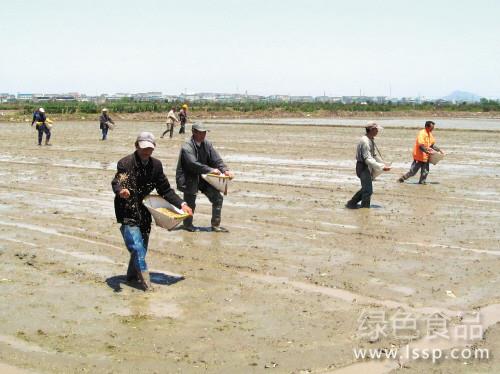
Direct-seeded early rice
1. Select suitable varieties. For direct-seeded early rice, the sowing period is somewhat late, the root system is shallowly distributed, tillering is early and vigorous, the population is large, and lodging occurs easily. Therefore, choose early rice varieties with a short growth period, strong stress resistance, good adaptability, high and stable yields, and strong market demand, such as: Xiangzaoxian No. 45, Zhongzao 39, Xiangzaoxian No. 32, Zhuliangyou 30, Zhuliangyou 819, Zhuliangyou 189, etc. Late-maturing varieties, especially extremely late-maturing ones, should not be used.
2. Fine land preparation. The key to high yields in direct-seeded early rice lies in improving the quality of paddy field preparation, which requires achieving the "four musts": First, plough early. Plough before mid-March so that the green plants fully decompose, and sow in early April to reduce the impact on seed sprouts. Second, level the field. The field surface must be level and uniform, with height differences within 3 cm, to facilitate field water management. Third, the bed surface must be moderately soft and firm. Field tillage and preparation should be moderate, achieving a soft top and loose bottom, divided into beds 3 m wide, and sowing when the bed surface is moderately soft and firm. If the floating mud is too mushy, sowing too deep makes it difficult to achieve uniform seedling emergence; if too firm, the grain cannot settle, causing roots to turn up and sprouts to topple. Generally, sow on the day after bed preparation. Fourth, ditches and channels must be complete. Open bed ditches and surrounding ditches well, and connect them with drainage and irrigation ditches, so that drainage and irrigation are unimpeded and the field dries after rain stops.
3. Sow at the right time. Generally, sow when the temperature stably passes 12°C. Pay attention to weather changes, seize the end of a cold spell and the start of a warm one, and preferably sow during 2-3 sunny days. Generally sow in early April, and finish sowing before April 10. Carry out seed soaking and disinfection and sprout the seeds before sowing; do not sow unsprouted grain. When sowing, take a scale to the field and sow uniformly at a set rate per bed. For conventional rice, use 7-9 kg of seed per mu; for hybrid rice, use 2.5-3 kg per mu. If the sowing period is early, the sowing rate should be slightly higher; otherwise, slightly lower. After sowing, let the mud settle the grain, clear the ditch system, and promote rooting and seedling establishment.
4. Rational fertilisation. Direct-seeded early rice is affected by weather, and the basic seedling number varies greatly. On the basis of applying sufficient phosphorus and potassium fertiliser, attention should be paid to applying nitrogen fertiliser according to the seedlings. If the seedling number is sufficient, reduce the amount of nitrogen fertiliser; otherwise, increase it. For paddy fields of medium fertility, generally apply 25-40 kg of 40% compound fertiliser per mu as a basal application to promote early tillering. Because sprouted grain is sensitive to chemical fertilisers, 25% chlorine-containing compound fertiliser should not be used in direct-seeding cultivation, so as to avoid rotting the sprouts and affecting emergence. After the two-leaf-one-heart stage, apply supplementary seedling and tillering fertiliser according to seedling conditions to promote the early formation of a high-yielding seedling structure; at the later stage, apply panicle and grain fertiliser according to seedling conditions to prevent premature senescence.
5. Chemical weed control. 2-4 days after sowing early rice (before the rice seed stands upright as a sprout), use 25% bensulfuron-methyl · pretilachlor wettable powder mixed with 40 kg of water for uniform spray closure; when choosing the formulation, control the active ingredients to bensulfuron-methyl below 3 g and pretilachlor below 40 g, and note that there must be absolutely no standing water on the bed surface when spraying; after spraying, keep the field moist; 3-5 days after spraying, when the seedlings have 2-3 leaves, add shallow water to promote tillering. After the seedlings reach the three-leaf-one-heart stage, carry out supplementary control according to the weed situation in the field. Generally, at the 1-3 leaf stage of barnyardgrass, use 40-60 ml of 25% Daolie emulsifiable concentrate per mu; at the 3-5 leaf stage of barnyardgrass, use 60-80 ml; if barnyardgrass exceeds 5 leaves, appropriately increase the dosage further, and spray with 30 kg of water to control barnyardgrass. When Chinese sprangletop weeds are present, at the 2-4 leaf stage of the weeds, use 50-60 ml of 10% Qianjin emulsifiable concentrate per mu, mixed with 30 kg of water for spraying; for each additional leaf of the weeds, increase the dosage by another 10 ml; this herbicide should not be mixed with herbicides for controlling broadleaf weeds, and its effect on older barnyardgrass is not ideal.
6. Scientific water management. For direct-seeded early rice, manage water in stages: First, from sowing to the two-leaf-one-heart stage, insist on raising seedlings in the open, keeping water off the bed surface, that is, filling the bed ditches with water on sunny days, half-filling the ditches on cloudy days, and draining the water completely on rainy days, keeping the soil moist and the bed surface with fine cracks. Second, at the tillering stage, carry out frequent shallow irrigation on the bed surface to promote tillering. Third, from the late tillering stage to the young panicle differentiation stage, drain the water in time and use repeated light drying to control seedlings, preventing excessive cracking of the surface from heavy drying, which can break the root system. Fourth, from the heading stage to the dough stage, use shallow-wet intermittent irrigation, and by no means dehydrate too early, so as to prevent premature senescence and lodging.
7. Control diseases, insects, rodents, and birds. Before sowing early rice, use 80% diphacinone sodium salt at a ratio of chemical:water:rice grain = 1:100:500, or use 7.5% coumatetralyl at a ratio of chemical:water:rice grain = 1:50:200, to prepare poisoned bait to kill field rats, and at the same time prevent damage by birds. In the middle and late stages of early rice, focus on controlling pests and diseases such as rice planthopper, sheath blight, rice blast, and stem borers.