Early sowing of peanuts has advantages and disadvantages: when is the most suitable time to sow peanuts
It is peanut planting season, and every year at this time farmers struggle with the question of when to sow peanuts. Early sowing of peanuts helps extend the vegetative growth period and increase nutrient accumulation, but early sowing also comes with many unfavorable factors. So when is the best time to sow peanuts, and how should peanuts be planted? Today I will discuss this in detail for everyone.
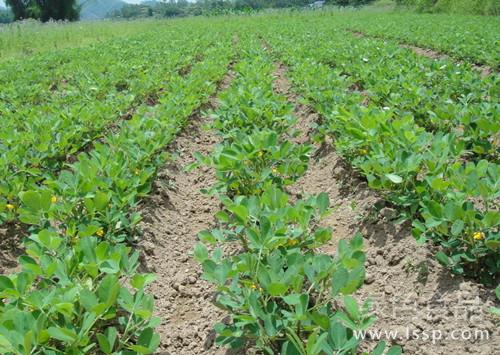
Peanut
1. Peanut planting methods:
1. Sowing methods. Peanut sowing methods are divided by cultivation method into open-field sowing and film-mulched sowing. By operation method, they are divided into manual dibbling and mechanical sowing.
2. Sowing density. The principle is rational close planting. Peanut planting density is determined by peanut height, fruiting range and leaf area. The suitable planting density of peanuts depends on climate characteristics, soil fertility, variety and cultivation conditions. Generally speaking, use a plant spacing of 5×8 cun, with double-seed planting, sow more than 23,000 basic seedlings per mu, and harvest about 20,000 plants. For opening rows, try to use peanut-specific row openers or peanut hole markers, and plant six rows per bed.
3. Sowing depth. Generally, peanut sowing is suitable at about 5 cm. Grasp the principle of “do not sow deep when dry, do not sow shallow when wet”; for clayey soil it should be shallower, and for sandy soil or soil with a high sand content it should be deeper. For open-field cultivation, the deepest should not exceed 7 cm, and the shallowest should not be less than 3 cm.
4. Pressing soil after sowing. Pressing soil after sowing is one of the measures for drought-resistant peanut sowing to ensure a full stand. After pressing, it can not only reduce soil moisture evaporation, but also bring the seeds into close contact with the soil, promote the rise of moisture from the lower soil layer, prevent the seeds from drying out, and facilitate seed germination and emergence.
2. The best planting time for peanuts:
In summary: peanuts like warmth, so the temperature must be suitable, and the most suitable temperature for sowing peanuts is about 12°C, while the most suitable temperature for flowering is 23-28°C, and the minimum temperature is 19°C.
Peanut sowing period: when sowing peanuts, if the soil temperature at a depth of 10 cm remains stable above 15°C for 5 consecutive days, they can be sown. Do not sow when the temperature is below 11°C, to prevent seed rot and dead seedlings; even if the peanut seedlings can emerge, the peanut seedlings will not be robust, thereby affecting yield. Generally, mid-to-late April to early May is the best planting time for peanuts, that is, the period around Grain Rain. With plastic film mulching, sowing can be advanced to mid-to-late March. However, climate conditions vary from place to place, so when planting peanuts, it should be determined according to actual conditions, but it must not be sown when the temperature is too low!
2-3 days before sowing, sun-dry the seed peanuts kept in shells. After sun-drying, shell them, mix the seeds with 50% imidacloprid suspension seed coating agent + Manshijin suspension seed coating agent, and sow after drying. Sow 2-3 seeds per hole, and the sowing depth should be 1.5 cun; for clayey soil with good moisture, it can be appropriately shallower, and for sandy soil with poor moisture, it can be appropriately deeper. It is recommended that spring peanut planting areas cover with plastic film, which allows appropriate early sowing and improves peanut yield.
Summer peanut planting areas can choose interplanting and sow early to increase yield.
Once you have mastered peanut planting methods and the best planting time, you can not only avoid problems caused by sowing issues, but also effectively increase peanut yield. However, everyone should be reminded that due to recent fickle weather, when sowing, be sure to handle it according to the climate as appropriate.