Greenhouse strawberries consume a lot of nutrients during continuous fruiting; here is how to manage them in the mid-to-late stage
At present, greenhouse strawberry production has entered the mid-to-late stage. In terms of management, in addition to strengthening pest and disease control and properly controlling temperature and humidity, the most important thing is to do a good job of fertilizing and watering in the later stage. Therefore, the following issues should be noted in production and corresponding measures should be taken.
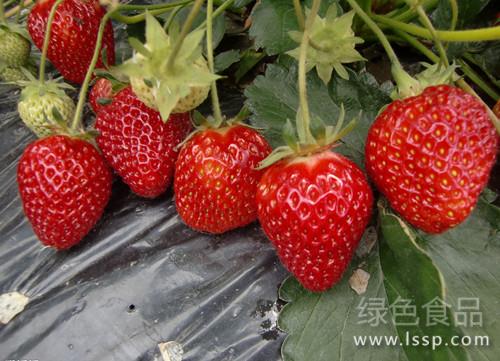
Strawberry
1. Uneven watering and irrigation. To save water and reduce greenhouse humidity, some farmers use drip irrigation. This method does not cause the greenhouse temperature to drop too quickly during irrigation, reduces the occurrence of strawberry diseases, and thereby increases strawberry yield. However, due to water quality reasons, in the later stage some drip outlets become clogged, causing uneven irrigation and affecting strawberry flowering, fruiting, and enlargement.
Management measures: According to practical experience, in later-stage irrigation, change drip irrigation to flood irrigation under the film. Specific operation method for under-film irrigation: uncover the film between two ridges, place the sprinkler head in the furrow under the film, turn on the water at full volume, and water thoroughly and deeply. This irrigation method allows water to be guided upward from the strawberry root zone, reduces soil compaction caused by irrigation, and under-film irrigation can also relatively reduce the number of irrigations, saving both labor and effort. Generally, for clay soil, water and fertilize once every 15-20 days; for sandy soil, once every 10-15 days.
2. After entering the second fruiting period, some strawberries show signs of nutrient deficiency. If nutrient supply is not strengthened at this time, it is easy to affect the yield and quality of the second crop of fruit, and the flowering period is not suitable for foliar fertilization, which adds a certain degree of difficulty to fertilizing.
Management measures: Along with watering, apply high-efficiency strawberry-specific trace element fertilizers such as Strawberry Pioneer, Pensitbao, and monopotassium phosphate to increase soil organic matter content, supplement missing trace elements such as manganese, molybdenum, zinc, and calcium, and supplement high-efficiency phosphorus and potassium fertilizers. Application method: During irrigation, evenly apply the diluted high-efficiency fertilizer with the water. Generally, apply 25 kg of special fertilizer per mu.
3. Pests and diseases are relatively severe. As the temperature rises, diseases and pests such as powdery mildew, gray mold, and aphids worsen, seriously affecting strawberry quality and yield.
Management measures: Prevent in advance. In the greenhouse, hang one insect sticky trap every 2 m, which can reduce the occurrence of aphids. For plots where diseases have already occurred, aerosol fumigation can be used after picking strawberries. During the specific operation, first move the bees used for pollination outside the greenhouse to prevent harming the bees. All ventilation openings must be sealed well. In the evening, ignite the aerosol fumigant, and ventilate and exchange air the next morning.