How to prevent cucumbers from growing leaves but no fruit? Growers should know early
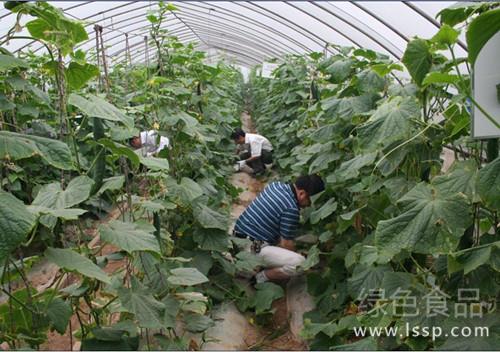
Cucumber fertilisation
I. Causes:
1. Too many fruits retained. Every fruit that can set is kept, and excess female flowers of the cucumber are not removed either.
2. Improper fertilisation. Excessive use of compound fertiliser makes the soil solution concentration too high, weakening root absorption capacity and affecting growth.
3. Excessive pesticide application. Most vegetable growers focus on chemical control and neglect agricultural measures, making the interval between applications too short and the concentration seriously excessive, causing fungicide overdose and phytotoxicity; combined with indiscriminate spraying of hormone-type pesticides, this causes physiological disorder in the cucumber, which cannot grow normally.
4. Improper watering. Watering is done without regard to the weather or the cucumber's growth pattern. For example, if watering is followed by continuous overcast days, low temperatures, strong cold waves and other weather, the soil temperature drops below 12°C while the relative soil humidity is above 85%, causing root drowning in the cucumber, which restricts root growth and greatly affects the upper growth.
5. Untimely harvesting. Because cucumber prices are unstable, sometimes growers leave already mature fruits on the vines while waiting for a high price, causing “vine dragging”. The result is that the balance between vegetative growth and reproductive growth of the cucumber is broken, and the plant's organic nutrients are consumed excessively.
II. Preventive measures:
1. Lower the vines appropriately. When lowering cucumber vines, do not go too low at one time, as going too low is not conducive to normal cucumber growth. After lowering the vines, keep the cucumber plants at about 1.5 m, ensuring more than 15 functional leaves, so as to guarantee normal photosynthesis and maintain normal growth.
2. Pay attention to flower and fruit thinning. For cucumbers that set many fruits, thin the fruits appropriately; never keep every fruit you see, otherwise it is easy to cause vine rest in the mid-to-late stage. Remove yellowing leaves at the bottom in time to reduce consumption.
3. Strengthen light management during continuous overcast days. On overcast days near noon, pull open the straw mats; if you then ventilate appropriately for 2 hours, not only will the greenhouse temperature not drop, it will actually increase by 2°C. After continuous overcast days suddenly turn clear, do not uncover all the straw mats at once; instead use “partial mat uncovering” to avoid the “seedling flash” phenomenon.
4. Pay attention to fertiliser and water management. When the temperature is low and light is weak, do not water too frequently; generally water about once every 20 days, and do not flood-irrigate. Also note that after watering, wait until the greenhouse temperature rises above 30°C before ventilating, and the vent should be opened gradually from small to large; do not ventilate too much at once, which can cause the seedling flash phenomenon. Apply fertiliser by flushing with water, using fertiliser containing humic acid or amino acids that cucumbers can easily absorb, and the amount used at one time should not be too much.
5. Strengthen disease control. Because ventilation is not timely, cucumbers are prone to phytotoxicity after pesticide application in the greenhouse, so when using pesticides, strictly control the concentration, do not mix three or five pesticides together, and reduce the occurrence of phytotoxicity.