Prevention and Control Methods for Physiological Diseases Easily Triggered in Enoki Mushroom by Improper Management
Enoki mushroom is both medicinal and edible, crisp and smooth in texture, and rich in nutrients. If cultivation and management are improper, physiological diseases are easily triggered. Here we introduce five common physiological diseases of enoki mushroom and their prevention and control methods, for reference only.
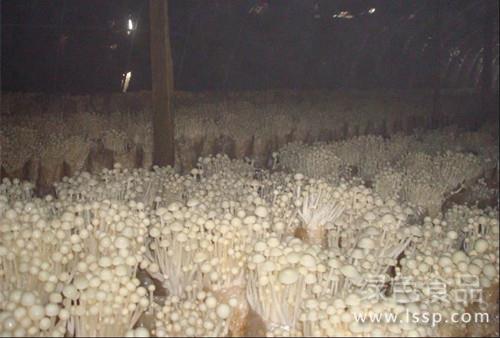
Enoki mushroom
1. Needle-shaped mushroom: The upper part of the enoki mushroom fruiting body is pointed and slender, the stipe is slightly thick, and it appears needle-shaped. This is mainly caused by excessively high carbon dioxide concentration inhibiting the growth of the cap. Prevention and control methods: Ensure good ventilation conditions, avoid opening the bag too late, and after bagging, carry out ventilation once a day.
2. Premature opening of the cap: The fruiting body has not fully developed and matured, yet the cap is rather large and opens too early. This is mainly related to the quality of the mushroom bag; secondly, it depends on whether it has been contaminated by bacteria or fungi; furthermore, it is related to air, light, humidity, and temperature during the fruiting process; in addition, it may also be caused by too low a content of bran in the auxiliary materials. Prevention and control methods: Strictly control sterilization and inoculation; during the fruiting period, coordinate air, light, and humidity well. Generally, the fruiting temperature for enoki mushroom varieties should not exceed 15°C, and the bran content should not be lower than 20%, so that the mycelium is sturdy and the yield is high.
3. Water mushroom: The so-called "water mushroom" refers to the enoki mushroom fruiting body looking as if it has been soaked in water, appearing semi-transparent, with almost no commercial value. The main reasons are: high temperature, too much spraying of water, slow evaporation of water, all of which remains on the fruiting body. Prevention and control methods: The number of water sprayings should not be too many, the air humidity in the mushroom house should be maintained at about 80%, and ventilation should be carried out regularly.
4. Downy fuzz connecting at the base of the stipe: The amount of downy fuzz at the base of the fruiting body directly affects the commercial value of enoki mushroom. The main reason is related to humidity and air. Prevention and control methods: Avoid the air humidity being too dry or too wet, otherwise downy fuzz is easily produced; in addition, during the young mushroom stage, excessively high carbon dioxide concentration and insufficient oxygen easily occur, so the oxygen content inside the bag should be increased.
5. Lateral mushrooms: The enoki mushroom fruiting body does not grow out from the surface layer of the culture material; most grow on the side walls of the mushroom bag. The main reasons are: the culture material is bagged too loosely, and when the culture material separates from the mushroom bag, fruiting bodies easily grow and consume nutrients. The prevention and control method is: when bagging the culture material, the tightness must be consistent, and a bagging machine should be used as much as possible to avoid the phenomenon of overly loose mushroom bags.