Mango fertilization is concentrated in four periods, with potassium, nitrogen and phosphorus as the main fertilizers
Producing 1000 kg of mangoes requires 1.74 kg of nitrogen, 0.23 kg of phosphorus, and 2.0 kg of potassium, with potassium being the greatest, followed by nitrogen and phosphorus. Generally, it is applied at a ratio of nitrogen:phosphorus:potassium = 1:0.5:0.5-1. However, for mango trees of different ages, in different regions, and with different yields, the recommended fertilization rates often vary greatly, and should be adjusted appropriately according to actual conditions. Fertilization of bearing mango trees is mainly carried out in four periods:
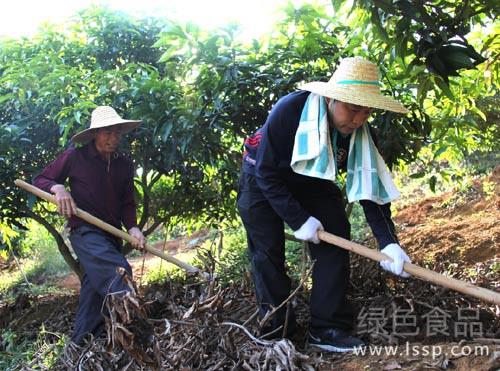
Mango fertilization
1. Flower-promoting fertilizer. The month before flowering is the flower bud differentiation period of mango. In Guangxi, mangoes generally flower in December, and fertilizing before flower bud differentiation can promote mango flower bud differentiation. It is mainly based on quick-acting nitrogen and potassium fertilizers, with the amount accounting for about 20% of the annual amount. Apply 0.1-0.2 kg each of urea and potassium chloride per tree (if single-element phosphorus fertilizer is used, it can be applied at this time, generally 1.6-1.8 kg of calcium magnesium phosphate fertilizer per tree). It can be combined with foliar fertilization by spraying a 0.2-0.3% potassium dihydrogen phosphate solution until the leaf surface is covered with droplets that are about to drip but not yet dripping, spraying 2-3 times consecutively at intervals of 7-10 days.
2. Flower-strengthening fertilizer. Mango trees bloom heavily and consume a lot of nutrients, so quick-acting nitrogen fertilizer should be applied once during the flowering period. The fertilization time depends on tree vigor, plant condition, and weather. It must be applied at the right time, and it is best to start fertilizing when 50% of the terminal shoots of the mango tree show flower buds. Otherwise, if the tree is vigorous, the temperature rises, and fertilization is too early, it may induce the sprouting of too many vegetative shoots or mixed flower shoots, reducing the number of flowers. For flower-strengthening fertilizer, urea or compound fertilizer can be used, applying 0.1-0.15 kg of urea or compound fertilizer per tree, and it can be combined with foliar spraying of 0.1% borax and 0.2-0.3% potassium dihydrogen phosphate solution.
If the flower-promoting fertilizer was applied sufficiently and the mango tree is growing vigorously, this fertilizer may be omitted.
3. Fruit-strengthening fertilizer. About 30 days after flower drop is the period of rapid growth and development of mango, and during the rapid enlargement of young fruit, fruit-strengthening fertilizer must be applied to meet the nutrient needs of mango development. Generally, apply 0.3-0.4 kg of urea and 0.2-0.3 kg of potassium chloride per tree (if there was no phosphorus fertilizer in the flower-promoting fertilizer, 1.6-1.8 kg of calcium magnesium phosphate fertilizer can be applied together this time). It can be combined with foliar fertilization by spraying a solution of 0.2-0.3% urea plus potassium dihydrogen phosphate until the leaf surface is covered with droplets that are about to drip but not yet dripping, spraying 2-3 times consecutively with an interval of 7-10 days each time.
4. Apply fertilizer before and after fruit harvest to promote and strengthen shoots. Mangoes bear a large fruit load and consume many nutrients. If fertilizer is not replenished in time, it will be difficult to restore tree vigor and this will affect the sprouting of autumn shoots. Fertilization before and after fruit harvest is very critical, and it is better to apply it in two times. The first time, before and after fruit harvest, apply 0.2-0.3 kg of urea and 0.1-0.2 kg of potassium chloride per tree to promote the recovery of tree vigor and the rapid sprouting and growth of autumn shoots. The second fertilization is when the last shoots begin to turn green, and in combination with turning the soil, bury weeds and apply 25-50 kg of organic fertilizer and 0.5 kg of ternary compound fertilizer per tree. It can be combined with foliar spraying of 0.3% potassium dihydrogen phosphate solution 1-2 times.
Fertilization methods: mainly use the ring trench and strip trench methods, and cover with soil after application. (1) Ring trench fertilization: dig a ring-shaped or semi-ring-shaped trench 15-20 cm wide and deep outside the drip line of the mango tree canopy. (2) Strip trench fertilization: each year, alternately dig two parallel strip trenches symmetrically outside the drip line of the mango tree canopy, 20-30 cm wide and deep; when expanding the planting hole and improving the soil, the trench depth should be more than 60 cm.