What are the fertilizer requirements of cherries and how to fertilize cherries scientifically
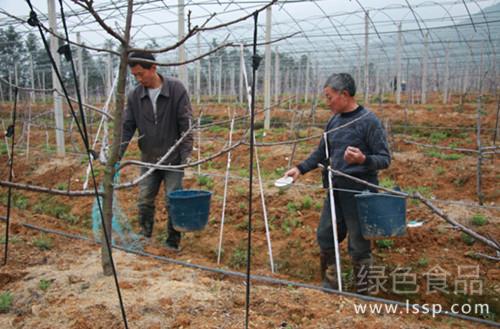
Cherry fertilization
1. Cherry fertilization periods:
The cherry growing period is short, and fertilizer needs are rapid and concentrated. From bud break, leaf expansion, flowering, and cherry development to maturity, they are concentrated in April to June, and flower bud differentiation is also concentrated in a relatively short period after harvest, so the tree's nutritional status before overwintering directly affects growth and development. Based on this characteristic, applying base fertilizer in autumn and topdressing during the flowering and fruiting period and after fruit harvest are essential. Generally, base fertilizer is applied in August and September. After fertilization, the fertilizer effect is exerted in the same year, increasing tree nutrition and favoring flowering and fruiting. According to the fertilizer requirements of cherries, topdressing can be divided into 3 times: first, pre-flowering fertilizer, mainly nitrogen and phosphorus fertilizer, to promptly supplement tree nutrition and promote flower bud sprouting and spring shoot growth; second, fruit-fattening fertilizer, mainly nitrogen and potassium fertilizer, combined with phosphorus fertilizer, to promote cherry enlargement, reduce physiological fruit drop, improve quality, and simultaneously supplement nutrition; third, topdressing before cherry coloring, mainly quick-acting potassium fertilizer, applied 20-25 days before harvest; fourth, supplementary fertilizer after fruit harvest, mainly quick-acting fertilizer, preferably compound fertilizer.
2. Cherry fertilization amount:
1) Fertilizer requirement pattern: Cherries have the greatest demand for nitrogen and potassium, and the amounts are similar, while the demand for phosphorus is lower. The suitable ratio of nitrogen, phosphorus, and potassium is 10:1.5-10:12. In addition, the demand ratio of cherries for calcium, magnesium, and sulfur is 1.4-2.4:0.3-0.8:0.2-0.4. These elements play an important role in improving cherry quality, especially calcium, which helps prevent cherry fruit cracking, increase firmness, extend the supply period, reduce physiological diseases during storage, increase the stress resistance of cherries and the tree, and alleviate freezing damage during the flowering period.
2) Nutrient content required by cherries: According to research measurements, for every 100 kg of cherries produced, about 1.04 kg of pure nitrogen, 0.14 kg of pure phosphorus, and 1.37 kg of pure potassium need to be absorbed. Adding the needs for root, branch, and leaf growth, rainwater leaching, and soil fixation, a cherry orchard with medium soil fertility should apply fertilizer annually at 2-3 times the cherry yield.
3) Nutrient content of normal cherry leaves: In normal cherry trees, the main element contents in leaf dry matter are: nitrogen 2.33-3.27%, phosphorus 0.23-0.32%, potassium 1.25-1.92%, calcium 1.62-2.60%, magnesium 0.49-0.74%. Trace element contents are: sulfur 124-150 mg per kg, iron 119-203 mg per kg, manganese 44-60 mg per kg, boron 38-54 mg per kg, zinc 20-50 mg per kg, copper 8-28 mg per kg, molybdenum 0.5-1 mg per kg. Through plant diagnostic analysis, if levels are below the lower limits above, fertilizer should be supplemented promptly to avoid deficiency symptoms. For a specific cherry orchard, the suitable application amount of various fertilizers should also be determined according to the yield level of that orchard. Fertilizing according to a nitrogen, phosphorus, and potassium formula will significantly promote high and stable cherry yields.
4) Amount of organic fertilizer applied as base fertilizer: Organic fertilizer can improve the soil, increase soil fertility, reduce environmental pollution, and improve cherry quality. It has a certain effect on cherry color, brightness, firmness, and sugar content. For high-yield cherries, generally 150-200 kg of fermented pig or chicken manure organic fertilizer is applied as base fertilizer per plant.
5) Spraying trace element fertilizer: Mainly according to the principle of supplementing what is deficient, appropriately supplement boron, zinc, magnesium, and other elements. Spraying 0.3% borax solution at the flowering stage can promote flower organ development and increase the fruit-setting rate. After fruit setting, spraying 0.3% monopotassium phosphate solution has an obvious effect on increasing cherry sugar content and coloring.
3. Cherry fertilization methods:
According to the fertilizer requirement characteristics of cherries and the characteristics of fertilizers, the base fertilizer should adopt the spreading method. First make a border around the tree pan, spread the organic fertilizer on the surface of the tree pan, and then water immediately, with the watering amount being 100 kg per plant. Advantages of spreading base fertilizer: first, the absorption area is large and the utilization rate is high; second, nutrients are not easily lost and the effect is good; third, the soil remains loose and does not become compacted. For foliar topdressing, use the leaf spray method, which allows nutrients to be directly absorbed by the leaves, mainly using urea and monopotassium phosphate, with urea concentration at 0.3-0.5% and monopotassium phosphate concentration at 0.3%. Spray from top to bottom, spraying both the back and front of the leaves, with the criterion being that no liquid drips from the leaves and cherries. Cherry is a chlorine-sensitive tree species, so potassium fertilizer must be potassium sulfate, and potassium chloride cannot be used.