Control methods for tomato viral disease causing stunted plants, upward-curled leaf edges and spots
Tomato viral disease occurs easily in spring, degrading quality and affecting profits. To reduce disease, lower the pest population base and reduce the chances of pest transmission, here is a reminder on how to recognize and promptly control tomato viral disease:
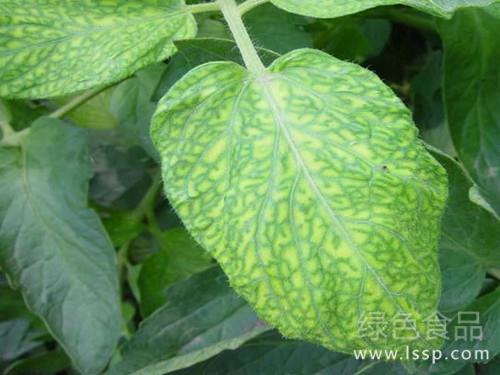
Tomato viral disease
First, an introduction to the causes of viral disease. Objectively, it may be because aphids, whiteflies and other pests multiply in large numbers in spring, transmitting viruses from overwintering plants to tomatoes and causing infection. At the same time, adverse conditions such as high temperature, strong light and drought also increase the probability of tomato infection to a certain extent. Subjectively, it may be because some tomato plants are weak, with poor resistance and no good “physical constitution”, so when facing viral attack they have no “ability to fight back” and simply fall ill.
Second, the types of viral disease and their symptoms. (1) Leaf curl type: after onset, the upper leaves yellow and become smaller, the leaf edges curl upward, and the leaves wrinkle, thicken and curl; the upper nodes rarely flower, or no inflorescences form; infected tomato plants grow slowly or stop growing and are obviously stunted. (2) Mosaic type: after onset, mottling of alternating yellow and green or dark green and light green appears on the leaves, sometimes with transparent veins; in severe cases the leaves become narrow or distorted and deformed, causing flower and fruit drop, small fruit and stunted plants. (3) Streak type: it can occur on stems, leaves and fruit; leaves show tea-brown spots or cloud patterns, and stems show dark brown patches. The fruit surface has dark brown sunken patches. In severe cases, the plants shrink and turn yellow, finally wither and die, or even suffer total crop loss. (4) Fern leaf type: the top leaves are especially narrow or curl downward in a spiral, and become fern-like from top to bottom, sometimes with almost no leaf mesophyll; petals enlarge to form “giant flowers”, the fruit core turns brown, and plants are stunted to varying degrees.
Finally, the control methods. (1) Seed treatment. According to the main local virus sources, choose disease-resistant tomato varieties suited to local conditions; disinfect the seeds, that is, before sowing soak the seeds in clean water for 3-4 hours, then place them in a 10% trisodium phosphate solution for 20-30 minutes, remove them, rinse them clean with water, then germinate and sow. (2) Avoiding and preventing aphids. Intercrop tomatoes with early-maturing corn at a tomato:corn ratio of 4:1; silver-gray film can be used instead of plastic mulch for covering, or after trellising, two 10 cm wide silver-gray film strips can be stretched above the seedlings parallel to the vegetable beds; in protected areas, mesh can be used to cover and seal openings to reduce aphids entering the greenhouse; for aphid control, sprays such as pymetrozine, pymetrozine and bifenthrin can be used. (3) Controlling tobacco whitefly. The key to controlling leaf curl type viral disease is to prevent tobacco whitefly in the early growth stage of tomatoes, among which the seedling stage and about 1 month after transplanting are the critical periods for control. During the seedling raising period, use 40-60 mesh insect-proof netting as a protective shed to prevent tobacco whitefly from entering, and spray agents such as thiamethoxam, bifenthrin and imidacloprid. 1-2 days before transplanting, drench the roots with thiamethoxam, applying about 15 milliliters of solution per seedling, with an effective period of up to 20-30 days. After transplanting, seal the greenhouse vents with insect-proof netting of 40 mesh or above, and hang yellow sticky boards inside the greenhouse; if tobacco whiteflies on the yellow boards increase, immediately use chemical agents for control. (4) Strengthen field management. Carry out crop rotation for more than two years; deep plow the soil and apply lime; sow at the proper time, strengthen management, promote early seedling growth and cultivate strong seedlings; use formula fertilization, spray 6000-fold sodium nitrophenolate solution, etc., to enhance host disease resistance; spray NS-83 resistance inducer 100-fold solution once each 15 days before planting, 2 days before planting and 14 days after planting, which can both induce tomato disease tolerance and increase yield; promptly pull out diseased seedlings, and when pruning and removing side shoots in the field, operate on diseased and healthy plants separately. (5) Biological agent control. Before separating seedlings, planting, tying vines and removing side shoots of tomatoes, spray 1% soapy water + 0.2%-0.4% potassium dihydrogen phosphate, or 1:20-40 soybean milk or soybean milk powder, to prevent contact transmission. (6) Inoculation with mild virus strains. For greenhouse tomatoes, when seedlings have 2 leaves and 1 heart leaf, spray the mild virus strain N14 with a high-pressure spray gun; after inoculation, raise the seedbed temperature and promptly control aphids, which can enhance tomato immunity to tobacco mosaic virus. (7) Chemical control. In the early stage of disease, Beinong Huada zinc sugar powder can be used, with each 10 g bag mixed with 15 kg of water (1500-fold dilution) for spray application; in the early stage of viral disease, using zinc sugar powder + gluco-oligosaccharide (or moroxydine) and other above-mentioned antiviral agents + imidacloprid (or acetamiprid, thiazinone, etc.) in combined control gives better results.