Greenhouse cucumbers have weak roots and poor absorption, yet they love and tolerate fertilizer. How should you fertilize them?
Greenhouse cucumbers have weak roots and relatively poor absorption capacity, but they have an extremely strong love of and tolerance for fertilizer. Understanding and mastering the growth characteristics of greenhouse cucumbers, fertilizing skillfully and managing scientifically can lead to high-quality cucumber yields.
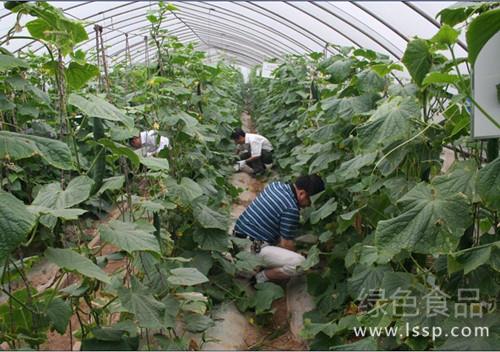
Fertilizing greenhouse cucumbers
For the seedling nutrient soil, the requirement is a loose texture, good air permeability, sufficient nutrients and a pH value of 5.5-7.2. For the preparation method, refer to the tomato nutrient soil formula. When preparing the nutrient soil, add superphosphate at 2-3% of the total nutrient soil amount, which can promote the root growth of cucumber seedlings and cultivate strong seedlings. When raising seedlings in a seedbed, at transplanting time, apply 2 kg per mu of Manyuanchun microbial inoculant in the planting holes before transplanting, or dip the roots, which can stimulate root growth, improve the survival rate after transplanting and cultivate strong seedlings.
Cucumber roots are mainly distributed in the 15-25 cm plough layer, and their salt tolerance is relatively poor. Each topdressing amount must not be too large, and the number of topdressings should be greater, grasping the principle of "small meals, more often."
1. Apply sufficient base fertilizer. Apply 5000 kg of decomposed organic fertilizer, 20-30 kg of diammonium phosphate, 20 kg of potassium sulfate and 50 kg of superphosphate per mu as base fertilizer. For greenhouses used for many years, add 2 kg of ferrous sulfate, 2 kg of zinc sulfate, 1 kg of borax, or 2-5 bags of Manyuanchun Yijia boron and 2-5 bags of Manyuanchun Yijia inoculant. After each fertilizer is evenly scattered on the ground, it only needs to be turned once to take effect, and the utilization rate is high.
2. Apply transplanting fertilizer skillfully. At transplanting, choose bio-organic fertilizer as the transplanting fertilizer, generally applying 40-50 kg of bio-organic fertilizer per mu. When fertilizing, it can be concentrated and scattered on the ridge lines, then hoed once, and the ridges can be made immediately afterward.
3. Topdressing during the growth period. Generally, cucumbers need 8-10 topdressings after transplanting. After fruit set, cucumber yield is basically formed. Fertilizing will not cause excessive vine growth, and will also promote increased yield. Apply the first topdressing at the early fruiting stage, applying 7-9 kg of urea per mu (12-15 kg of ammonium sulfate), together with 5-8 kg of potassium sulfate. After that, water once every 5-10 days according to conditions. Watering should be alternated with fertilizer; each time, apply 10 kg of Manyuanchun biological water-soluble fertilizer per mu with the water. This ensures continuous high yields of cucumbers. Fertilizing is also needed in the later stage. As cucumbers are harvested, nutrients are continuously consumed, requiring a steady and long-lasting nutrient supply. Neglecting topdressing in the later stage causes cucumbers to age prematurely due to nutrient deficiency, shortening the effective harvesting period, reducing cucumber yield and increasing deformed fruits such as curved cucumbers. After cucumbers have set 2-3 rounds of fruit, apply 10-20 kg of urea per mu to reduce female flower development, promote the growth of the cucumber "leader" and avoid deformed fruits.
4. Foliar topdressing. Carry out foliar topdressing after cucumber transplanting, before flowering, at the early fruiting stage and at the peak fruiting stage. Apply 2 bags of Manyuanchun Yijia inoculant per mu mixed with 30 kg of water as a foliar spray to prevent premature aging and reduce deformed fruits.