Shallow-water lotus root cultivation techniques: lotus root prefers shallow water, tolerates heavy fertilization, and does not tolerate drought
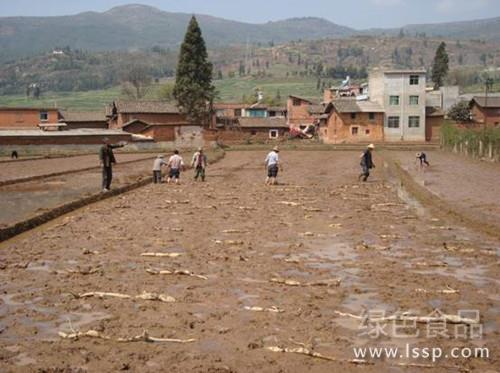
Shallow-water lotus root cultivation
I. Environmental requirements for lotus root growth and development:
1. Temperature conditions. During the growth period, lotus root needs high temperatures and abundant sunlight, and grows in hot, rainy seasons. Sprouting requires an air temperature of 15°C; at 20°C, it grows lotus runners, fibrous roots and standing leaves; at 35°C it grows vigorously, buds and flowers; the most suitable temperature for the lotus root formation stage is 25°C, and when the temperature drops to 15°C, growth stops.
2. Moisture conditions. Lotus root is aquatic, and its water consumption is large and fast, but its root system has a weak capacity to absorb water. It prefers shallow water and high temperatures, and does not tolerate drought. During the growth period, a water layer of a certain depth must always be maintained. During the sprouting and growth stage, the water level should be shallow to help raise soil temperature and promote early sprouting and rapid growth; during the vigorous growth stage, the water level should be deep to help lotus root grow robustly; during the lotus root formation stage, the water level should be lowered to promote early root formation.
3. Soil and fertilizer conditions. Lotus root is large and extremely tolerant of fertilizer, and prefers soft, fertile, clayey soil. Base fertilizer should be the main component, accounting for 70% of the total fertilizer amount, with topdressing as a supplement, accounting for 30%. The base fertilizer should mainly consist of fully decomposed chicken manure, pig manure and farmyard manure, combined with diammonium phosphate, potassium sulfate and NPK compound fertilizer. Topdressing should mainly consist of urea and compound fertilizer. Applying more farmyard manure can reduce the reddish-brown rust spots attached to the surface of lotus root.
II. Cultivation techniques:
1. Building the pond and adding soil: the ground should be firm and level. A 0.3-0.4mm plastic sheet can be laid on the pond bottom, mainly to prevent seepage and preserve heat. The four corners of the pond should be plastered with sand-lime mortar (to prevent the corners from cracking after the pond is filled with soil and water), and the inner walls of the pond should be smoothed with fine lime. The outer walls can be filled solid with soil (if conditions permit, they can also be smoothed with fine lime). After the cement surface has set (5—7 days), the large pond can be divided into several small ponds, with no limit on length and a suitable width of 6—8 m (for easier operations such as spraying pesticides and applying fertilizer). Then evenly spread 15—18 cm of clay inside the pond. The best soil is red clay or black clay, and it must not contain sand, stones, etc.
2. Formula fertilization: before planting, apply 4—6 cubic meters of fermented human manure, chicken manure, pig manure and other farmyard manure per mu of pond, 30—50 kg of cake fertilizer or special fertilizer, 50 kg of compound fertilizer, and 30 kg of potassium sulfate. The fertilizer must be applied evenly into the soil, and must never be applied only on the surface.
III. Timely planting:
Around Grain Rain, plant about 300 kg of lotus root seed per mu, with a plant spacing of 1.5×2 m and a row spacing of 2×2.5 m. The lotus root seed should be buried in the soil with the growing tip facing inward and must not be exposed above the soil surface. When planting lotus root, it is best to soak it in Tianda 2116 or carbendazim for 20—30 minutes.
IV. Strengthen field management:
1. Adjust the water level. In the early stage, maintain a shallow water layer of 5—7 cm to help raise soil temperature and promote sprouting; in the middle stage, maintain a deep water layer of 12—15 cm to meet the water demand of vigorous lotus root growth and to prevent wind and lower temperature; in the late stage, maintain a shallow water layer of 7—10 cm to favor lotus root formation.
2. Topdressing. (1) On the basis of sufficient base fertilizer, topdress twice. The first topdressing is carried out when lotus root has grown 2-3 standing leaves, to promote vigorous growth of lotus root, commonly known as "seedling-promoting fertilizer," generally applying 15-20 kg of urea per mu. The second topdressing is around "Summer Solstice," applying 20 kg of compound fertilizer per mu to promote lotus root formation. (2) If the base fertilizer is insufficient, three topdressings are needed. The first is about 25 days after planting lotus root (around Grain in Ear), when lotus root has grown 1-2 standing leaves, applying 10 kg of urea per mu; the second topdressing is 40-45 days after planting lotus root (around Summer Solstice), when lotus root has grown 2-3 standing leaves and begun branching, applying 20 kg of urea and 20 kg of compound fertilizer per mu, to promote vigorous growth of lotus root and lay the foundation for a high yield; the third is carried out half a month after the second, that is, around "Minor Heat," applying 10 kg of urea and 15 kg of compound fertilizer. After "Major Heat," stop topdressing to prevent excessive vegetative growth and late maturity, which would reduce cold resistance. After each topdressing, splash clear water to wash the lotus leaves.
3. Timely prevention and control of pests and diseases. The main insect pests of lotus root include aphids, tobacco cutworms, lotus root maggots, etc. The first two can be controlled by spraying omethoate or deltamethrin; the latter by spraying phoxim diluted with water. The main diseases of lotus root include rot disease, leaf blight, etc., which can be controlled by spraying thiophanate-methyl, chlorothalonil, agricultural streptomycin, etc. When spraying, add 0.1% neutral washing powder to improve the adhesion and spreading of the pesticide solution.