Potted Pomegranate Growing Techniques: Both Ornamental and Rewarding with Delicious Fruit
Potted pomegranate has both ornamental value and produces delicious fruit. It can be grown in larger spaces, courtyards, balconies, and similar locations. Some plants bloom in autumn of the same year, and all bloom and bear fruit the following year.
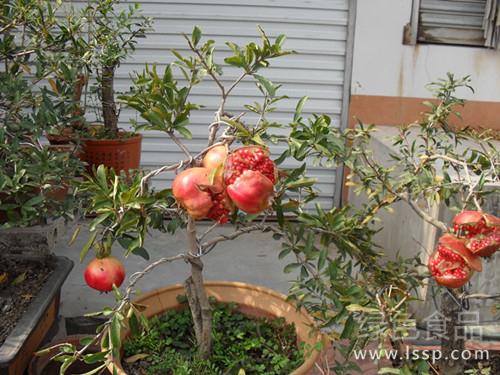
Potted Pomegranate
1. Source of seedlings: Excellent pomegranate varieties from nurseries can all be used for potting. Small clay pots can also be used for propagation. Cut pomegranate branches into pieces of about 20cm, and insert them in March to April into clay pots with a diameter of 20cm filled with nutrient soil, 1 to 2 cuttings per pot. Water promptly after inserting, and keep the potting soil moist. After rooting, apply organic fertilizer solution 2 to 3 times in summer to promote growth and cultivate strong seedlings. By autumn, they become potted seedlings.
2. Pots and nutrient soil: Clay pots, ceramic pots, plastic pots, etc. can be used. The diameter is generally above 30cm, and the volume of the pot is generally above 5L. Nutrient soil preparation: 13 parts compost soil from legume crop straw + 13 parts garden soil + 13 parts sandy soil. Add 1KG of 25% nitrogen-phosphorus-potassium compound fertilizer per cubic meter of nutrient soil and mix well.
3. Planting: Planting is generally carried out during the deciduous dormant period. Place a few broken tile pieces over the drainage hole at the bottom of the pot, add part of the nutrient soil, place the pomegranate seedling on the nutrient soil, spread out the root system, then add more nutrient soil, tap the edge of the pot lightly, and gently compact the nutrient soil. Leave a few centimeters of depth at the pot rim, without filling with soil, as a water opening. After potting, water thoroughly once. After some time, once the potting soil settles, add some more nutrient soil.
4. Water and fertilizer management: Although pomegranate is drought-tolerant, it cannot be dry for a long time. On sunny days in spring and autumn, water once every 1 to 2 days; in summer, water 1 to 2 times a day. In winter, water promptly as well according to how dry the potting soil is. During the growing period, if it rains for a long time, make sure water does not accumulate in the pot. Start fertilizing after sprouting, generally applying organic fertilizer solution fermented from cake fertilizers such as soybean cake. Take out the fertilizer solution, dilute it with more than 10 times water, and apply it in the pot. Generally fertilize once every 7 to 10 days. Before flowering, apply one application of 0.3% urea solution to promote flowering and fruit set. During the fruit-swelling stage of pomegranate, spray 0.3% potassium dihydrogen phosphate solution twice, which is beneficial to the fruit's swelling and growth.
5. Flower and fruit management:
5.1 Flower and fruit thinning: Pomegranate has a large number of flowers and blooms successively from June. In addition, bell-shaped pomegranate flowers cannot set fruit; only a portion of barrel-shaped flowers can set fruit. Therefore, when flowering, apart from ornamental needs, promptly thin out bell-shaped flowers and overly dense flower buds. In addition, fruit set from the first and second flushes of pomegranate flowers is larger, so they should be retained for fruit set. If the third flush of barrel-shaped flowers is not for ornament, it should also be thinned promptly. For pomegranates that set fruit, retain more first-flush fruit and select second-flush fruit to keep. If the first and second flushes set few fruits, part of the third-flush fruit can be retained, and the rest thinned.
5.2 Preserving flowers and fruits: Artificial pollination during the flowering period can improve fruit set. Dip the pollen that has just been released from opening flowers onto the tip of a brush, then dab it onto the stigmas of newly opened barrel-shaped flowers in other pots. Spraying 40 to 50mg/L gibberellin or 20 to 50mg/L naphthalene acetic acid on the leaves can also increase the fruit-setting rate. When it rains during the flowering period, taking rain-shelter measures can also increase the fruit-setting rate. When watering during the flowering period, do not pour water onto the flowers.
6. Training and pruning:
6.1 Training: The tree form of potted pomegranate should preferably be a single-trunk form, with a trunk height of about 20—30cm, and about 5 main branches growing on the leader, with bearing branches and bearing branch groups growing on the main branches.
6.2 Winter pruning: Pomegranate produces many branches, so thinning should be the main approach. Shorten the extension branches of the main branches or branches used to cultivate branch groups. The mixed buds of pomegranate grow at the top or near the top of robust short branches, so take care to retain them. At locations with sparse branches, long branches can be heavily shortened, generally leaving 2 to 3 buds to grow new branches.
Potted Pomegranate
6.3 Summer pruning: Pomegranate buds have early maturity and can sprout branches multiple times during the growing period, causing the crown branches to gradually become denser during the growing period. Therefore, during the growing period, remove useless buds and young shoots, and thin out overly dense branches as well. If water sprouts have no useful value, remove them promptly. Pinching long branches can promote thickness and strength.
7. Pest and disease control: Common pests of potted pomegranate include aphids, stinging moths, and scale insects. For aphids, wash with 0.4% laundry detergent solution or use the natural enemy ladybug to prey on aphids. For stinging moth larvae, spray with 3000 times diluted deltamethrin solution to kill them, or manually capture and kill the larvae. For tortoise wax scale insects, scrape and treat during the dormant period, or spray 800 times diluted 50% dichlorvos solution during the peak egg-hatching period in summer.
8. Repotting and soil replacement: Pomegranate grown in a pot for a long time will gradually weaken in growth vigor, and generally needs to be repotted into a larger pot once every 2 to 3 years. Pull the pomegranate out of the pot with soil, remove the root pad and a small portion of the root system, then put the prepared nutrient soil into the new pot, place the pomegranate with soil in it, and add enough nutrient soil. Potted pomegranates that are not moved to a larger pot should also be pulled out with soil, have the root pad and a small portion of the root system removed, be replaced with new nutrient soil, and be watered thoroughly.
9. Overwintering: For potted fruiting pomegranate, pay attention to cold protection during overwintering. If conditions permit, place it indoors or in a shed to overwinter. In areas where winter is not too cold, it can overwinter in the open. Generally, cover the potting soil with some chopped grass to protect the root crown. Before a cold wave arrives, check whether the potting soil is dry or wet. If the potting soil has become dry, water thoroughly once.