Proper management during the fruiting stage of lion's mane mushroom is essential for achieving high yields
To achieve high and quality yields of lion's mane mushroom, the following management measures must be strengthened during the fruiting stage:
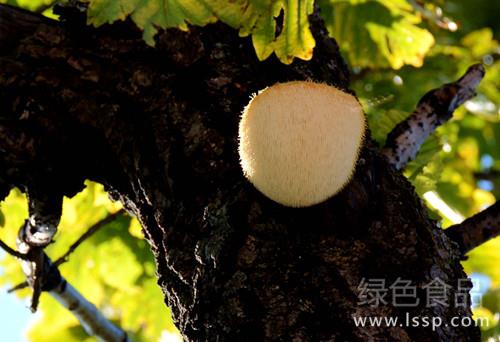
Lion's mane mushroom
1. Temperature regulation: After the substrate bags are placed in the field, the temperature should be lowered from the original spawn-running stage to the optimal fruiting stage temperature of 16°C-20°C before inducing primordia. Under suitable temperature conditions, it generally takes about 10-12 days from small primordia to mature mushrooms. When the temperature exceeds 23°C, the fruiting bodies of lion's mane mushroom develop slowly, the stipes continuously proliferate, the mushroom bodies spread out, forming cauliflower-like deformed mushrooms, or bald mushrooms without spines. When the temperature exceeds 25°C, the mushroom bodies will shrivel. Therefore, during the fruiting stage, special attention must be paid to temperature control. If the temperature exceeds the specified range, the following measures can be taken: ① Increase mist spraying in the space. ② Irrigate the furrow to increase humidity. ③ Thicken the shading material of the shade shed. ④ Stagger ventilation times, uncover the film for ventilation in the morning and evening. At noon, open both ends of the covering film to allow air circulation. Create suitable temperatures to promote the smooth growth of young primordia.
2. Strengthen ventilation: Lion's mane mushroom is aerobic. If ventilation is poor, excessive carbon dioxide accumulation will stimulate continuous branching of the stipes, inhibit development of the central part, and produce coral-like deformed mushrooms. Under such saturated humidity and still air, they easily become deformed mushrooms or are contaminated by competing microorganisms. For this reason, in field furrow cultivation, the film should be uncovered for ventilation for half an hour at 8 AM every day. When the fruiting bodies grow larger, ventilate in the morning and evening every day, appropriately extending the ventilation time. But never let wind blow directly on the mushroom bodies, to avoid shriveling.
3. Humidity control: During the growth and development period of lion's mane mushroom fruiting bodies, water must be managed scientifically. Spray different amounts of water according to the size of the mushroom bodies, surface color, climate, and other conditions. Do not spray when the mushrooms are small, especially for bags placed on the ground or with the hole opening facing downward; using ground moisture is sufficient, and generally no spraying is needed. If the climate is dry, shallow water can be stored in the furrow to let moisture evaporate onto the mushroom bodies. To check whether humidity is appropriate, observe the spines: if the spines are fresh white and highly elastic, it indicates suitable humidity; if the mushroom bodies are withered and yellow, the spines are not obvious, and growth is slow, then humidity is insufficient, and water should be sprayed to increase humidity. Water spraying must be combined with ventilation to keep the air fresh and allow the fruiting bodies to grow robustly. However, strictly prevent blind excessive spraying, which can cause the fruiting bodies to rot. The cultivation site must create 85%-90% relative air humidity. Young mushrooms are sensitive to spatial humidity; if it is below 70%, differentiated fruiting bodies stop growing. Even if growth resumes after increasing humidity later, permanent marks will remain on the surface of the mushroom bodies. If it is above 95%, combined with poor ventilation, it easily causes contamination by competing microorganisms. The following measures can be taken: ① Irrigate the furrow to increase ground humidity. ② Point the nozzle upward and spray into the space. ③ Tightly cover the furrow bed with plastic film to retain moisture. ④ For shelf-layer cultivation during the young primordium stage, cover the surface with wet gauze or newspaper to increase humidity.
4. Moderate light: During the fruiting stage, there should be scattered light, generally 300-600 lux illuminance. For field shade sheds, master the principle of "three parts sunlight and seven parts shade, with dappled sunlight able to shine through" to meet the growth needs of the fruiting bodies.
5. Timely harvesting and skillful management of regenerated mushrooms:
From the appearance of mushroom primordia to the maturity of fruiting bodies, under suitable environmental conditions, lion's mane mushroom generally takes 10-12 days. Some can also mature early in 8-10 days. Signs of maturity: the mushroom body is white, the spines are rough, and spores begin to be discharged, accumulating a thin layer of white powdery substance on the surface of the substrate bag. According to market requirements for lion's mane mushroom, the harvest maturity differs slightly. For lion's mane mushroom used as fresh cuisine for the market or for salt-processing, it is best to harvest when the spines have not yet extended, or have formed but are no more than 0.5 cm in length, and before large amounts of spores are released. At this time, the color is pure white, the flavor is fresh and pure, with no bitterness or very slight bitterness. If lion's mane mushroom is used for medicinal purposes and dehydrated and dried as a commodity, the fruiting body maturity can be extended somewhat, and it is best to harvest when the spines are about 1 cm.
Lion's mane mushroom can generally be harvested for 3 batches, and some can also yield 4 batches, but the first 1-2 batches have high yield and high quality, generally accounting for 80% of the total yield. Cultivation of regenerated mushrooms is as follows: after the first batch is harvested, stop spraying water for 3 days; uncover the film for ventilation for 12 hours to let the mushroom root surface shrink after harvest and prevent mold; then adjust the temperature to 23°C-25°C to allow the mycelium to accumulate nutrients. After about 5 days, primordia appear, and after about 10 days, young primordia form. At this time, lower the temperature to 16°C-20°C, raise the air humidity to about 90%, and the fruiting bodies will grow healthily. The entire production cycle ends in 60-70 days under normal temperature conditions, and the biological conversion rate is generally 90%-100%.